Despite government promises, ‘Total Peace’ remains elusive in Colombia today

On 4 April Maribel Silva, Isaíd Gómez and Isaíd’s uncle, Carlos Valero obeyed the summonses of an illegal armed group operating in the Calamar Municipality of Colombia’s Guaviare Department. The next day, James Caicedo, Jesús Valero, Maryuri Hernández, Nixon Peñalosa and Oscar García did the same. 

After the individuals failed to return home to their families in the hamlet of Agua Bonita in Pueblo Seco their family members reached out to representatives of the illegal armed group who had issued the summonses, but the group denied that any summonses had been issued. Later, the family members were indirectly warned that they should stop looking for their loved ones and ‘consider the case to be closed.’  

So their families were left waiting, in the horrific uncertainty of what might have happened to them, wondering whether to sit tight, holding onto hope that their family members still might return home, or to flee the region out of fear of reprisals and for the safety and protection of the lives of the children and parents of the disappeared individuals. All eight individuals had already relocated and settled in Guaviare after being displaced from Arauca Department due to violence and severe violations of freedom of religion or belief (FoRB), including the closure of churches and the targeting of Protestant pastors by illegal armed and criminal groups over the past decade.  

Continue reading “Despite government promises, ‘Total Peace’ remains elusive in Colombia today”
Bridging the gap: The importance of finding common ground between religious groups and secular human rights organisations 

Oppressive governments depend, in part, on two things: unity among those who support them and divisions within the communities that do not. One of the greatest challenges in addressing freedom of religion or belief (FoRB) in countries where that right is regularly violated is bridging divisions between different groups within the religious sector, as well as the gap that often exists between the religious sector and secular human rights and other independent civil society organisations. 

Religious groups often occupy a unique position within larger independent civil society. They are networked and organised, to different extents, with members who regularly attend and participate in their activities. They often possess a dedicated physical space, where they are able to hold their activities with minimal outside interference. Some religious groups will run outward focused activities, providing social services. In many cases, religious leaders not only hold a significant decree of influence within their respective community – they may also be perceived as moral adjudicators more widely even by people who do not share their religious beliefs.  

Oppressive regimes are sensitive to the danger posed to them by a socially engaged religious sector and outspoken religious leaders who are willing to work hand in hand with larger civil society in defending civil and political rights. Division, therefore, is deliberately encouraged and stoked, often by intelligence and security agencies, with the goal of neutralising or coopting organised independent civil society, including the religious sector.  

Continue reading “Bridging the gap: The importance of finding common ground between religious groups and secular human rights organisations “

‘We go into the streets with fear’: After the murders of two pastors, Christians in northern Colombia no longer feel safe

Many Christians in the north-central part of Colombia encompassing the neighbouring regions of Magdalena and Cesar are on edge after the targeted assassinations of two church leaders in the space of two weeks. On 29 December, an entire family of four – Pastor Marlon Lora, his wife Yurlay, and adult children Ángela and Santiago – was shot to death following a Sunday morning service at the service at the Missionary Bible Church in the Villa Paraguay neighbourhood of Aguachica, Cesar Department.

On the evening of 8 January, Iván García, a 28-year-old church leader and husband of a pastor, died after being shot six times, after leaving a religious service. In both cases, the killings were carried out by masked hitmen on motorcycles.

Mr García was followed by the hitmen as he was walking home along a dark, rural road with his 14-year-old stepdaughter and six other individuals following a spiritual celebration at the People of God Christian Vision Church, where his wife, Pastor Karen Nierles, had been invited to lead a Bible study. Pastor Nierles leads the New Rebirth in Christ Church in the village of Garital, in the Banana Cultivation Zone, in Magdalena. According to the witnesses, after being shot the young preacher fell to his knees and raised his hands in thanks to God. The hitmen left the scene without speaking.

Continue reading “‘We go into the streets with fear’: After the murders of two pastors, Christians in northern Colombia no longer feel safe”

Seven years since Colombia’s peace agreement, but violence against the religious sector continues

On 30 November 2016, the Colombian Congress ratified a peace agreement between the government and the Revolutionary Armed Forces of Colombia-Army of the People (FARC-EP), a Marxist-Leninist guerrilla group.

It was hoped that the agreement would mark the beginning of the end of the complex internal conflict which has engulfed Colombia since 1958 and involves multiple far-left and far-right illegal armed groups, criminal groups, and government forces. However, seven years later peace remains elusive; the violence continues.

Undelivered promises

At first, things seemed to be improving; from 2016 to 2017, violence related to freedom of religion or belief (FoRB) appeared to decrease. However, from 2018 to 2022, and especially since 2019, the numbers have been on the upswing once again.

Continue reading “Seven years since Colombia’s peace agreement, but violence against the religious sector continues”
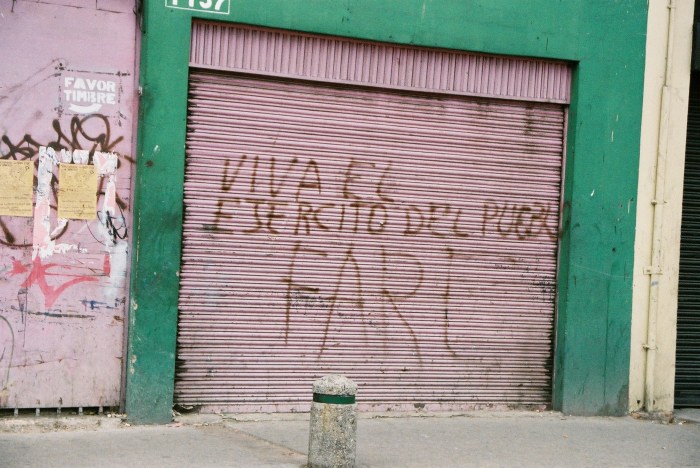
Graffiti in Colombia reads 'Viva el ejercito del pueblo FARC' i.e. 'Long live the army of the people, FARC'

Colombia must finally reckon with the religious element of its decades long internal conflict

Darkness falls quickly in Colombia due to its proximity to the equator, and it was no different on the night of Thursday 5 July 2007. As night closed in, Joel Cruz Garcia, a 27-year-old pastor, heard banging on the front door of the small home he shared with his wife Yuvy and their nine-month-old daughter in the village of El Dorado in the department of Huila. When the pastor opened the door, he was faced with a heavily armed group of individuals dressed in the uniform of the 17th Brigade of the Revolutionary Armed Forces of Colombia, better known as the FARC, who demanded that he come with them.  

The pastor was given no choice, and his wife later recounted how even as the guerrillas manhandled him and ridiculed his faith, Joel quoted a Bible verse to them, saying, ‘To live is Christ and to die is gain.’ 

‘Good,’ the guerrillas responded. ‘Then you will die.’ 

Continue reading “Colombia must finally reckon with the religious element of its decades long internal conflict”