In Depth: The Process of Church Confiscations in Cuba

Update: In May 2017 CSW received further information on the status of the AoG churches. Please read the latest information here.


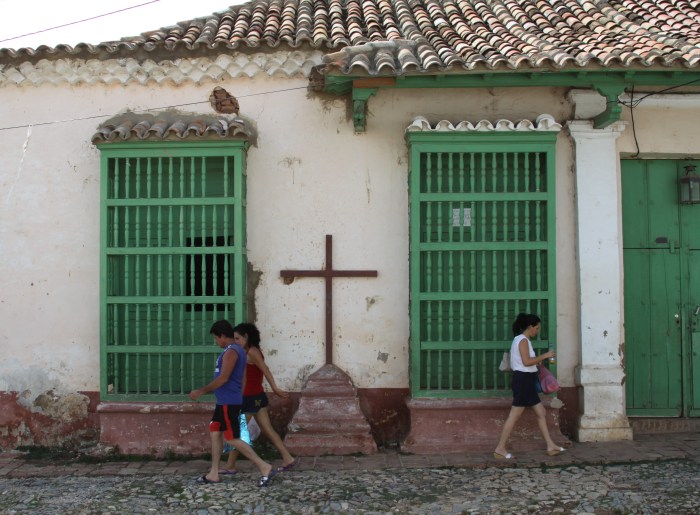
In August 2016, CSW’s latest report on Freedom of Religion or Belief (FoRB) in Cuba detailed FoRB violations including the destruction of church property, arbitrary detention and harassment of religious leaders, and the demolition and confiscation of church buildings.

There has been some misreporting in the media about the situation concerning churches belonging to the Assemblies of God (AoG) denomination, in particular the situation regarding 1,400 AoG churches that are in the process of being expropriated by the government; 100 of which are under threat of demolition.

As CSW’s report explains, between January and July 2016 there was a continuation of serious FoRB violations in Cuba: “In line with previous years, these religious freedom violations are predominantly carried out by Cuban government officials and the Office of Religious Affairs (the ORA), and take place in many regions throughout the island.”

Continue reading “In Depth: The Process of Church Confiscations in Cuba”

Enforced Disappearance: No Answers, No Accountability

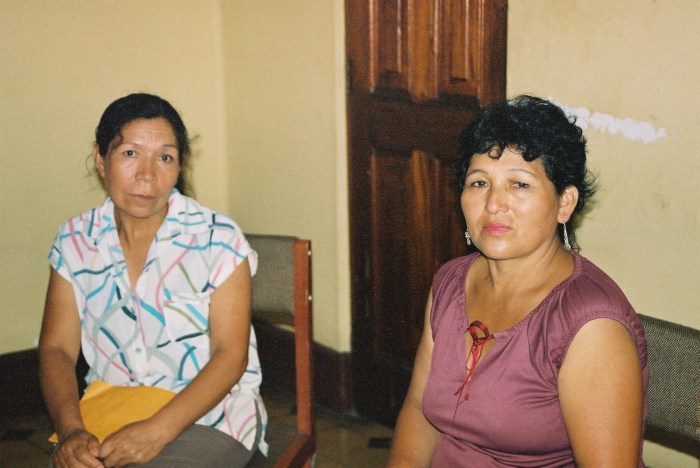
Pictured: Widows Donatilda and Adalgiza

Ten years ago I sat in a small, hot room in Trujillo, Peru with a colleague and three women each clutching a folder. They held the folders as if they contained a fortune, and we leaned forward as one by one they carefully opened their folder to show us the precious contents. There were a few old photographs and scores of documents peppered with government stamps. When they finished, each woman closed her folder, looked at us, and said “I still don’t know where he is.”

The three women were talking about their husbands, victims of enforced disappearance. Some twenty years earlier the police had taken their husbands somewhere, making assurances to their young wives that they just needed to ask them a few questions and they’d soon be home. Days, then weeks, then years went by and their husbands did not return. The women went from police station to police station, then to the prisons, the hospitals and morgues but no one could tell them where they went, or rather, where they had been taken.

As we listened to them, I watched the way they treated the folders, holding them close to their chests, caressing the documents and photos as they showed them to us. I realised why the folders were so precious t them. It was because this was all they had left of their husbands. Without them, it was as if they had never existed at all.

Torturous Hope

Enforced disappearance is one of the cruellest human rights crimes.

There is the crime against the primary victim – who has disappeared – and this is compounded by the crime committed against their families and loved ones who endure years and even decades of wondering what has happened to them.

In the vast majority of these cases, the victim has been killed but the lack of a body or even information about their fate opens the door to hope that maybe they are out there somewhere. Hope, which is something we usually view as a positive thing, is distorted into a kind of torture as their families exhaust all their resources, financial as well as physical and emotional, to try to establish what has happened.

Continue reading “Enforced Disappearance: No Answers, No Accountability”

The Power of Personal Testimony: A Mexican Delegation Visits Congress

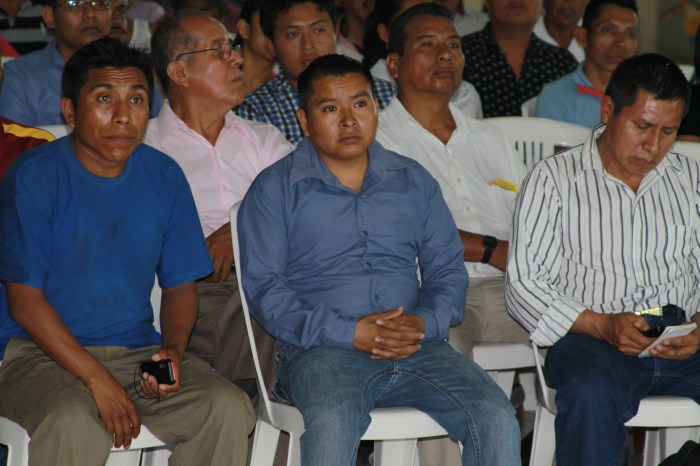
Casto Hernandez Hernandez and Fidel Lopez Hernandez are from indigenous ethnic groups in Mexico, speak Spanish as second language and live in remote, subsistence farming communities. Both were forcibly displaced because of their religious beliefs. This year, they made an unprecedented trip to Washington DC, facilitated by CSW, to give their testimony to Congress in person – the first time victims of similar offences from Mexico have done so.

Their stories are depressingly similar. Fidel Lopez Hernandez was one of a group of 47 protestant Christians violently expelled from their village by the Roman Catholic majority in July 2012. In March 2015 the group were able to return to their homes and only then under an agreement which included a fine of 10,000 pesos per family (equivalent to 530 US dollars). Additionally, in their absence, the villagers had used their homes as rubbish dumps and the government did not follow through with promised funds to restore their houses.*

Casto’s case will be familiar to regular readers of this blog; read more about him here and here. Casto and his cousin were illegally arrested in their town in Hidalgo State in March 2015 by the local authorities and held for 30 hours with no water, food or access to sanitary facilities in an effort to pressure them to renounce their faith. Although an agreement established by the Hidalgo State Public Ministry allowed the men to return home in February 2016, they, like Fidel, are still subject to illegal restrictions on their right to freedom of religion or belief (FoRB) in their hometown.

Continue reading “The Power of Personal Testimony: A Mexican Delegation Visits Congress”

The Path to Lasting Peace in Colombia Lies in Learning the Lessons of the Past

“Maybe you who came from the cities to see us can tell us, where did mass displacement come from? Where did this Clan Úsuga come from? Where did any of these things come from? Can you tell us? We do not know.”

The Protestant pastor held his Bible tightly to his chest as he stood and said these words. He and his wife had been forcibly displaced along with a large group from their church, forced to flee their rural village to the relative safety of an urban centre, after receiving threats from Clan Úsuga, a neo-paramilitary group also known as the Urabeños, one of the largest and most powerful violent criminal groups in Colombia.

We were at a meeting with about 15 church leaders who had travelled from across the region which was infested with left-wing guerrilla groups like the Revolutionary Armed Forces of Colombia – Army of the People (FARC-EP) and National Liberation Army (ELN), as well the Urabeños and other neo-paramilitary groups. They all had similar stories to share.  Most, like the pastor who asked these questions, were humble people from the countryside who had dedicated themselves to subsistence farming and their ministry. They are far, far away from the centres of power in Colombia both in terms of geographic distance and influence. Yet, as he expressed, they and the people in their communities are the ones who live and cope daily with the consequences of the decisions and agreements brokered in those centres.

Continue reading “The Path to Lasting Peace in Colombia Lies in Learning the Lessons of the Past”

The Courage of Cuba’s Ladies in White

Every Sunday Cuba’s Ladies in White (Damas de Blanco, in Spanish) have been forcibly and often violently prevented from attending Sunday morning services. Every Sunday since the group was formed in 2003, the women attend (or at least attempt to attend) Sunday Mass dressed in white to symbolise peace and walk through the streets in silent protest afterwards.

The Ladies in White movement was formed in response to the Black Spring in 2003 – a mass crackdown by the Cuban government on dissidents and journalists. Since 2010, all of the Black Spring prisoners have now been released. However, political prisoners remain in Cuba and the Ladies in White, a movement largely comprised of wives and other female relatives of former and current political prisoners remain active.

As the world marks International Women’s Day on 8 March, CSW commends their courage and peaceful protest, which saw them awarded the European Parliament’s Sakharov Prize for Freedom of Thought in 2005.

Continue reading “The Courage of Cuba’s Ladies in White”