Attacks on places of worship: Armed groups raise the stakes in the Central African Republic

Attacks on places of worship in the Central African Republic (CAR) are not a new phenomenon.

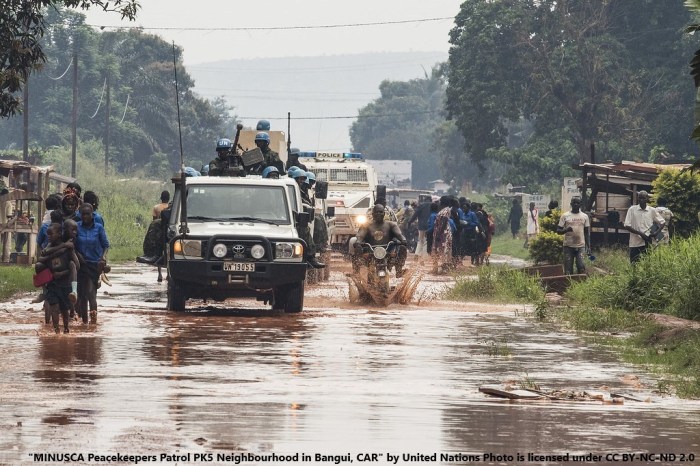
In March 2013, the predominantly Muslim rebel alliance, Seleka, seized power, and in the crisis that followed, there were reports of looting and attacks on worshipers in churches initially, spreading to mosques and other places of worship as the conflict assumed an increasingly religious dimension.

Even after the election of President Faustin-Archange Touadéra three years later, attacks on places of worship continue at a disturbing rate.

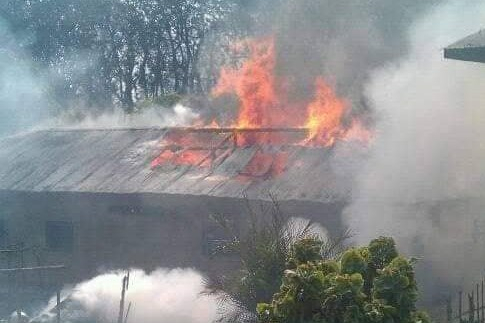
In the capital city Bangui, tensions flare periodically near the KM5 district. In May 2018, at least 15 people, including a clergyman, were killed and 100 injured in an attack on the Our Lady Fatima Catholic Church. On 7 February 2017, three churches were burned and a pastor killed in the same district.

Attacks such as these have taken a new and alarming turn since November 2018.

Continue reading “Attacks on places of worship: Armed groups raise the stakes in the Central African Republic”

Justice Delayed is Justice Denied

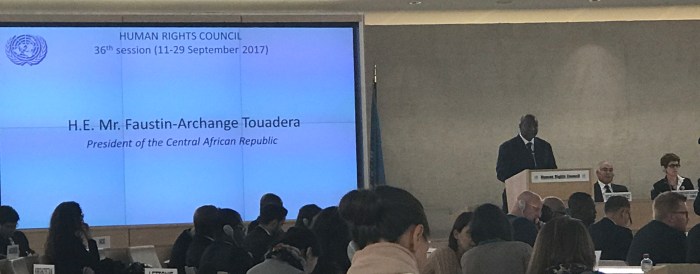
Next week the United Nations’ (UN) Human Rights Council (HRC) is holding a high level dialogue to assess the situation in the Central African Republic (CAR). The last time the HRC considered the situation of CAR was in September 2017, when President Faustin-Archange Touadéra made an unexpected appearance, and addressed member states, nongovernmental organisations (NGOs) and human rights mandate holders.

Christian Solidarity Worldwide (CSW) was present during this address and noted the positive engagement CAR maintains with the UN’s human rights mechanisms, including by granting access to the Independent Expert on CAR, Ms. Marie-Therese Keita Bocoum.

End of transition was not the end of the security crisis

During his speech, President Touadéra noted that the end of the transitional government and the return to democracy did not bring an end to the security crisis in CAR. Since November 2016, armed groups that were once part of the Seleka Alliance have clashed in the north and eastern regions. This violence has been characterised by the targeting of civilians and destruction of civilian infrastructure leading to mass displacement.

Continue reading “Justice Delayed is Justice Denied”

Shared experiences in the context of extreme violence: what is the Church’s role?

Over the past decades, both Peru and Colombia have experienced internal conflicts which involved extreme levels of violence in many regions and high loss of life. While the conflicts were political (pitting far left groups against the government and/or far right paramilitary groups) they directly impacted ordinary civilians and civil society, including churches.

In many cases, Christians, especially church leaders, were targeted for different reasons by the various armed actors. This directly affected freedom of religion or belief (FoRB) in those areas.

In both countries, the larger Church (composed of many different denominations) found itself looking for ways to respond to the conflict and especially how to support the churches, Christians and others living in conflict zones.

Continue reading “Shared experiences in the context of extreme violence: what is the Church’s role?”

Shifting Alliances in Northwest Syria Make a Political Solution More Remote

In northwest Syria, religious minorities have suffered multiple attacks on their properties, places of worship and unknown numbers have been killed. The rights of small Christian and Druze communities that remain are likely to be further restricted by the rapidly changing political and military landscape in the area.

Talks in Astana, Kazakhstan

The Kazakh capital, Astana, has been the site of several rounds of talks organised by Russia, Iran and Turkey aimed at finding a political solution to the Syrian crisis. However, shifting power play between the different armed groups that constitute the rebel movement continues to throw up hurdles in the path towards peace.

Continue reading “Shifting Alliances in Northwest Syria Make a Political Solution More Remote”

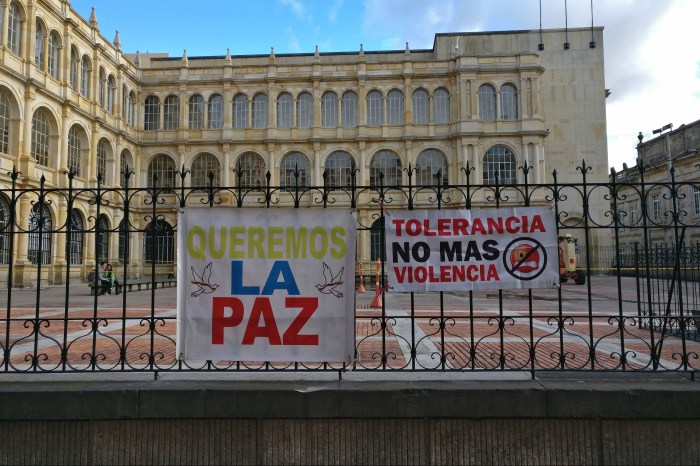
For Some, Yellow Butterflies Symbolise Hope in the Midst of Colombia’s Uncertainty

Yellow butterflies covered every wall in the office of one of our partner organisations in Colombia.

The first butterfly was cut out and hung on a wall immediately following the signing of the peace agreement between the government of Colombia and the Revolutionary Armed Forces of Colombia (FARC) on 26 September 2016 in Cartagena on the northern coast of the country.

In their speeches on this momentous occasion, both President Juan Manuel Santos and Timochenco, the commander and Chief of the FARC, referred to the yellow butterflies from celebrated Colombian author Gabriel Garcia Marquez’ famous novel ‘One Hundred Years of Solitude’: Gabriel Garcia Marquez is remembered for his love of yellow butterflies and flowers, which signify that nothing bad will happen.

“The war is over, we are starting to build peace” – Timochenko, Commander and Chief of the FARC

During his speech, Timochenko, stated, “war is over, we are starting to build peace’’ followed by a reference to a character in the novel, Mauricio Babilonia, who is constantly followed by yellow butterflies wherever he goes, as a symbol of infinite love and hope. Ivan Marquez, the FARC’s lead negotiator stated at a national FARC conference, “Tell Mauricio Babilonia he can release the yellow butterflies,” as a direct quote from the novel.

An Unexpected Outcome

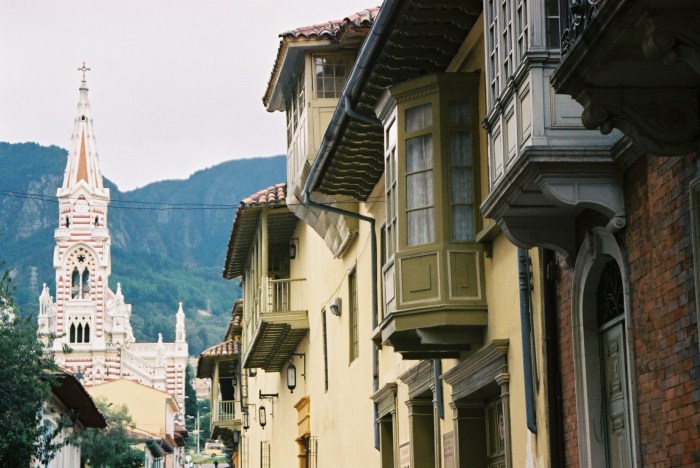
These butterflies were a clear example of the hopeful expectancy that surrounded me in Bogota. Everyone was discussing what the peace agreement would mean for the country, especially for the regions most affected by the 52 year long conflict, especially the more rural areas of Colombia.

During the 53 years of internal conflict, hundreds of thousands of lives have been lost. All actors during the conflict have been responsible for major human rights violations; armed actors have also been responsible for a wide range of violations of religious freedom as hundreds of religious leaders have been the victims of targeted assassinations since 2000 and many have received threats, including death threats, by neo-paramilitary groups and guerrillas. Many churches have faced extortion from armed groups or have been forcibly closed.

However, at this point in time, the national plebiscite which was due to be held on 2 October 2016 had not yet taken place and was the final step required to bring the peace agreement into force.

Continue reading “For Some, Yellow Butterflies Symbolise Hope in the Midst of Colombia’s Uncertainty”