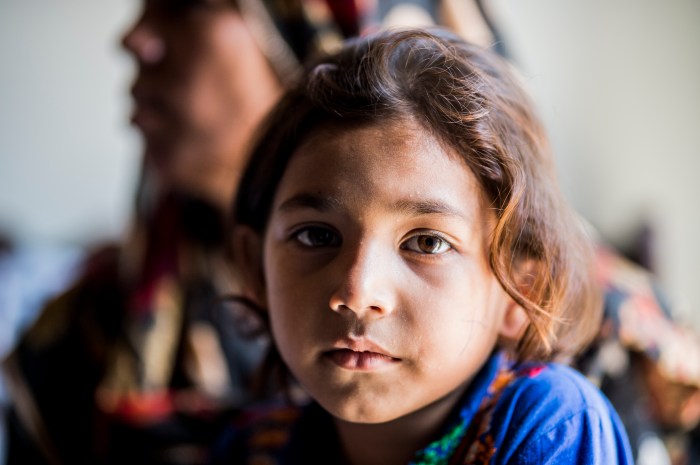
Youhanabad: This Is Our Land, This Is Our Spirit

For 65 years we have tolerated aggression against us so something must have drastically gone wrong that day for that to happen.’

Walking into Youhanabad on the outskirts of Lahore you notice the busyness of life; children playing, street vendors selling fruit and delicious fried snacks and motorbikes and scooters whizzing pass. Two years ago that the scene was transformed – chaos, carnage and confusion ensued on the morning of Sunday 15th March in 2015 when two suicide bombers approached Christ Church and St John’s Catholic Church and blew themselves up killing 15 and injuring around 70 people. After the bombing a mob was instigated, protest turned into violence and violence resulted in two people being lynched.

‘Within a few minutes victims became aggressors’

Continue reading “Youhanabad: This Is Our Land, This Is Our Spirit”

The Courage of Cuba’s Ladies in White

Every Sunday Cuba’s Ladies in White (Damas de Blanco, in Spanish) have been forcibly and often violently prevented from attending Sunday morning services. Every Sunday since the group was formed in 2003, the women attend (or at least attempt to attend) Sunday Mass dressed in white to symbolise peace and walk through the streets in silent protest afterwards.

The Ladies in White movement was formed in response to the Black Spring in 2003 – a mass crackdown by the Cuban government on dissidents and journalists. Since 2010, all of the Black Spring prisoners have now been released. However, political prisoners remain in Cuba and the Ladies in White, a movement largely comprised of wives and other female relatives of former and current political prisoners remain active.

As the world marks International Women’s Day on 8 March, CSW commends their courage and peaceful protest, which saw them awarded the European Parliament’s Sakharov Prize for Freedom of Thought in 2005.

Continue reading “The Courage of Cuba’s Ladies in White”

The Importance of China’s Rights Lawyers to the Chinese Church

In October 2014, the Chinese Communist Party announced that rule of law would be a top priority for the country. However, just one year later, over 150 lawyers and 150 more colleagues, family members and other activists had been questioned, detained, or disappeared in a crackdown which began on 9 July 2015.

Journalists and legal experts have speculated about what ‘strengthening rule of law’ might mean for China’s ruling Party: whatever it means, it doesn’t seem to include rights lawyers.

Continue reading “The Importance of China’s Rights Lawyers to the Chinese Church”

Crackdown on the Cuban Church

CSW’s 2015 report on violations of freedom of religion or belief (FoRB) in Cuba detailed an unprecedented crackdown on churches across the denominational spectrum.

Figures compiled by CSW, which are not exhaustive but which serve as an indicator of the level of FoRB violations, reveal a tenfold increase – with 2,300 separate violations recorded in 2015 compared to 220 in 2014.

Many incidents involved entire churches or, in the case of arrests, dozens of victims.

Continue reading “Crackdown on the Cuban Church”

Religious Leaders as Human Rights Defenders?

In the early hours of 1 July 2015, Pastor Hafiz Mengisto, senior minister of the Khartoum Bahri Evangelical Church in Sudan, was arrested after trying to prevent police officers from demolishing a building on church property, which they did not have authorisation to do. While in police custody, he sustained injuries to his head and ear that required medical attention upon his release. Pastor Mengisto was only acquitted of ‘obstructing a public servant from performing the duties of his office’ on 29 December 2015.

While his acquittal is welcome, his case is not an isolated incidence of harassment but is indicative of a continued and wide crackdown on human rights defenders (HRDs) – including religious leaders or members of faith communities making a stand for human rights within their community. HRDs face various challenges ranging from de jure discrimination and bureaucratic hassles to harassment, violence, torture and murder.

Is the international community waking up to reprisals against HRDs?

In his report to the UN General Assembly in 2015, the Special Rapporteur on the situation of human rights defenders, Michel Forst drew attention to the “disturbing increase in the number of reprisals and acts of intimidation reported by defenders.” Today, thousands of human rights activists across the world face severe intimidation and harassment. One of the most difficult countries for human rights defenders is China where at least half of the country’s most prominent human rights lawyers – many of them Christians – have been interrogated, detained and in some cases disappeared since 9 July 2015. At least 30 of the over 300 HRD’s interrogated during this period, as well as others connected to them, have vanished into China’s detention system.

Since the adoption of the UN Declaration on Human Rights Defenders (1998), the international community has increasingly recognised the role of HRDs in promoting human rights. The work of the UN Special Rapporteur on the situation of human rights defenders has been instrumental in this. Moreover, the adoption of UN resolutions on human rights defenders has ensured that their situation remains visible in international human rights platforms.

In November 2015, the UN General Assembly passed an important resolution calling for states to adopt strong and effective measures to protect human rights defenders. The resolution was passed with 117 countries voting for it and 14 countries – including several Human Rights Council members such as Pakistan, China, Russia, Saudi Arabia – voting against. A further 40 countries abstained from the vote. It’s clear that many countries, including several members of the Human Rights Council, still remain uncomfortable with the work of HRDs.

Continue reading “Religious Leaders as Human Rights Defenders?”