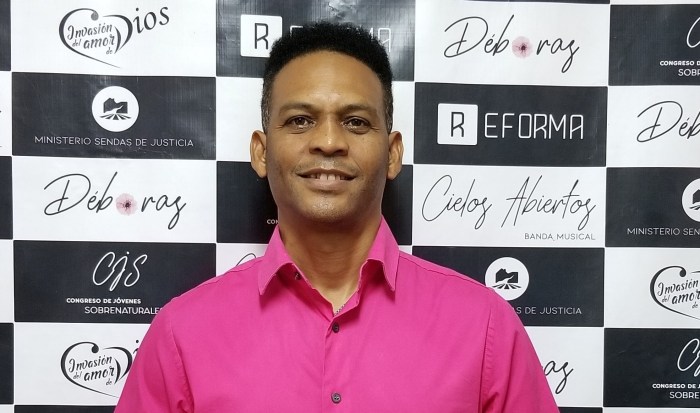
‘The Church was left without a place to worship’ – The story of Alain Toledano Valiente

‘We were evicted for the first time in 2007. The government came into our house [and] threw us out into the street – they took everything from us and threw it into the street. We were left homeless. At the same time, the government demolished our place of worship, Emanuel Church. They destroyed the floor and took it away. They left everything in ruins. They confiscated our land. This was the first violation of that scale. They demolished everything and took everything from us, our family possessions, music and audio equipment. Everything the church had was seized, all our technology was taken away. The church was left without land, its property and possessions, without a place to worship and we were left homeless in the street.’

Pastor Alain Toledano Valiente in an interview with CSW, September 2020

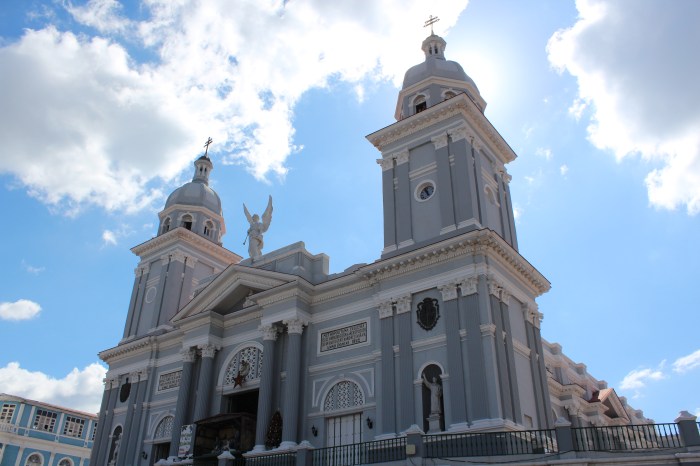
Less than ten years later, Emanuel Church in Santiago de Cuba was subjected to a second major attack. At 5am on Friday 5 February 2016, military, state security and police officers surrounded the property where the church was located and where the Toledano family was living. Pastor Toledano was abroad at the time, but his wife was taken into custody by government authorities and held incommunicado for the duration of the demolition from 5am to 7pm. Around 40 church members were also detained, and the church and home were demolished.

These incidents – the demolitions of November 2007 and February 2016 – are two dark threads in a disturbing tapestry of the Cuban authorities’ violations against Pastor Toledano, spanning over two decades. More than six years after that second major church demolition, attacks against Pastor Toledano, his church, and their right to a place of worship continue to escalate. 

Continue reading “‘The Church was left without a place to worship’ – The story of Alain Toledano Valiente”
Living in exile: “As long as the same government is in power I do not dare to return”

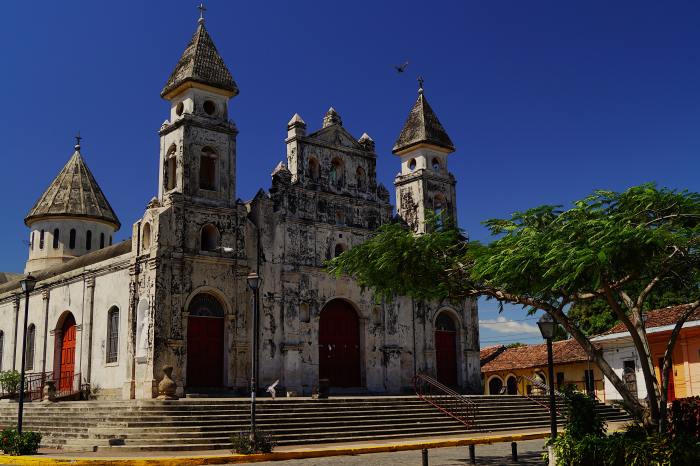
Samuel1 is a Nicaraguan teacher and lawyer who was forced to flee his country in April 2019 after being repeatedly arrested in retaliation for his reporting on human rights violations committed by government forces.

For the latest instalment in our Living in exile series, CSW spoke with Samuel to hear his story.

Could you tell us a bit about yourself?

“I am a Nicaraguan citizen from the Department of Chontales. I am a teacher and a lawyer. I am currently in exile in Panama as a “Refugee in Process”, and have been since 16 April 2019 through Executive Order No. 5 for the Protection of Refugee Applicants from the Government of Panama, through the National Office for the Attention of Refugees (ONPAR).

Continue reading “Living in exile: “As long as the same government is in power I do not dare to return””

许那:遭遇过两场镇压的人生

六月是个悲伤的季节,对无数的中国人来说,1989年春夏之交发生在北京天安门广场的一切,是一条从未愈合仍在流血的伤口。在中国,“六四”是禁忌的敏感词,任何回忆和纪念都被中共当局视为公然反抗。但每年此时在世界各地都会有很多追思纪念活动。在中国,无数人的生命轨迹因为八九六四发生了巨大的改变。他们至今仍以各自无声的方式坚守着对历史的记忆。 

当年天安门广场上的绝食学生中,有一位名叫许那(又名许娜),是北京广播学院(现中国传媒大学)的学生。32年前,她曾和同学高举“新闻自由,言论自由”的横幅,满怀希望地走在北京街头游行的人群中。32年后,许那仍在北京,却已在东城区看守所被刑事拘留近一年了。 

人生巨变,监狱历程 

Continue reading “许那:遭遇过两场镇压的人生”

Pastors or fraudsters? Neither registered nor unregistered religious leaders are safe from the Chinese Communist Party’s false allegations

Under China’s current religious regulations, only government-approved faith leaders can carry out government-approved religious activities in government-approved sites. As a result, there are many situations in which a religious leader can find themselves on the wrong side of the law in China, even facing charges that have no apparent connection to religion but can carry lengthy sentences.

The widely-reported cases of Pastor Wang Yi and Pastor Yang Hua highlight how the Chinese authorities prosecute leaders of unregistered Protestant churches with flagrantly baseless criminal charges: ‘inciting to subvert state power’ and ‘illegal business operations’ for Wang and ‘divulging state secrets’ for Yang. Alarmingly, fraud charges seem to have become one of the most damaging tools that the authorities use against pastors, for persecution as well as defamation.

Elder Zhang Chunlei

On 1 May 2021, the day the new administrative measures on religious clergy came into effect, Love Reformed Church received a notice saying their leader Zhang Chunlei had been officially arrested ‘on suspicion of fraud’. To this, the unregistered church in Guiyang in Guizhou province expressed incredulity in a prayer update issued on the same day.

Continue reading “Pastors or fraudsters? Neither registered nor unregistered religious leaders are safe from the Chinese Communist Party’s false allegations”

Tearing down Cuba’s ‘wall of fear’

No single fundamental human right exists in isolation. There is a significant overlap and interlinking of all rights, exemplified in the relationship between freedom of religion or belief (FoRB), freedom of expression and freedom of assembly. These three rights sit side by side in Articles 18, 19 and 20 of the United Nations Universal Declaration of Human Rights. 

Over the past year, and especially in recent months, these related rights have increasingly come under attack in Cuba, as members of independent civil society including artists and journalists, some of whom identify with a particular religion or belief, have maintained calls for legal and political reform, in particular coalescing around protests of Legal Decree 370 and Legal Decree 349.

Legal Decree 349 came into force in 2018 and gave the government extensive control over all artistic expression on the island, including mandating that any artistic activity had to be approved in advance by the Ministry of Culture. At the time, many Cubans expressed concern that the law would essentially stamp out freedom of expression in Cuba by only permitting the existence of government approved ‘art’. The same year a group of Cuban artists, journalists and academics came together and formed the San Isidro Movement to peacefully and creatively protest official censorship of artistic expression on the island.

Continue reading “Tearing down Cuba’s ‘wall of fear’”