A street with flags flying in Michoacán, Mexico.

México: Las minorías religiosas en Michoacán solo desean ser tratadas con igualdad y respeto

Michoacán es un estado ubicado en el centro de México. Esta región de montañas y bosques está habitada por las poblaciones indígenas P’urhépecha, cuya lengua P’urhe aún se habla hoy en día y que son reconocidos por su fino trabajo y artesanías con los diferentes tipos de madera que se encuentran en la zona. Los p’urhépecha se concentran en 22 municipios a lo largo del estado. 1

Michoacán también es conocido por su belleza natural y la riqueza de su tierra y clima, lo que lo convierte en un lugar propicio para el cultivo de diferentes frutas que se exportan a nivel internacional, entre ellas el aguacate. México es el mayor productor a nivel mundial de este preciado producto que tiene un impacto económico anual de miles de millones de dólares.

La meseta de P’urhépecha alberga alrededor del 70% de la producción nacional de aguacate de México. Esto ha dado lugar a enfrentamientos en Michoacán entre grupos del crimen organizado que se disputan el control del territorio y el mercado del aguacate. La situación ha provocado, a su vez, la formación de milicias comunitarias y grupos de autodefensa que, hartos de la extorsión y los abusos cometidos por los grupos del crimen organizado, han tomado las armas para proteger sus tierras. En algunos casos, sin embargo, estas milicias comunitarias y grupos de autodefensa también han estado involucrados en la violación de los derechos humanos.

Continue reading “México: Las minorías religiosas en Michoacán solo desean ser tratadas con igualdad y respeto”
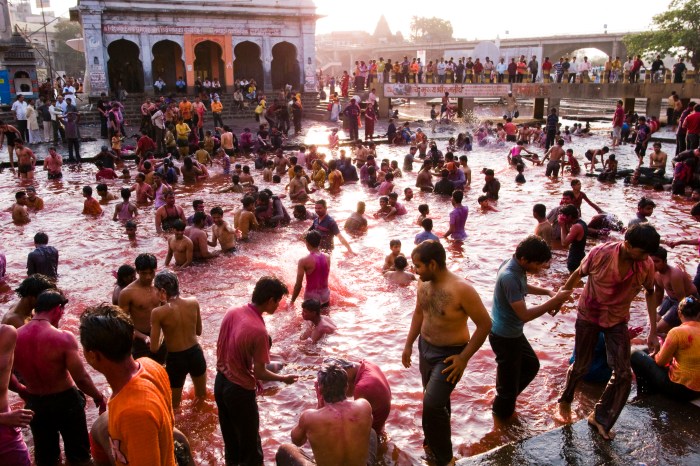
Members of the Dalit community celebrating of the festival of Holi in India.

A Uniform Civil Code: What is it and could it work in India today?

A Uniform Civil Code (UCC) means that all citizens shall be governed by a common law, irrespective of their religious background. This includes personal laws that apply to marriage, divorce, inheritance, succession of property, maintenance and adoption. In India, the debate over a UCC for all citizens of India has been a contentious issue since the colonial era, and has remained so despite independence and the creation of the modern Indian state.

Every few years, the subject is brought to the fore and debated hotly by proponents and opponents before retreating to simmer in the background of public discourse.      

In June 2023, public debate was reignited when the 22nd Law Commission of India solicited public opinion and comments from selected religious organisations on the subject of the UCC. Then, on 27 June Prime Minister Narendra Modi made a strong public pitch for the UCC for all citizens, garnering strong reactions from several opposition parties and religious groups.

Continue reading “A Uniform Civil Code: What is it and could it work in India today?”
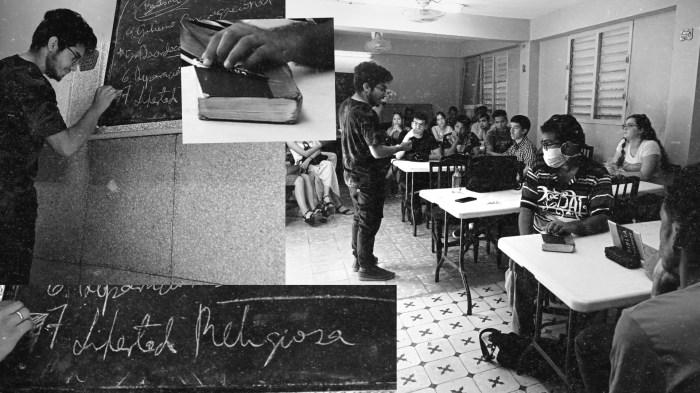
Iván Daniel Calás Navarro teaching a class on freedom of religion or belief in Cuba.

Cuba’s political police threaten young evangelical Christian because of his leadership

By Yoe Suárez

7 September, the day on which 19-year-old YouTuber Iván Daniel Calás Navarro was to celebrate his 20th birthday was going to be an unforgettable day, and it was, but in a very different way. That day, he received a summons, delivered to his house in Havana, for 8 September 2023, to present himself at a police station known for imprisoning and punishing political dissidents.

Although this was the first time he had received an official summons, Calás Navarro is certain that he became a target of the political police beginning in 2017, when, at the age of 14, he decided to share his faith and created the ‘Voz De Verdad’ [Voice Of Truth]’ YouTube channel – which now has 7000 followers – and when a few years later he began to work as a youth leader in his congregation, the Nazareth Baptist Church, which is part of the Baptist Convention of Western Cuba, a registered denomination with a historic presence on the island.

Surveillance of Calás Navarro became even more intense after the peaceful protests of 11 July 2021 when, in less than a month, the Cuban regime announced Legal Decree 35, which regulates social media. According to FRANCE 24, the law prompted concern in Cuba because of its implication for freedom of expression. The law punishes any content that is critical of the government, or which the authorities deem to be ‘fake news’, or which incites protests. The government maintains that the law is meant to fight cyber-terrorism, however members of Cuban independent civil society believe that the law is nothing more than the formalisation of the censorship that has spread across the island since internet use has grown more widespread.

Continue reading “Cuba’s political police threaten young evangelical Christian because of his leadership”
Iván Daniel Calás Navarro teaching a class on freedom of religion or belief in Cuba.

Policía política de Cuba amenaza a joven cristiano evangélico por su liderazgo

Escrito por Yoe Suárez

El 7 de septiembre, día en el que el YouTuber Iván Daniel Calás Navarro, de 19 años, celebraría su cumpleaños número 20 iba a ser un día inolvidable; y lo fue, pero de una forma muy diferente. Ese día recibió una citación, entregada en su casa de La Habana, para presentarse el 8 de septiembre de 2023, en una estación de policía conocida por encarcelar y castigar a los disidentes políticos.

Aunque era la primera vez que recibía una citación oficial, Calás Navarro tiene la certeza de que se convirtió en blanco de la policía política a partir de 2017, cuando, a los 14 años, decidió compartir su fe y creó su Canal en YouTube llamado  ´Voz De Verdad´ -que hoy cuenta con 7000 seguidores- y cuando, años después, comenzó a trabajar como líder juvenil en su congregación, la Iglesia Bautista Nazaret, que forma parte de la Convención Bautista del Occidente de Cuba, denominación registrada y con una presencia histórica en la isla.

La vigilancia sobre Calás Navarro se volvió aún más intensa después de las protestas pacíficas del 11 de julio de 2021 cuando, en menos de un mes, el régimen cubano anunció el Decreto Ley 35, que regula las redes sociales. Según FRANCE 24, esta iniciativa generó preocupación en Cuba por sus implicaciones para la libertad de expresión, pues la ley castiga cualquier contenido que sea crítico con el gobierno, y que las autoridades consideren “noticias falsas” o que incite a protestas. El gobierno sostiene que la ley está destinada a combatir el ciberterrorismo, sin embargo miembros de la sociedad civil independiente cubana creen que el Decreto Ley 35 no es más que la formalización de la censura que se ha extendido por la isla desde que se generalizó el uso de Internet.

Continue reading “Policía política de Cuba amenaza a joven cristiano evangélico por su liderazgo”
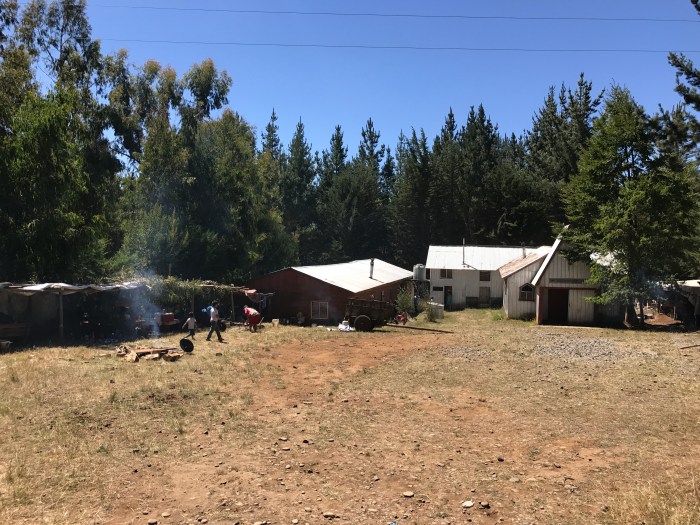
A church in Araucania, Chile.

‘The only church that enlightens is the one that burns’: The glowing embers of Chile’s Latin American success story

Today marks 50 years since Augusto Pinochet’s coup d’état forever changed the course of Chilean history. His rule brought about years of egregious human rights violations, during which many Chileans were tortured, murdered or forcibly disappeared, and their bodies never found. The trauma still scars the population today.

Pinochet was removed from power in 1990 after 17 years of brutal military dictatorship, and as President Patricio Aylwin took office on 11 March 1990, he declared, ‘Chile doesn’t want violence or war; it wants peace’. Whilst Chile has enjoyed relative peace and human rights have generally been respected since 1990 compared with the 17 years preceding it, Aylwin’s words still ring true more than 30 years later.

Success wearing thin

Chile has largely been heralded for its stability for the last decade or so; prosperous and peaceful, largely untouched by the levels of violence experienced by other countries in the region. The Latin American success story is largely backed up by statistics, such as those of the Global Peace Index, which ranked Chile at 58 out of 163 countries for its levels of peace in 2023.

Continue reading “‘The only church that enlightens is the one that burns’: The glowing embers of Chile’s Latin American success story”