Citizenship and conflict: How the militaries of Israel and Myanmar are taking advantage of displaced persons

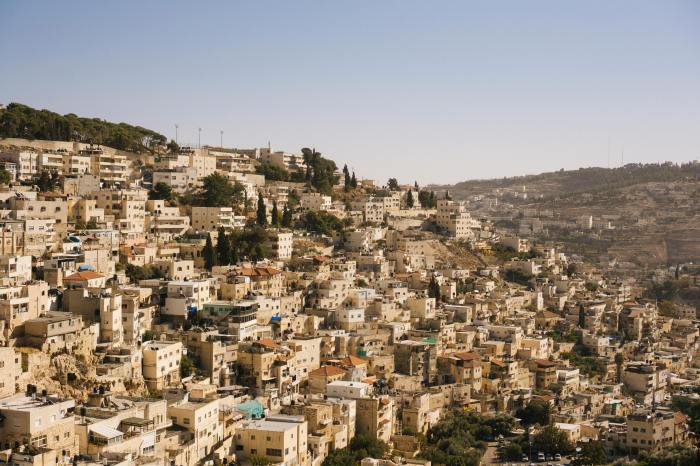
There are currently around 30,000 asylum seekers in Israel. Most have fled severe repression, including religious persecution, under a government responsible for decades of widespread crimes against humanity in Eritrea, or come from Sudan, where a gruelling 18-month conflict between the Rapid Support Forces and Sudan Armed Forces is the latest in a series of calamities to cause a severe humanitarian crisis.

Most will have travelled through Egypt before arriving there, typically with the help of people smugglers, and at great risk of assault, extortion, gender-based violence, or arrest and possible refoulement. The majority of those who complete this journey are young men, together with some young women who have likely endured unimaginable atrocities en route.

Upon their arrival, these asylum seekers find themselves in legal limbo; according to the Hotline for Refugees and Migrants, Israel’s leading refugee advocacy organisation, Israel approves less than 1% of the asylum claims it receives, with many cases pending for over five or even ten years.

Continue reading “Citizenship and conflict: How the militaries of Israel and Myanmar are taking advantage of displaced persons”

Women from Africa and the diaspora call for action to protect women and girls in Sudan from conflict-related sexual violence

As women from Africa and the diaspora, we have signed this open letter to express our solidarity with women and girls in Sudan who are being targeted in a relentless campaign of conflict-related sexual violence (CRSV) and to appeal for the urgent initiation of international protection measures and accountability mechanisms.

The war in Sudan began in April 2023 and has been described as a conflict fought on the bodies of women and girls. A total absence of protection for women and girls heightens the risk of sexual and gender-based violence.

Distressing reports have emerged of rape, gang rape, and forced ‘marriages’, with many of these violations occurring in people’s homes.1

Continue reading “Women from Africa and the diaspora call for action to protect women and girls in Sudan from conflict-related sexual violence”

Syria: Ten years on, why does it matter?

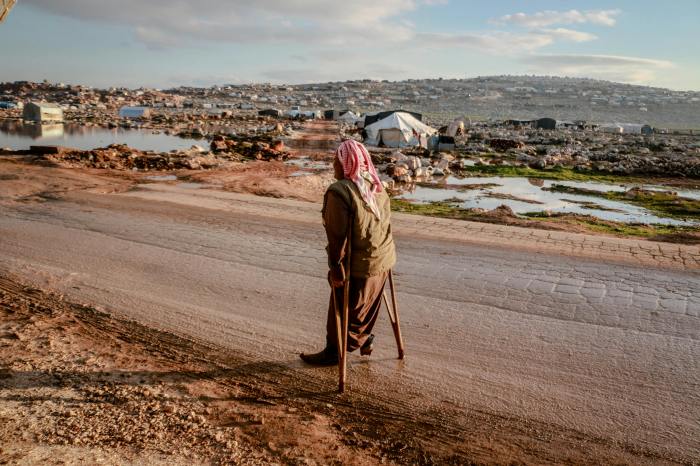
June 2024 marked ten years since the Islamic State (IS) declared a caliphate in Syria. Years of brutal conflict including flagrant and well-documented human rights violations, including atrocity crimes, by a complex web of aggravators resulted in one of the highest death counts of any recent war and the highest number of displaced persons in modern history.

Yet in May of last year, Syria was welcomed back into the Arab League, the same government invited to participate in talks to further international cooperation that, just a decade earlier, had deployed chemical weapons against its own civilians. Furthermore, in summer 2023, Russia vetoed the renewal of a mechanism that had enabled the UN to deliver aid without the Syrian government’s consent to parts of north-west Syria not under its control – a resolution that had been in place for nine years. The year rounded out four months later with Syria present at the COP28 climate conference even as France issued an arrest warrant for President Bashar al-Assad over alleged  complicity in the chemical gas attacks.

Additionally, the Turkish president currently appears to be working towards normalising relations with Syria, despite opposing the Assad regime for over a decade and the ongoing occupation of parts of northern Syria by Turkish forces and allied Islamist militia.

It is clear that the world is beginning to forget the atrocities of the Syrian Civil War as well as the chaotic campaign of IS that saw whole cities reduced to rubble, wreaking havoc on the nation. But beyond the short clips of media coverage that defined our news cycles for years, what exactly happened between 2012 and 2014, and why does it matter today?

Continue reading “Syria: Ten years on, why does it matter?”

Un año mas de conflicto en Sudán: la comunidad internacional debe actuar ahora

Esta semana se cumple un año desde que estalló la guerra entre las Fuerzas Armadas Sudanesas (SAF) y las Fuerzas de Apoyo Rápido (RSF), en la culminación de las tensiones y reclamos que han existido entre los dos grupos desde que despojaron del poder al gobierno de transición en octubre de 2021.

Lo inusual de esta guerra es que comenzó en la capital, Jartum, y se extendió por todo el país. Desde que Sudán obtuvo su independencia en 1956, los conflictos e incluso las revoluciones se han originado fuera de la capital, lo que a menudo ha llevado al aislamiento de las comunidades del centro, y posiblemente del norte de Sudán, de las peores ramificaciones de la inestabilidad. Hoy, sin embargo, son pocos los lugares del país que se han librado de las hostilidades a gran escala entre ambos grupos, y su impacto sobre la población civil ha sido catastrófico.

Cuando el conflicto entró en su segundo año, ya había cobrado la vida de al menos 13,000 personas y más de 33,000 habían resultado heridas. Con la intensificación de la guerra en las ciudades pobladas, el número de desplazados internos ha aumentado a más de nueve millones, y se calcula que el número de quienes padecen hambre asciende ahora a 20 millones. Además, hay más de dos millones de refugiados, la mitad de ellos darfuríes, que también padecen hambre. Trágicamente, por segunda vez en 20 años también hay informes de crímenes atroces, y el Fiscal de la Corte Penal Internacional (CPI) señaló que la situación ahora en Darfur era peor que cuando el Consejo de Seguridad remitió a Sudán a la corte.

Continue reading “Un año mas de conflicto en Sudán: la comunidad internacional debe actuar ahora”

A year of conflict in Sudan – the international community must act now

This week marks one year since war broke out between the Sudanese Armed Forces (SAF) and the Rapid Support Forces (RSF), in the culmination of tensions and contradictions that have existed between the two groups since they seized power from the transitional government in October 2021.

What has been unusual about this war is that it started in the capital, Khartoum, and spread throughout the country. Since Sudan gained independence in 1956, conflicts and even revolutions have originated outside of the capital, which has often led to the insulation of communities in the centre, and arguably the north, of Sudan from the worst ramifications of the instability. Today however, few places in the country have been spared the large-scale hostilities between the two groups, and its impact on civilians has been catastrophic.

As the conflict enters its second year, it has claimed the lives of at least 13,000 people, and more than 33,000 have been injured. With the war intensifying in populated cities, the number of internally displaced persons (IDPs) has risen to more than nine million, and the number of those facing hunger is now estimated to be as high as 20 million. In addition, there are over two million refugees, half of them Darfuri, also facing hunger. Tragically, for the second time in 20 years, there are also credible reports of atrocity crimes, with the Prosecutor of the International Criminal Court (ICC) noting that the situation now in Darfur is worse than when the Security Council referred Sudan to the court.

Continue reading “A year of conflict in Sudan – the international community must act now”