“We are not safe anymore”: Burma’s coup shatters hopes for democracy, religious tolerance and human rights

By Benedict Rogers

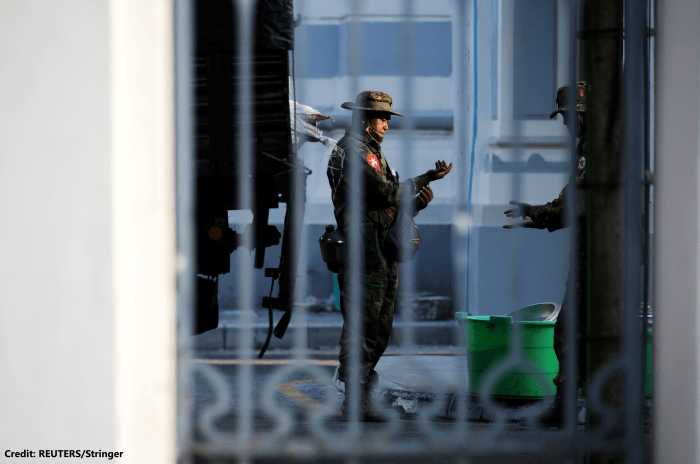
Images of tanks and soldiers on the streets of Burma’s cities, and the sound of gunfire against peaceful protesters take us back in time almost 14 years, and reverse a decade of fragile reform and democratization in the country. From the scenes of her release from house arrest in November 2010 via her talks with Burma’s then-President Thein Sein in August 2011, and through to her subsequent election to Parliament, victory in a nationwide election and the past five years as de facto head of government, Aung San Suu Kyi is now back where she started: in detention.

The generals have remained in power throughout, but now they have abandoned any pretense and seized direct control once more.

The coup on 1 February stunned the world. Although it had been rumoured, few expected the military to really do it. It is true that the army in Burma has a history of staging coups – in 1958, 1962 and 1988 – and it isn’t keen on losing elections, as it showed in 1990 when it refused to accept Suu Kyi’s first victory, consigning her to 15 years under house arrest, and her colleagues to prison or exile. In 2008 it drafted a new constitution designed to keep Suu Kyi out of power, rammed it through in a sham referendum and two years later heavily rigged the country’s first elections in two decades. Nevertheless, since then it had appeared that the military had come to some kind of accommodation with Suu Kyi and her National League for Democracy (NLD).

Continue reading ““We are not safe anymore”: Burma’s coup shatters hopes for democracy, religious tolerance and human rights”
Towards an inclusive Sudan

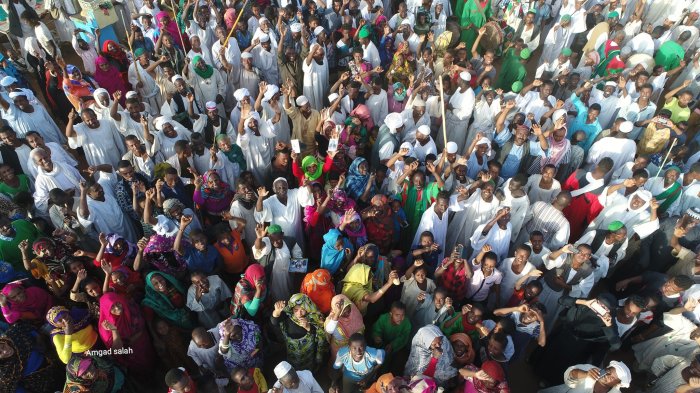
The people of Sudan have endured a long and winding road towards realising their dream of a free, just and peaceful country.

Since the arrest of former President al Bashir in April, protesters organised under the Forces for Freedom and Change (FFC), have been engaged in negotiations with the Transitional Military Council (TMC) over the creation of a civilian led transitional administration.

What is clear is that human rights like freedom of religion or belief (FoRB) must be upheld in order for such a transition to be successful. FoRB is a vital right in the context of a democratic society. Being able to live in a diverse society, where a plurality of opinions, beliefs, cultures and expressions are accommodated is key to promoting tolerance, peace, and development.

Continue reading “Towards an inclusive Sudan”

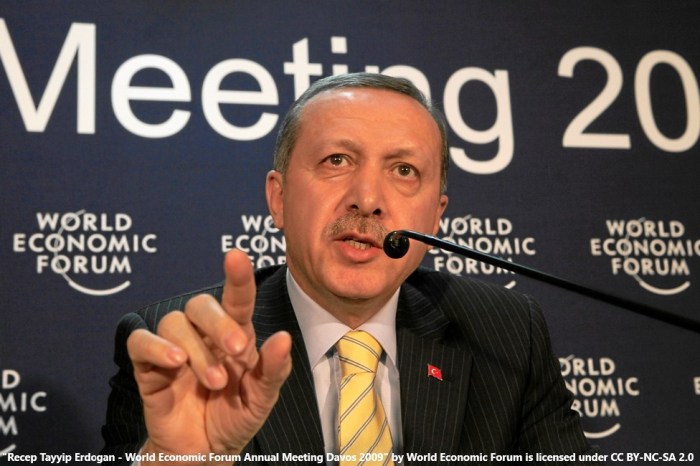
Turkey under Erdogan: Caught between secular and Islamic identities

Although Turkey’s constitution defines the country as a secular state, it is caught between its secular and Islamic identities. The current government has publicly endorsed a move towards a Sunni Muslim identity for the country, conflating religious and national identities, by combining the religious nationalism propagated by the ruling Justice and Development Party (Adalet ve Kalkinma Partisi, or AKP) with the secular Nationalist Movement Party (Milliyetçi Hareket Partisi, or MHP)’s ideology of ‘ultra-nationalism,’ which is defined as “extreme nationalism that promotes the interests of one state or people above all others.”  

The promotion of religious ultra-nationalism in Turkey has contributed to a rise in discrimination, and in hate speech that incites violence against those who do not adhere to Sunni Islam.

Such incitement is visible in a variety of areas ranging from education and employment, to religious practices and day-to-day administrative procedures. There has also been a surge in the expression of anti-Semitism and anti-Christian sentiments in pro-government media.

Continue reading “Turkey under Erdogan: Caught between secular and Islamic identities”

Indonesia’s elections reveal a nation at the crossroads between pluralism and intolerance

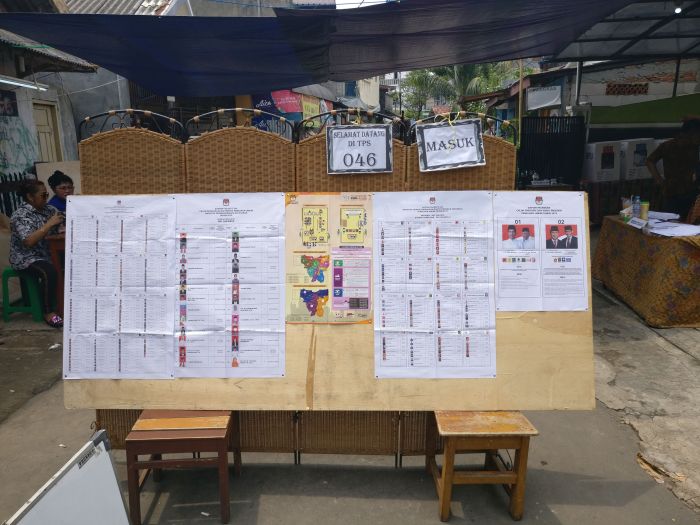
When the official results confirming the re-election of Joko Widodo as President of Indonesia were announced on 21 May, supporters of his rival, former General Prabowo Subianto, took to the streets. Riots led to carnage in the capital, Jakarta, with at least six people dead. The divisions unleashed by the election campaign were exposed in their ugliest form.

Until that point, Indonesia’s elections had been peaceful and orderly, despite what almost all observers describe as the most divisive campaign in the country’s recent history. On 17 April, over 190 million people cast their votes for the presidency and the national, regional and local legislatures, in one of the world’s biggest and most complex democratic exercises in recent times. To conduct such a poll, in the world’s third largest democracy and fourth most populous nation, across the world’s largest archipelago of 17,508 islands stretching from the Indian to the Pacific Oceans, is a significant feat.

I spent three weeks in Indonesia during the election period. I witnessed the final week of the campaign, election day itself, and the first twelve days after the elections. I travelled to four cities – Jakarta, Medan in North Sumatra, Surabaya in East Java, and Pontianak in West Kalimantan – where I met civil society activists, religious communities and government advisers. I left Indonesia with profoundly mixed feelings.

Continue reading “Indonesia’s elections reveal a nation at the crossroads between pluralism and intolerance”

Venezuela: “If we, as Christians who yearn to live in justice, look at the reality of our nation, we cannot remain silent.”

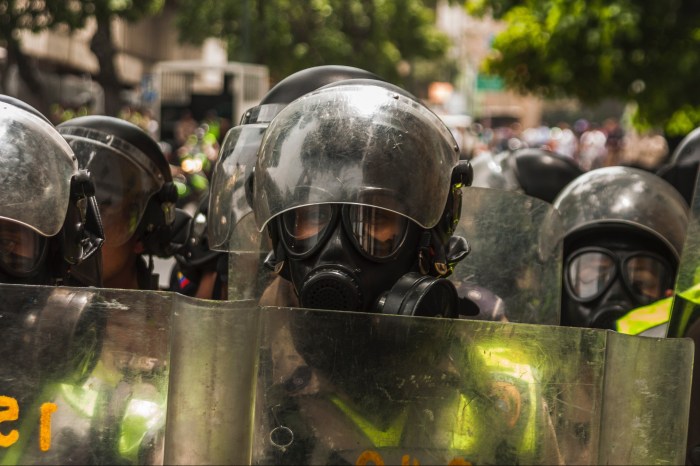
A young church leader is unwittingly caught up in a security dragnet, arrested, falsely accused and imprisoned. Another church youth leader is shot and killed when security forces open fire on peaceful protestors. In the same country, the military surrounds a cathedral where over a thousand peaceful protestors have sought refuge after fleeing tear gas and violence at the hands of security forces.

What is happening in Venezuela today shows how religious groups can become caught up in larger political movements, sometimes despite their best efforts to remain neutral and disengaged from politics.

Once religious groups find themselves in situations like these they can be forced out of their neutrality, putting them in opposition to powerful forces; this in turn can lead to violations of freedom of religion or belief (FoRB) as the authorities crack down on what they perceive to be rebellious religious groups.

Continue reading “Venezuela: “If we, as Christians who yearn to live in justice, look at the reality of our nation, we cannot remain silent.””