The Freedom of Religion Law in Jharkhand, India: A recycled law that’s repressive on all counts

Religious conversion was criminalised in India’s Jharkhand State on 11 September with the introduction of the so-called ‘Freedom of Religion’ law, making Jharkhand the seventh State to introduce such legislations after Odhisa (1967), Madhya Pradesh (1968), Chhattisgarh (1968), Arunachal Pradesh (1978), Gujarat (2003) and Himachal Pradesh (2006).

Section 3 of the Jharkhand Freedom of Religion Act 2017 declares “no person shall convert or attempt to convert, either directly or otherwise, any person from one religion/ religious faith to another by the use of force or by allurement or by any fraudulent means, nor shall any person abet any such conversion.” The punishment includes a prison term of up to three years and/or a fine up to fifty thousand rupees (equivalent to about £580).

Continue reading “The Freedom of Religion Law in Jharkhand, India: A recycled law that’s repressive on all counts”

Rosie Costa

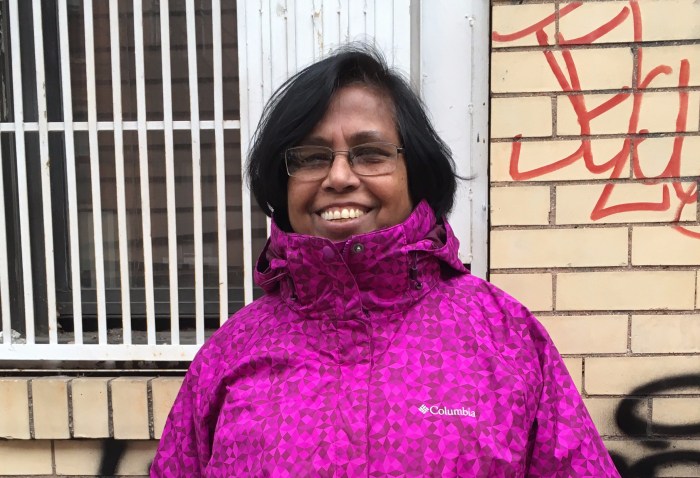
Rosaline (Rosie) Costa, a Bangladeshi human rights activist, was forced to leave the country in July 2016. In 2017, CSW interviewed her in New York. During the interview, Rosie discussed the reasons she had to leave Bangladesh, and shed light on issues of religious freedom in the country.

Rosie’s involvement in human rights work began in 1986, after she left the community of nuns to which she belonged for 17 years to pursue human rights work. She spent time working with women and children in the garment industry, establishing a hostel for rescued children who had been forced into madrasas (colleges for Islamic instruction), and speaking around the world about issues faced by minorities and particularly Hindus.

Forced To Flee

While Rosie had been no stranger to risk in her work, her fears for her safety grew following a number of killings of Christians in Bangladesh, perpetrated by people claiming to belong to Daesh. “I realised that I was being followed by some people, that’s when I left the country … I saw how the people were killed, so if something was to happen to me nobody would be able to rescue me from these people.”

Continue reading “Rosie Costa”

Bangladesh: How long will impunity rule?

“The culture of impunity can’t go on or violence will increase.” – Ajoy Roy

The words of Ajoy Roy, the frail father of the late Avijit Roy hit us hard. We listened in silence as he shared his despair and disappointment at the lack of judicial process following the murder of his son in 2015. The murder of Avijit Roy, a blogger, made international news and became a case representative of the situation facing not just bloggers but journalists, lawyers, religious leaders and religious minorities in Bangladesh; these members of Bangladesh’s civil society are vulnerable to threats, harassment and attacks.

Continue reading “Bangladesh: How long will impunity rule?”

NGOs in Partnership with International Parliamentarians

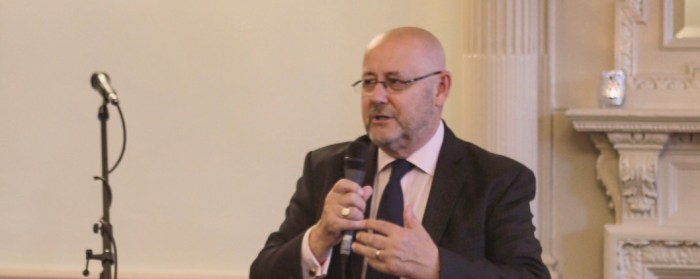
LONG READ: “NGOs in Partnership with International Parliamentarians” is the speech delivered by CSW’s Chief Executive Mervyn Thomas at the UK’s Foreign and Commonwealth’s (FCO) Conference,  ‘Preventing violent extremism by building inclusive and plural societies: How freedom of religion or belief can help’, 19 -20 October 2016. 


As we’ve already heard today, the fundamental human right to Freedom of Religion or Belief (FoRB), embedded in Article 18 of the International Covenant on Civil and Political Rights is one that at first can appear daunting and difficult to raise. Professor Heiner Bielefeldt, UN Special Rapporteur on FoRB has said that “it is the most challenging of all human rights, it is the spice in the soup of human rights.” However, although daunting it is extremely important to intensify our joint efforts to promote it.

The latest information from the Pew Research Center stated that in 2014, 74% or roughly ¾ of the world’s population, live in countries with either high or very high restrictions on religious freedom. That means that over 5.1 billion people in this world are not able to fully recognise their inalienable human right to practice or change the religion or belief system of their choice.

Furthermore, FoRB is part and parcel of peace and stability; a cornerstone of democratic societies, and it can provide an important antidote to rising violent extremism. High-levels of discrimination based on religion or belief and FoRB restrictions can undermine peaceful development and in fact increase the grounds for the rise of extremism.

It is clear that some of the most significant foreign affairs challenges the international community are currently grappling with, involve violent extremism, and many of the challenges are deeply rooted in violations of the right to freedom of religion or belief.

Continue reading “NGOs in Partnership with International Parliamentarians”

Interview with a Sri Lankan Human Rights Advocate – Part 1

Patterns of discrimination against religious minorities

CSW spoke to a human rights advocate in Sri Lanka whose identity for security reasons has been withheld. This post has been edited for clarity.

Q: Could you comment on religious extremism in Sri Lanka?

A: A recent surge of religious extremism in Sri Lanka began sometime in 2012 during the tenure of the previous government, with the emergence of extremist groups such as Bodu Bala Sena (Buddhist Force Army), or the Sinhala Ravaya, or Hela Bodu Pawura. These groups emerged after the ethnic war, which ended in May 2009. These extremist groups led violent attacks against religious minorities. Most violent attacks were led with impunity and tacit approval. The judiciary was also very much biased.

For example, there was one particular case that was filed against the General Secretary of the Bodu Bala Sena. There was video-document evidence submitted in the High Court of Colombo in that particular case. Even after video evidence was submitted, the General Secretary was released, and the case came to a settlement. The video evidence was not taken into consideration by the court – and this is the High Court of Colombo. That was [how] the situation used to be in Sri Lanka. These Buddhist extremist groups also led a lot of hate campaigns, against Muslim minorities as well. They also used the media as a tool to lead these hate campaigns. And even when they led violent attacks, they also used media to portrayed a biased attitude of the minority victim who actually got attacked rather than the perpetrators themselves.

Continue reading “Interview with a Sri Lankan Human Rights Advocate – Part 1”