‘The Church was left without a place to worship’ – The story of Alain Toledano Valiente

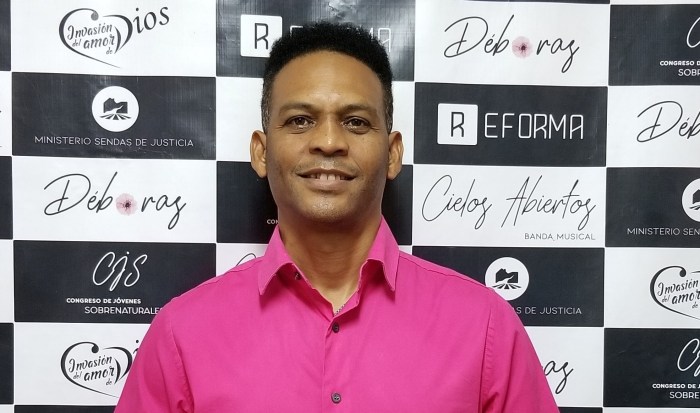
‘We were evicted for the first time in 2007. The government came into our house [and] threw us out into the street – they took everything from us and threw it into the street. We were left homeless. At the same time, the government demolished our place of worship, Emanuel Church. They destroyed the floor and took it away. They left everything in ruins. They confiscated our land. This was the first violation of that scale. They demolished everything and took everything from us, our family possessions, music and audio equipment. Everything the church had was seized, all our technology was taken away. The church was left without land, its property and possessions, without a place to worship and we were left homeless in the street.’

Pastor Alain Toledano Valiente in an interview with CSW, September 2020

Less than ten years later, Emanuel Church in Santiago de Cuba was subjected to a second major attack. At 5am on Friday 5 February 2016, military, state security and police officers surrounded the property where the church was located and where the Toledano family was living. Pastor Toledano was abroad at the time, but his wife was taken into custody by government authorities and held incommunicado for the duration of the demolition from 5am to 7pm. Around 40 church members were also detained, and the church and home were demolished.

These incidents – the demolitions of November 2007 and February 2016 – are two dark threads in a disturbing tapestry of the Cuban authorities’ violations against Pastor Toledano, spanning over two decades. More than six years after that second major church demolition, attacks against Pastor Toledano, his church, and their right to a place of worship continue to escalate. 

Continue reading “‘The Church was left without a place to worship’ – The story of Alain Toledano Valiente”

A mockery of democracy: The international community must maintain firm pressure on Nicaragua

On 7 November 2021, Daniel Ortega was re-elected President of Nicaragua after months of government repression and violence against protesters. On 10 January 2022 he was inaugurated. This long read on the government’s history of repression against the citizens of Nicaragua was informed by testimonies from several individuals whose names have been withheld for security reasons.

In the first week of June 2021, the political landscape of Nicaragua transformed overnight when police arrested five opposition candidates who were on the ballot for the country’s November 2021 elections. What began as covert government repression of opposition candidates in the election burst into the open as many of them were suddenly detained.

In Nicaragua, the will of a repressive leader is above the law.

The most flawed election in Nicaragua’s history

Since the re-election of Daniel Ortega on 7 November 2021, analysts have contended that the electoral process was one of the most flawed in the country’s history as a democracy, as it was characterised by the arrests of numerous opposition candidates. To many, the scenario for Nicaragua seems hopeless.

Continue reading “A mockery of democracy: The international community must maintain firm pressure on Nicaragua”

Christmas Eve in the Dark

Christmas Eve night. Millions of people around the world prepare to celebrate the birth of a baby, a king and saviour, 2000 years ago in Bethlehem. Jesus Christ was born to be a light to the world.

Over 1,000 miles away from Jerusalem, a mother tends to her new-born baby in total darkness. She lives in the community of El Encanto, Las Margaritas Municipality in the state of Chiapas, in southern Mexico. Her name is Rebeca Vasquez Cruz. Like many others in the community, her electricity supply has been cut off because of her faith. She will celebrate Christmas Eve in the dark.

A culture of abuse and impunity

The Roman Catholic Church has historically dominated the religious landscape across Latin America and particularly in Mexico. The religious hegemony of the past centuries has led to a lack of understanding about other religions, and in particular the right to freedom of religion or belief (FoRB). In an increasingly diverse religious landscape, with 11.2% of the Mexican population identifying as Protestant Evangelical in the latest census, FoRB violations are common and widespread in Mexico.

Continue reading “Christmas Eve in the Dark”

Red tape and restrictions: India’s Foreign Contribution Regulation Act is preventing NGOs from doing their vital work

Home of Hope, Chennai, is a church-based non-governmental organisation (NGO) that helps underprivileged children and orphans with monthly sponsorship feeding programs, and helps women with microloans. Like many NGOs, Home of Hope relies on funds from generous donors across the globe to sustain their work, but the Indian government is making life increasingly difficult for this and many organisations like it.

Since amendments to the Foreign Contribution (Regulation) Act (FCRA) came into effect in September 2020, things have been different. Two boys receiving support from Home of Hope were prevented from sitting their final examinations in September as they were unable to receive the funds that helped pay their fees on time. Several other critical needs, such as healthcare for COVID-19 patients, were also left unmet due to the delay in funds. 

Of course, Home of Hope is not the only organisation affected by the new regulations. A majority of Christian charities, organisations and even educational institutions in India are funded by international donors, relying on them to survive. The FCRA amendments have made it almost impossible for them to function. 

Continue reading “Red tape and restrictions: India’s Foreign Contribution Regulation Act is preventing NGOs from doing their vital work”

Living in exile: “I am not less than any other human. I just want to be heard and seen”

Ali* is an Iranian Christian convert who was reported to the police after some of those close to him discovered he had changed his religion. In 2015 he fled to Cuba via Armenia because it was the easiest place for him to get a visa as an Iranian.

Ali hoped to be resettled quickly in an anglophone country because of his fluency in English. He has been recognized as a refugee by the UNHCR and is in the resettlement process, but this has been slowed significantly because of political issues and the COVID-19 pandemic. CSW spoke with Ali who told us of his experiences of living in exile.

Could you tell us a bit about yourself?

“I’m a young Iranian Christian citizen who has been stuck in long and exhausting limbo against my will for more than half a decade in Cuba. I’m a refugee, away from all the loved ones and abandoned in a foreign land with no sense of ‘belonging.’ I’m a university graduate with an impressive background in sales and business management that has been achieved with dedication and hard work at international companies in my country.

Continue reading “Living in exile: “I am not less than any other human. I just want to be heard and seen””