Truth matters: How misinformation and sensationalism undermines support for victims of human rights violations

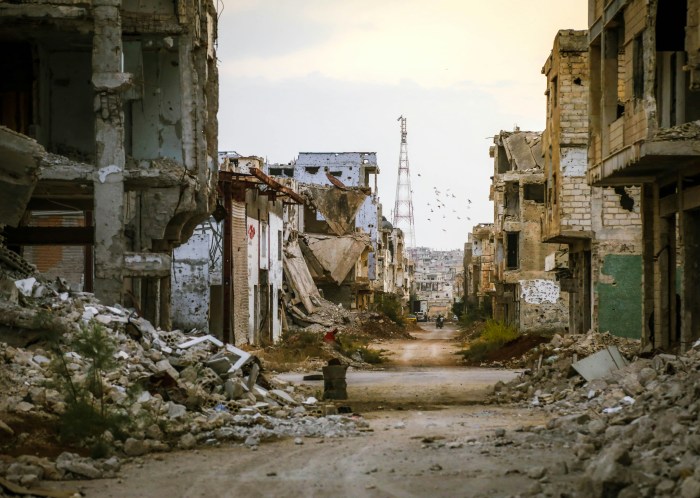
In early March, alarming reports surfaced of the killing of Christians in Syria. As a shocking outbreak of violence claimed the lives of over 1,000 people within just two days, including 745 civilians, many outlets were quick to claim that the country’s Christian community had been the target. 

GB News led with ‘Christians massacred as Syrian jihadist launches killing spree just weeks after toppling Assad’; a writer for the Times of Israel lamented what he identified as the media’s ‘predictable’ disdain for Syrian Christians; the Christian outlet Relevant Magazine claimed that ‘hundreds of Christians’ were among those killed, and countless posts on social media amplified claims of Christians being deliberately targeted and murdered in large numbers. 

Such reporting appeared to confirm the worst fears that many have harboured since December 2024, when President Bashir al-Assad was ousted by a coalition of rebel groups led by the Islamist military organisation Hayat Tahrir al-Sham (HTS), an organisation sanctioned by the US government. In the immediate aftermath of the takeover, many predominantly – though not exclusively – Christian outlets expressed understandable concern over impending threats to the country’s Christian community, with some warning of potential ‘ethnic cleansing’, ‘persecution’ and ‘genocide’. 

Continue reading “Truth matters: How misinformation and sensationalism undermines support for victims of human rights violations”

Control of Khartoum may have changed hands, but Sudan’s nightmare is far from over

In late March the Sudan Armed Forces (SAF) claimed a significant victory. After months of fighting, the army declared that it had seized full control of the Sudanese capital Khartoum from the Rapid Support Forces (RSF) militia.

Visiting the presidential palace for the first time since conflict broke out between the two forces almost two years ago, the leader of the SAF Abdel Fattah al-Burhan said, ‘Khartoum is free, it’s done.’

Some residents of the city may have even breathed a small sigh of relief. While both the RSF and SAF stand accused of the gravest of international crimes, it is generally accepted that conditions are marginally better in areas under SAF rule, perhaps because it is the party to the conflict that currently occupies Sudan’s seat in international arenas.

But the country’s nightmare is far from over.

Continue reading “Control of Khartoum may have changed hands, but Sudan’s nightmare is far from over”
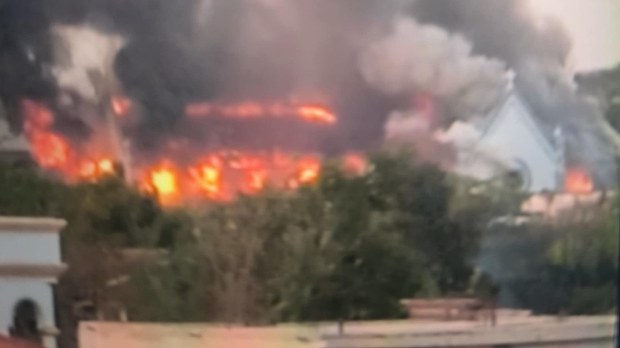
MYA Video footage shows St Patrick's Cathedral on fire on 16 March. CREDIT RVA Kachin Facebook

An attack on St. Patrick’s Cathedral the day before St. Patrick’s Day is yet another indicator of the remorselessness of the Myanmar military

17 March is a significant date for the community of St. Patrick’s Cathedral in the Banmaw diocese of Myanmar/Burma’s Kachin State.  

It is, of course, the feast day of the church’s patron saint – a day of prayer and celebration in honour of one of the most revered figures in Catholic Church history.  

This year, however, the community was unable to mark the occasion as they normally would have done, as on the evening of 16 March the cathedral was set on fire by soldiers from the State Administration Council (SAC), which falls under the authority of Myanmar’s ruling military junta. 

Continue reading “An attack on St. Patrick’s Cathedral the day before St. Patrick’s Day is yet another indicator of the remorselessness of the Myanmar military”

‘Hope is resistance’: An interview with CSW’s India Researcher

CSW relies extensively on the documenters, journalists, experts and activists that gather first-hand evidence of violations of the right to freedom of religion or belief (FoRB) in the countries we work on.

Last month, our Advocacy Intern Anna Shannon spoke with CSW’s India Researcher, whose name has been withheld for security reasons, to discuss what her work entails, the state of FoRB in India, and where she sees hope for the future.

As CSW’s India Researcher, what does your work entail?

My work entails documenting and reporting on violations of religious freedom across India, particularly against Muslims and Christians. So, whenever there are any attacks or any instances of discrimination against Muslims or Christians, I speak to victims, eyewitnesses, sometimes the lawyers who are working on these cases and I write the report.

Continue reading “‘Hope is resistance’: An interview with CSW’s India Researcher”

‘We go into the streets with fear’: After the murders of two pastors, Christians in northern Colombia no longer feel safe

Many Christians in the north-central part of Colombia encompassing the neighbouring regions of Magdalena and Cesar are on edge after the targeted assassinations of two church leaders in the space of two weeks. On 29 December, an entire family of four – Pastor Marlon Lora, his wife Yurlay, and adult children Ángela and Santiago – was shot to death following a Sunday morning service at the service at the Missionary Bible Church in the Villa Paraguay neighbourhood of Aguachica, Cesar Department.

On the evening of 8 January, Iván García, a 28-year-old church leader and husband of a pastor, died after being shot six times, after leaving a religious service. In both cases, the killings were carried out by masked hitmen on motorcycles.

Mr García was followed by the hitmen as he was walking home along a dark, rural road with his 14-year-old stepdaughter and six other individuals following a spiritual celebration at the People of God Christian Vision Church, where his wife, Pastor Karen Nierles, had been invited to lead a Bible study. Pastor Nierles leads the New Rebirth in Christ Church in the village of Garital, in the Banana Cultivation Zone, in Magdalena. According to the witnesses, after being shot the young preacher fell to his knees and raised his hands in thanks to God. The hitmen left the scene without speaking.

Continue reading “‘We go into the streets with fear’: After the murders of two pastors, Christians in northern Colombia no longer feel safe”