Syria: Ten years on, why does it matter?

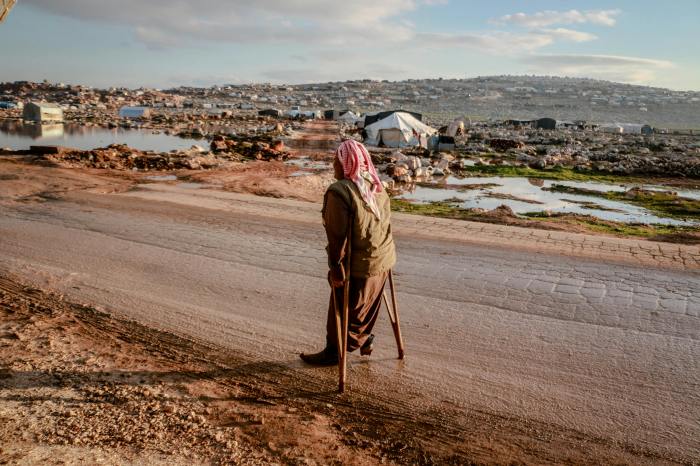
June 2024 marked ten years since the Islamic State (IS) declared a caliphate in Syria. Years of brutal conflict including flagrant and well-documented human rights violations, including atrocity crimes, by a complex web of aggravators resulted in one of the highest death counts of any recent war and the highest number of displaced persons in modern history.

Yet in May of last year, Syria was welcomed back into the Arab League, the same government invited to participate in talks to further international cooperation that, just a decade earlier, had deployed chemical weapons against its own civilians. Furthermore, in summer 2023, Russia vetoed the renewal of a mechanism that had enabled the UN to deliver aid without the Syrian government’s consent to parts of north-west Syria not under its control – a resolution that had been in place for nine years. The year rounded out four months later with Syria present at the COP28 climate conference even as France issued an arrest warrant for President Bashar al-Assad over alleged  complicity in the chemical gas attacks.

Additionally, the Turkish president currently appears to be working towards normalising relations with Syria, despite opposing the Assad regime for over a decade and the ongoing occupation of parts of northern Syria by Turkish forces and allied Islamist militia.

It is clear that the world is beginning to forget the atrocities of the Syrian Civil War as well as the chaotic campaign of IS that saw whole cities reduced to rubble, wreaking havoc on the nation. But beyond the short clips of media coverage that defined our news cycles for years, what exactly happened between 2012 and 2014, and why does it matter today?

Continue reading “Syria: Ten years on, why does it matter?”

Un año mas de conflicto en Sudán: la comunidad internacional debe actuar ahora

Esta semana se cumple un año desde que estalló la guerra entre las Fuerzas Armadas Sudanesas (SAF) y las Fuerzas de Apoyo Rápido (RSF), en la culminación de las tensiones y reclamos que han existido entre los dos grupos desde que despojaron del poder al gobierno de transición en octubre de 2021.

Lo inusual de esta guerra es que comenzó en la capital, Jartum, y se extendió por todo el país. Desde que Sudán obtuvo su independencia en 1956, los conflictos e incluso las revoluciones se han originado fuera de la capital, lo que a menudo ha llevado al aislamiento de las comunidades del centro, y posiblemente del norte de Sudán, de las peores ramificaciones de la inestabilidad. Hoy, sin embargo, son pocos los lugares del país que se han librado de las hostilidades a gran escala entre ambos grupos, y su impacto sobre la población civil ha sido catastrófico.

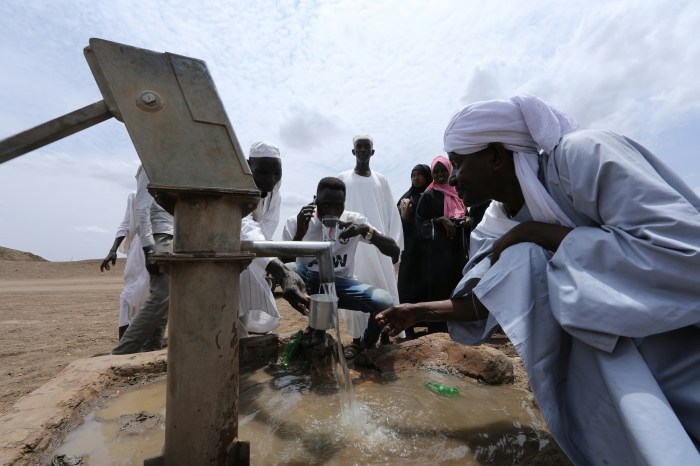
Cuando el conflicto entró en su segundo año, ya había cobrado la vida de al menos 13,000 personas y más de 33,000 habían resultado heridas. Con la intensificación de la guerra en las ciudades pobladas, el número de desplazados internos ha aumentado a más de nueve millones, y se calcula que el número de quienes padecen hambre asciende ahora a 20 millones. Además, hay más de dos millones de refugiados, la mitad de ellos darfuríes, que también padecen hambre. Trágicamente, por segunda vez en 20 años también hay informes de crímenes atroces, y el Fiscal de la Corte Penal Internacional (CPI) señaló que la situación ahora en Darfur era peor que cuando el Consejo de Seguridad remitió a Sudán a la corte.

Continue reading “Un año mas de conflicto en Sudán: la comunidad internacional debe actuar ahora”
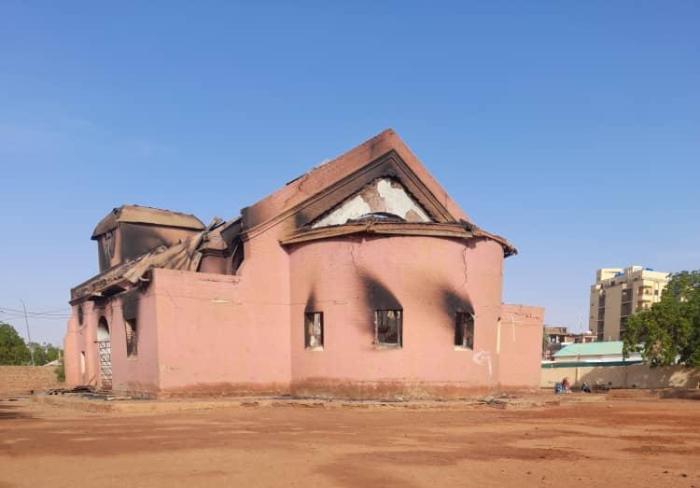
The Episcopal/Evangelical Church in Omdurman, which was shelled on 1 November 2023.

Sudan must not be allowed to slip off the international agenda

‘The land is valuable, and it will be easier to seize it if the buildings have been destroyed by war.’

This was the reaction of a CSW source to the bombing of churches and properties in Omdurman and Khartoum El-Shajara in Sudan at the start of the month.

On 1 November the Sudanese Armed Forces (SAF) shelled and completely destroyed a church that was used by the Episcopal and Evangelical denominations in Omdurman. It was the largest and second oldest church in the area, and its destruction came just three weeks after the Evangelical Commercial School and the Evangelical Secondary School were also bombed.

Continue reading “Sudan must not be allowed to slip off the international agenda”