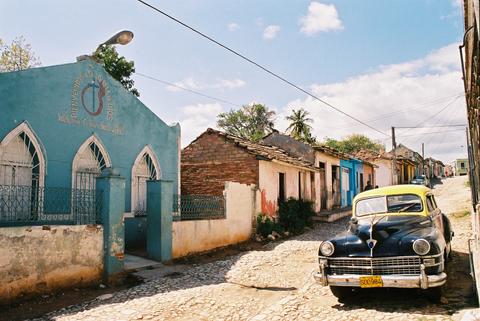
In January 2015, approximately 2,000 churches linked to the Assemblies of God (AoG) denomination were declared illegal in Cuba under Legal Decree 322, putting them at risk of confiscation and, in some cases, demolition. CSW’s July 2017 report details a new development in the case.
In May 2017, the superintendent of the denomination was summoned to the Office for Religious Affairs (ORA), where government officials gave verbal assurances that the churches were no longer under threat of confiscation. While verbal assurances have been provided in the past have not been honoured, on this occasion a document was provided that officially rescinded the demolition order for one of the AoG churches.
At the same meeting, the superintendent received verbal promises from ORA officials that they would help legalise the churches that had been under threat. This is tentatively being considered a positive development, however it remains dependent on implementation.
The Cuban government has a long-standing policy of targeting the children and other family members of church leaders and activists who it deems to be a problem; one of many tactics designed to ratchet up the pressure on them.
Religious leaders are increasingly standing up to government pressure and becoming bold in their efforts to defend religious freedom in the country, as the Cuban government’s Office for Religious Affairs (ORA) cracks down on unregistered religious groups and other groups that it perceives to be unsupportive of the government.
CSW’s latest report on freedom of religion or belief (FoRB) in Cuba reveals that the death of Fidel Castro in November 2016 failed to mark any significant improvements to FoRB in Cuba; instead, the arbitrary detention, harassment, restriction and surveillance of religious leaders and adherents has continued throughout the first half of 2017, as has the confiscation of church properties. In addition, several cases of family members of church leaders and activists singled out for harassment and discrimination have been brought to CSW’s attention in recent months.
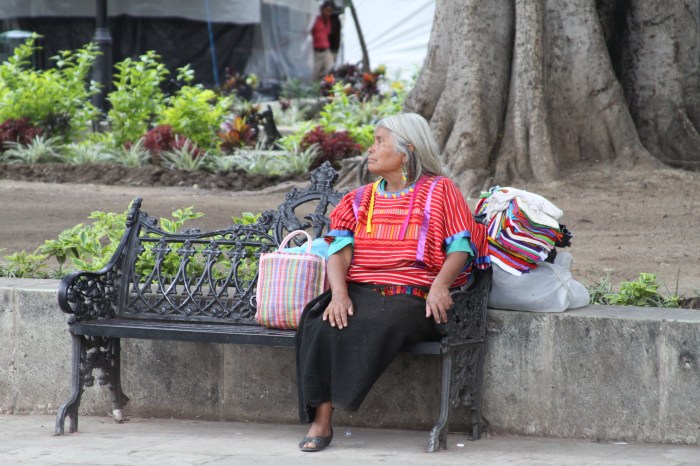
Chiapas, Oaxaca and Hidalgo are all home to some of the largest and most varied indigenous populations in Mexico. Unfortunately, this diversity sometimes provokes division, and the three states have some of the highest numbers of documented violations of freedom of religion or belief (FoRB) in the country, with the number of documented cases highest in Chiapas.
In Mexico, state and federal governments have a designated office to deal with religious affairs, a responsibility to address violations of religious freedom and to actively mediate a solution to religious conflicts. However, the officials are almost always distinctly under-resourced and lack training in human rights – especially religious freedom.
At best, state and municipal governments are unable or unwilling to protect the religious freedom of their citizens and to address these human rights violations. At worst, they are passively or actively complicit in the violations. A particularly concerning way FoRB is violated in these states is through the cutting off of basic services, like water and electricity, to Protestant families by the local authorities – as is often the case, the violation of one right leads to others
One of the most striking aspects of the cases Christian Solidarity Worldwide (CSW) has profiled in its latest report is the lack of official intervention to resolve them – apart from a few exceptions, for most of the people affected, little has changed.
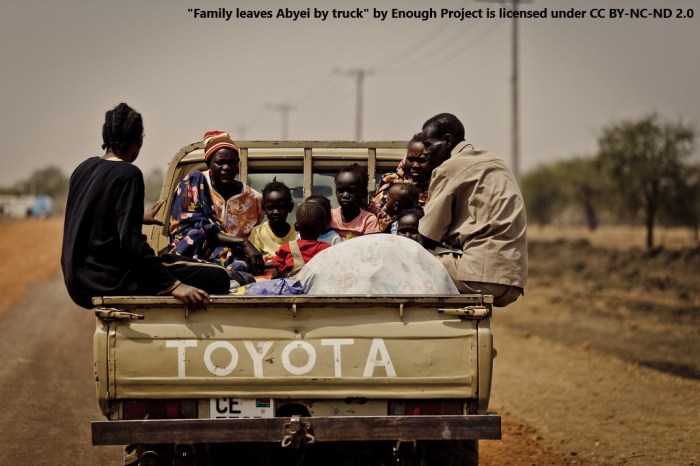
It has now been six and a half years since the people of Abyei should have decided their future.
Abyei, an oil-rich region situated between Sudan and South Sudan, was due to have a self-determination referendum on the 9 January 2011; the day South Sudan decided to become an independent nation. However, disagreements between Sudan and South Sudan regarding voter eligibility has meant that the people of Abyei are still waiting to hold an official vote.
These disagreements centre on whether the nomadic Arab Misseriya tribe who spend a portion of the year in Abyei are eligible to vote. Despite a ruling by the Permanent Court of Arbitration (PCA) stating that only the Ngok Dinka tribe, and those permanently residing in Abyei for a period of 3 years, may vote, the government of Sudan failed to accept these terms.
As the delay continued, the Ngok Dinka General Conference conducted what was termed a “People’s Referendum”: it was an unofficial vote but 98% of registered Ngok Dinka voters participated, of which 99.9% voted to join South Sudan. Sudan and South Sudan, as well as the African Union and international community, rejected the outcome of the referendum but both Khartoum and Juba have laid claim to Abyei.
Since the Peoples Referendum, South Sudan has descended into chaos, while Bashir’s grip on Sudan appears to be strengthening. With chaos to the South and oppression to the North, the decision may not be as simple as it was a few years ago – Abyei and its people are clearly trapped between a rock and a hard place.
“He was forced to take medicine. They stuffed the pills into his mouth… After taking the pills he felt pain in his muscles and his vision was blurred… He was beaten. He endured gruelling questioning while being denied sleep for days on end…”
Wang Qiaoling describingthe torture of her husband, lawyer Li Heping
“Even our breaths were suppressed. No voices. No texts. No images. No talking. No walking. Our hands, feet, our posture…every body movement was strictly limited. We needed permission for even the most trivial action”.
Lawyer Zhao Wei, the youngest legal assistant detained in the 709 Crackdown
“Prisoners were also put in cages submerged mostly in water, and left inside for seven days, the entire body underwater with a space to breath at the top. As they stood in the water and tried to sleep, rats would scurry about outside the cage, biting their nose and ears.”
These are just a few accounts of the torture experienced by human rights lawyers in China. Over 300 lawyers, activists, colleagues and family members were detained, interrogated or disappeared in a sweeping crackdown beginning on 9 July 2015, dubbed the 709 Crackdown. Two years on, most have been released, some on “bail” conditions amounting to house arrest, but with news of their release have come numerous testimonies of physical and psychological torture including frequent beatings, sleep deprivation, forced medication, violent threats, and prolonged isolation.
Use of torture in China
Lawyers and activists are by no means the only victims of torture. Many of the lawyers caught up in the crackdown had defended clients who had been tortured by police or security agents, including those arrested in connection with their religion or belief such as Falun Gong practitioners and Christians associated with unregistered churches, as well as those accused of crimes not related to politics or religion.
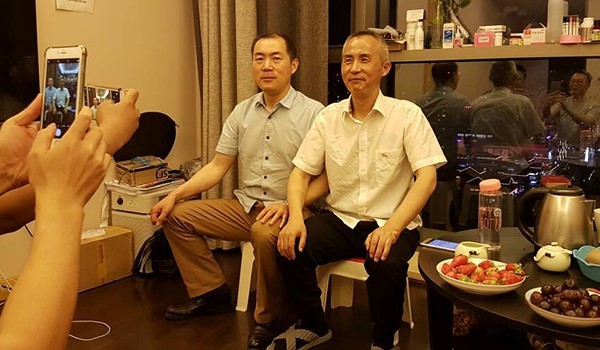
Human rights lawyer, Li Heping (right) pictured with his brother Li Chunfu (left) following his release from detention.