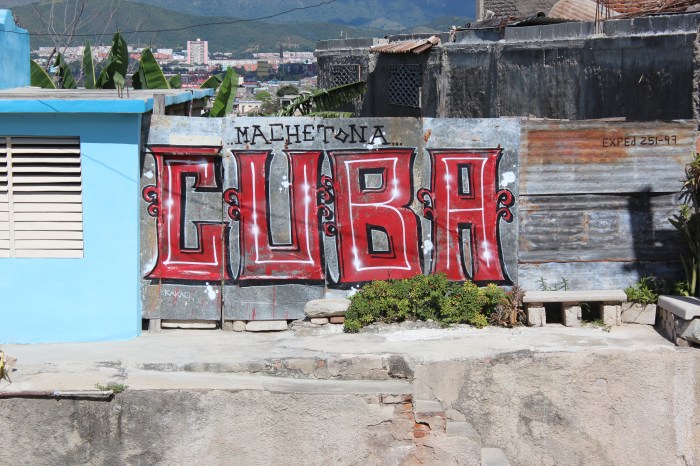
Graffiti in Cuba.

¿Por qué los líderes religiosos de Cuba escapan al exilio?

Tras las protestas pacíficas del 11 de julio de 2021, muchos líderes religiosos cubanos y miembros de comunidades de fe se han unido a la mayor ola de emigración en curso, desde el comienzo de la Revolución Cubana en 1959.

El gobierno cubano exige que todos los grupos y asociaciones religiosas obtengan el registro legal del Ministerio de Justicia, pero este organizmo les hace casi imposible obtener dicho registro. Desde la Revolución, el gobierno ha otorgado estatus legal a solo un puñado de grupos, y ha despojado de su estatus legal a algunos que tenían una presencia legalmente reconocida en la isla antes de 1959. Como resultado, la gran mayoría de los grupos religiosos que no tenían presencia legal en la isla antes de 1959 existen al margen de la ley, lo que los convierte automáticamente en objeto de discriminación y hostigamiento.

En los últimos dos años, Cuba ha enviado a cientos de disidentes a prisión, donde los guardias a menudo utilizan su fe como punto de presión para aquellos que tienen creencias religiosas. El gobierno viola regularmente las Reglas de Nelson Mandela, negándose a permitir que los presos políticos reciban visitas religiosas, posean materiales religiosos o participen en servicios religiosos dentro de las prisiones. La fe ó religión de los presos políticos es ridiculizada públicamente con regularidad. Entre el creciente número de presos políticos se encuentran líderes de grupos religiosos no registrados.

Continue reading “¿Por qué los líderes religiosos de Cuba escapan al exilio?”
Reverend Dr Hkalam Samson, one of Myanmar/Burma’s most senior and internationally renowned Christian pastors.

The continued imprisonment of Reverend Dr Hkalam Samson is proof that no one is safe in Myanmar

By Benedict Rogers

When I heard that my friend Reverend Dr Hkalam Samson, one of Myanmar/Burma’s most senior and internationally renowned Christian pastors, had been arrested at Mandalay airport on 5 December as he attempted to travel to Bangkok, several thoughts went through my mind.

On one level I was not surprised, because the current illegal military junta, which seized power in a coup on 1 February 2021, has been even more brutal, ruthless and inhumane than any of the succession of military dictatorships that have ruled Myanmar for most of the past six decades.

On another level, due to his international connections, I thought his arrest might simply lead to a brief detention, for the purposes of interrogation. I half expected him to be released within a matter of days. This is a man, after all, who has met the President of the United States in the White House, a Minister of State in the United Kingdom’s Foreign, Commonwealth and Development Office, parliamentarians around the world and has attended international fora including the International Ministerial Conference on freedom of religion or belief in Washington, DC in 2019.

Continue reading “The continued imprisonment of Reverend Dr Hkalam Samson is proof that no one is safe in Myanmar”
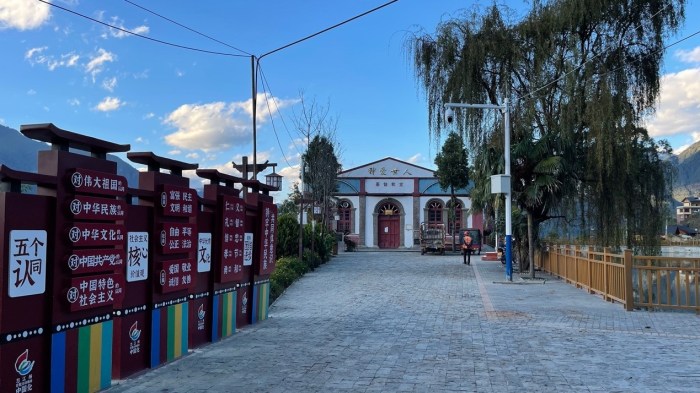
A series of political slogan boards erected outside Laomudeng Church in Yunnan, China.

‘The Yunnan Model’ could be an indicator that life is going to get even harder for religious and ethnic groups across China

Wang Shunping, Nu Sangdeng, San Luobo, Hua Xiuxia and Dong Mengru spent the past nine months in detention.

Their crime? Holding a handful of Christian gatherings and teaching guitar and hymns to a group of young people in their rented home in Fugong County in the Nujiang Lisu Autonomous Prefecture of China’s Yunnan Province.

Though they were released on bail on 7 May, the charges against them relating to ‘organising and sponsoring an illegal gathering’ are yet to be dismissed.

All five individuals – three men and two women – work among the ethnic Nu community, one of the 56 ethnic groups officially recognised by the Chinese authorities; the three men are Nu ethnic preachers. In China, the majority of the Nu live in Yunnan, where a significant history of Western missionary activity has resulted in a large Protestant Christian population alongside the majority religions of Buddhism and tribal animism.

Continue reading “‘The Yunnan Model’ could be an indicator that life is going to get even harder for religious and ethnic groups across China”
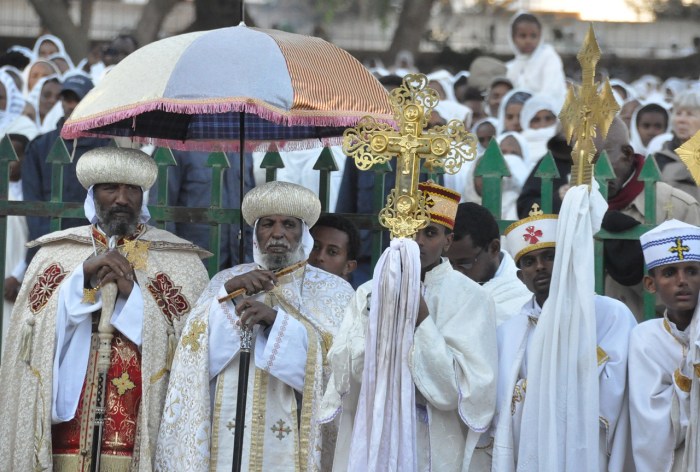
Leaders from the Eritrean Orthodox Tewahedo Church at Timkat Festival in Asmara, Eritrea.

The international community must assist in transforming Eritrea’s pathocracy into a genuine democracy

27 April 1993: Eritrea declares official independence from Ethiopia after a referendum which saw a 98.5% turnout with a 99.83% vote in favour.

The vote took place nearly two years after the defeat of Ethiopian forces in Eritrea in May 1991, which brought with it an end to nearly three decades of civil war. The referendum installed the leader of the Eritrean People’s Liberation Front (EPLF, which later became PFDJ – People’s Front for Democracy and Justice) Isaias Afewerki as president, and it was hoped that he would lead the Eritrean people into a just and democratic future – then-US President Bill Clinton even referred to him as a ‘renaissance African leader’.

Sadly, this did not occur. Afewerki remains the only ruler Eritrea has ever known, and under his leadership the nation’s heroic liberation struggle has been resolutely betrayed due to his obsession with absolute power.

Continue reading “The international community must assist in transforming Eritrea’s pathocracy into a genuine democracy”

Silenced for defending the oppressed – standing up for Vietnam’s prisoners of conscience

The Communist Party of Vietnam routinely violates the civil and political rights of its people. The right to freedom of expression, opinion and speech is tightly restricted and suppressed, with little or no space for the voice of civil society. The Vietnamese government regularly imprisons individuals for human rights work including exposing corruption, offering legal assistance, organising peaceful protests, and using social media to advocate on social issues and speak out against social injustices.

Many human rights defenders risk their own safety to stand up for victims of human rights violations, including the right to freedom of religion or belief (FoRB). Those who speak out frequently face harassment, intimidation, intrusive monitoring and even imprisonment by the Vietnamese government.

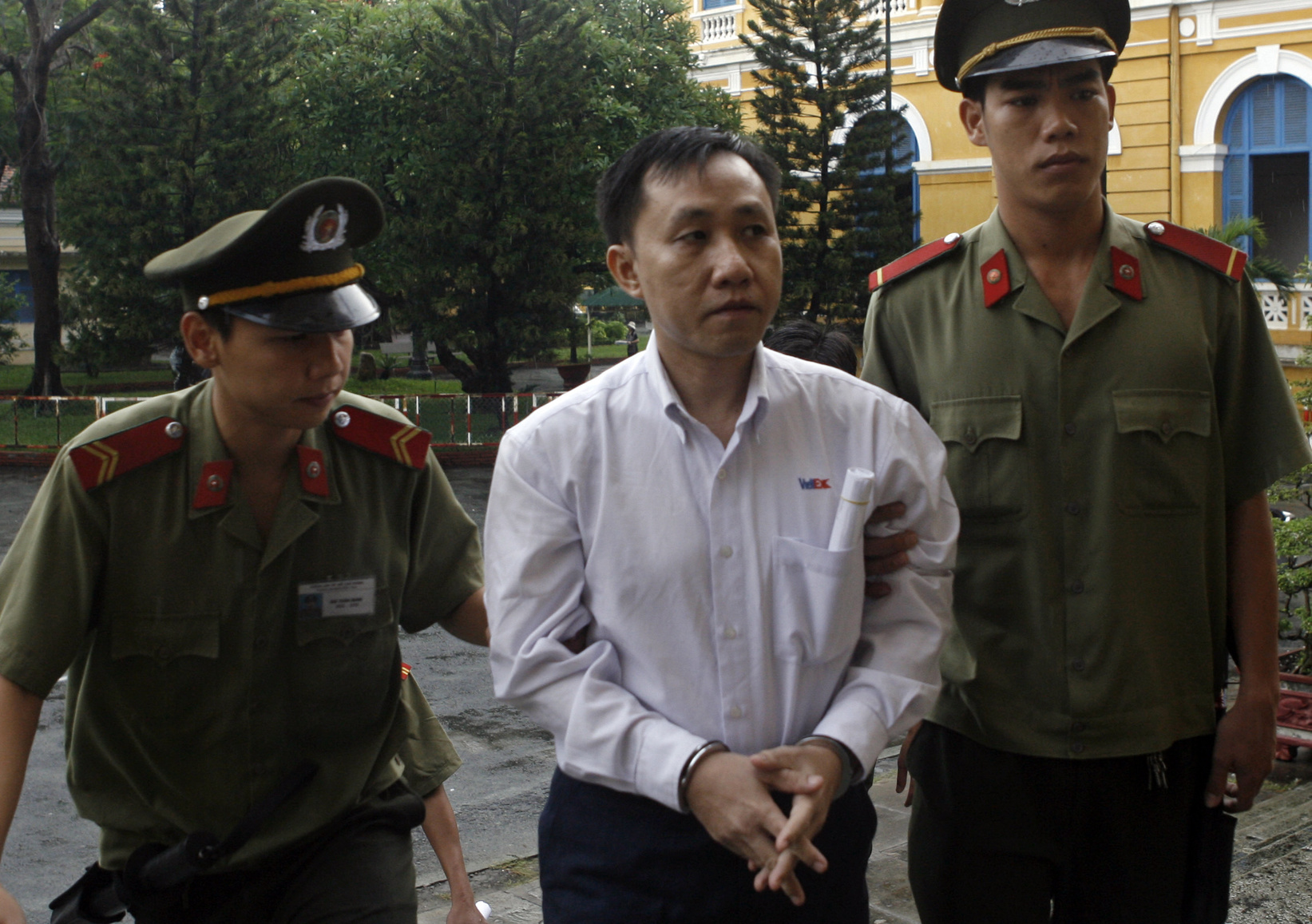
Six such activists are Nguyen Van Dai, Le Thu Ha, Nguyen Trung Ton, Nguyen Bac Truyen, Pham Van Troi and Truong Minh Duc. On 5 April 2018, they stood trial under accusations of ‘carrying out activities aimed at overthrowing the government’, receiving prison sentences of between seven and 15 years.

Continue reading “Silenced for defending the oppressed – standing up for Vietnam’s prisoners of conscience”