‘They realised their guns weren’t fast enough’

As we mark the second anniversary of the Pentecost Sunday massacre in Ondo State, Nigeria, the UK government needs to be doing more to advance FoRB through its foreign policy commitments. 

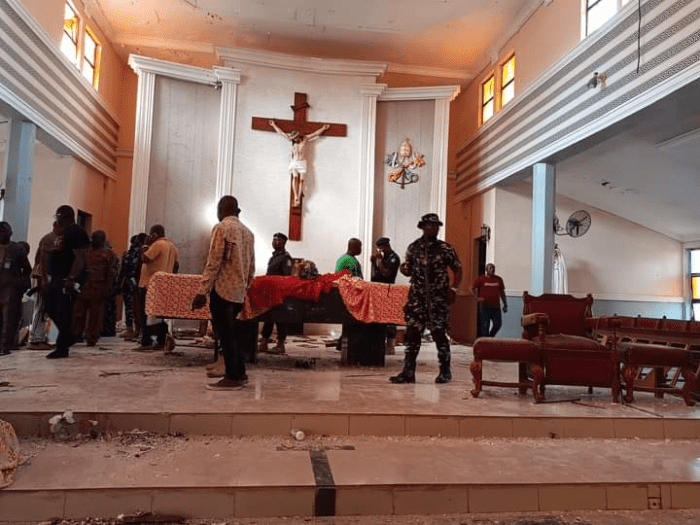
As Margaret is invited to speak, the room falls silent. We are in Parliament, off the side of Westminster Hall. It is the day of the Autumn budget and the news is flooded with discussion on whether a tax cut of 1% will be announced, how it will happen, and who it will benefit. Experts are pontificating on inflation and Conservative Party posing ahead of the 2024 general election. Seats to watch PMQs and the Chancellor’s statement are fully booked. The overflow queue stretches past the lobby and into St Stephen’s Chapel. There is no real possibility of those at the end of the queue getting in before the Chancellor is back at No. 11; but there is a small glimmer of hope, and so they stay. 

But Margaret is not standing in the queue. In fact, she couldn’t if she’d wanted to. Margaret lost her legs in the massacre at St Francis Xavier Catholic Church in Owo, Ondo State, Nigeria, on 5 June 2022 in the first ever terror attack on a church in the south of the country. This is her first time in the UK. She is supported by her husband Dominic to give a face to this year’s Red Wednesday, an event coordinated by Aid to the Church in Need aimed at raising awareness of Christian persecution. 

Continue reading “‘They realised their guns weren’t fast enough’”

Ten years since the abduction of the Chibok Girls, the Nigerian government must finally protect vulnerable communities

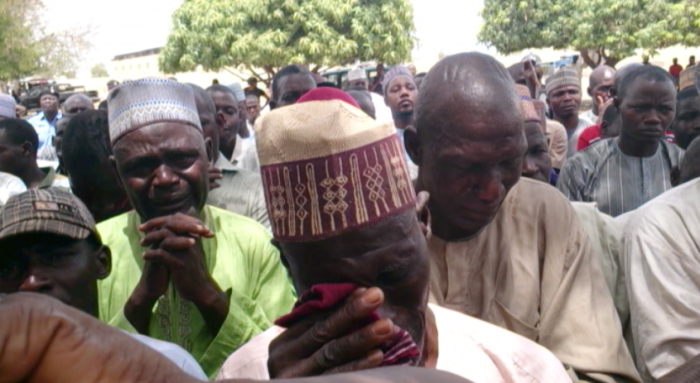
Last month, 137 families in Kuriga in Nigeria’s Kaduna State breathed a collective sigh of relief as their sons and daughters returned home after over two weeks in terrorist captivity.

The children were abducted from their school on 7 March when armed assailants descended on the premises just as classes were about to commence. The school reported that 287 students were taken; however Kaduna State Governor Uba Sani has since attempted to dismiss the figure as being a ‘figment of someone’s imagination’, despite initially citing the same number himself.

Several questions emerge from this: what is being done to confirm that all of the students have indeed been freed? What about the thousands of other individuals who have been abducted by terrorist groups in recent years? And finally, how can this still be happening a decade after mass kidnappings in Nigeria first landed on the international agenda?

Continue reading “Ten years since the abduction of the Chibok Girls, the Nigerian government must finally protect vulnerable communities”
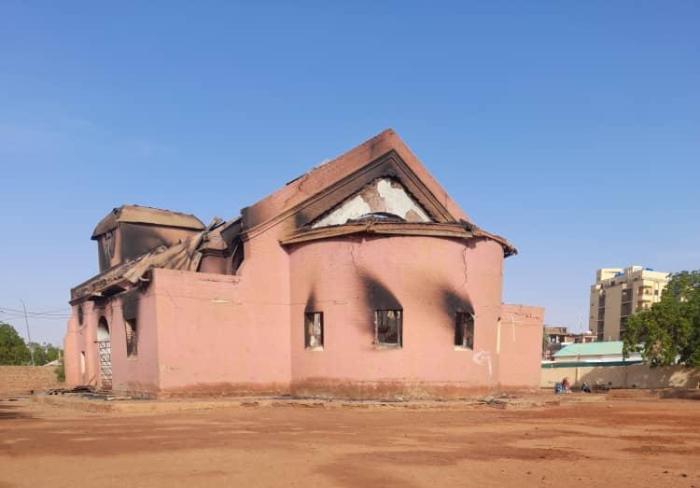
The Episcopal/Evangelical Church in Omdurman, which was shelled on 1 November 2023.

No se debe permitir que Sudán quede fuera de la agenda internacional

“La tierra es valiosa y será más fácil apoderarse de ella si los edificios han sido destruidos por la guerra”.

Esta fue la reacción de una fuente de CSW ante el bombardeo de iglesias y propiedades en Omdurman y Jartum El-Shajara en Sudán a principios de mes.

El 1 de noviembre, las Fuerzas Armadas Sudanesas bombardearon y destruyeron por completo una iglesia utilizada por las denominaciones episcopal y evangélica en Omdurman. Era la iglesia más grande y la segunda más antigua de la zona, y su destrucción se produjo apenas tres semanas después de que también fueran bombardeadas la Escuela Comercial Evangélica y la Escuela Secundaria Evangélica.

Continue reading “No se debe permitir que Sudán quede fuera de la agenda internacional”
The Episcopal/Evangelical Church in Omdurman, which was shelled on 1 November 2023.

Sudan must not be allowed to slip off the international agenda

‘The land is valuable, and it will be easier to seize it if the buildings have been destroyed by war.’

This was the reaction of a CSW source to the bombing of churches and properties in Omdurman and Khartoum El-Shajara in Sudan at the start of the month.

On 1 November the Sudanese Armed Forces (SAF) shelled and completely destroyed a church that was used by the Episcopal and Evangelical denominations in Omdurman. It was the largest and second oldest church in the area, and its destruction came just three weeks after the Evangelical Commercial School and the Evangelical Secondary School were also bombed.

Continue reading “Sudan must not be allowed to slip off the international agenda”
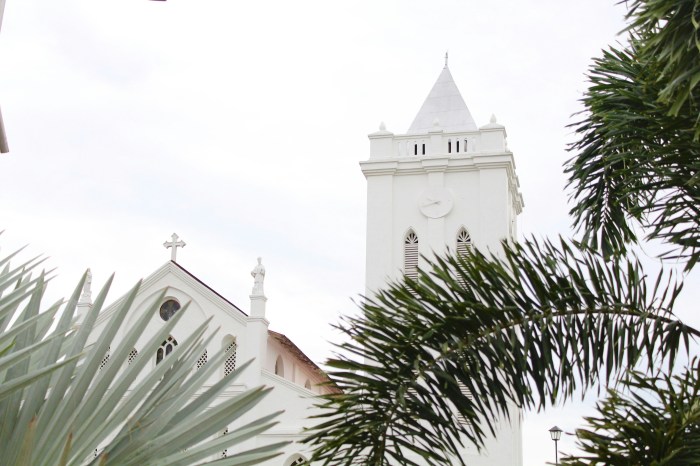
A church in Araucania, Chile.

‘The only church that enlightens is the one that burns’: The glowing embers of Chile’s Latin American success story

Today marks 50 years since Augusto Pinochet’s coup d’état forever changed the course of Chilean history. His rule brought about years of egregious human rights violations, during which many Chileans were tortured, murdered or forcibly disappeared, and their bodies never found. The trauma still scars the population today.

Pinochet was removed from power in 1990 after 17 years of brutal military dictatorship, and as President Patricio Aylwin took office on 11 March 1990, he declared, ‘Chile doesn’t want violence or war; it wants peace’. Whilst Chile has enjoyed relative peace and human rights have generally been respected since 1990 compared with the 17 years preceding it, Aylwin’s words still ring true more than 30 years later.

Success wearing thin

Chile has largely been heralded for its stability for the last decade or so; prosperous and peaceful, largely untouched by the levels of violence experienced by other countries in the region. The Latin American success story is largely backed up by statistics, such as those of the Global Peace Index, which ranked Chile at 58 out of 163 countries for its levels of peace in 2023.

Continue reading “‘The only church that enlightens is the one that burns’: The glowing embers of Chile’s Latin American success story”