Even in death, Christians in India’s tribal communities are denied their rights and dignity

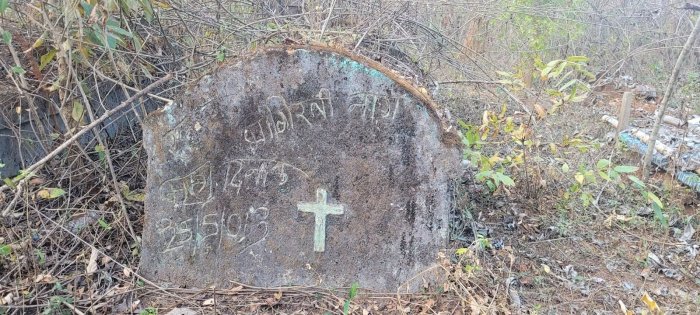
On 5 November the family of Gajendra Sahu, whose name has been changed for security reasons, attempted to bury him in his ancestral village of Kodekhursi, in Kanker District, in India’s Chhattisgarh State.

Gajendra had converted to Christianity three years previously. He had also given up drinking after years of alcohol addiction, but sadly passed away following a prolonged period of ill-health caused by it.

His relatives should have been permitted to lay him to rest in peace, however, because of his conversion to Christianity, residents of Kodekhursi refused to permit his burial within village boundaries, and even on his family’s own plot. Repeated requests for intervention from the authorities proved unsuccessful, and the family was ultimately forced to travel close to 200km – with a police escort – to the state capital Raipur where they were finally able to conduct a dignified funeral service in a Christian cemetery.

Continue reading “Even in death, Christians in India’s tribal communities are denied their rights and dignity”
How the education system perpetuates religious intolerance in Pakistan, and how it could be a route to change 

‘No one is born hating another person because of the colour of his skin, or his background, or his religion. People must learn to hate.’ 

These oft-quoted words of Nelson Mandela have proven all too true in far too many contexts throughout human history, as indeed they do in a very literal sense in Pakistan today. 

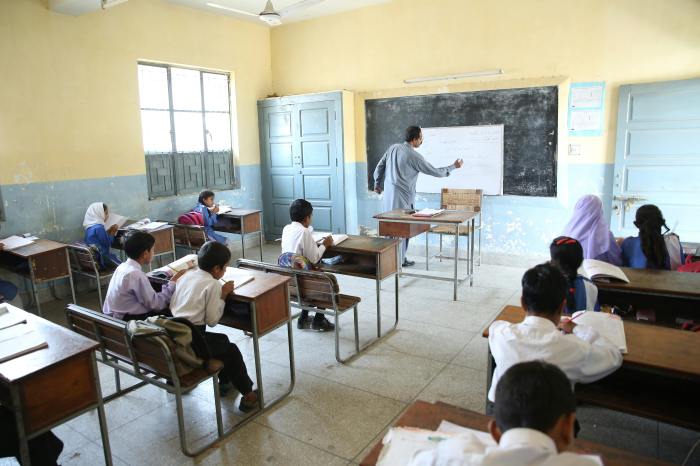
While hatred can be ‘learned’ in many ways – from one’s family, or cultural background, or even from negative experiences with the object of said hatred – in Pakistan the teaching of hatred, specifically religious intolerance, is embedded in various forms into the very fibre of the country’s education system. 

Continue reading “How the education system perpetuates religious intolerance in Pakistan, and how it could be a route to change “

India’s ‘freedom of religion’ laws have nothing to do with preventing forced conversions

On 20 August India’s Uttarakhand state government introduced significant amendments to its controversial anti-conversion law. Building on the original 2018 legislation and an initial round of amendments made in 2022, the Freedom of Religion and Prohibition of Unlawful Conversion (Amendment) Bill, 2025, imposes harsher punishments on a range of offences.

Individuals convicted of using allurement, misrepresentation or fraud to induce conversion now face anywhere from three to ten years in prison and a minimum fine of 50,000 rupees (approximately GBP £420). If the case involves a minor, a woman, a person with a disability, or a member of a Scheduled Caste or Scheduled Tribe, these penalties are increased to five to 14 years in prison and a fine of at least 100,000 rupees (GBP £840).

‘Mass conversions’ and those involving foreign funding are punishable with seven to 14 years imprisonment and a minimum fine of 100,000 rupees, while punishments for cases involving threats, assault, human trafficking, or marriage as a pretext for conversion can extend to 20 years or life imprisonment, along with fines covering the victim’s medical and rehabilitation costs.

Continue reading “India’s ‘freedom of religion’ laws have nothing to do with preventing forced conversions”

Pakistan must be made to end its decades-long tolerance and encouragement of the violent persecution of the Ahmadiyya community 

At 2.30pm on 16 May, Dr Sheikh Mahmood arrived at Fatima Hospital in Sargodha, Punjab Province, Pakistan and proceeded to attend to his patients as per his routine. A highly respected gastroenterologist and hepatologist, Dr Mahmood was widely known for his dedication, professional excellence and compassionate nature.  

But on this day – as he walked through the corridor of the hospital that he had worked in for the past seven years – an unidentified gunman opened fire on him from behind before fleeing the scene while openly brandishing a pistol. He sustained two gunshot wounds and was immediately transferred to Civil Hospital Sargodha, where he succumbed to his injuries. He leaves behind a mother, wife, two daughters and two sons. 

Dr Mahmood, 58, had no known personal enmities and Sargodha police have yet to confirm the motive behind the killing, however recent developments in Pakistan give much and highly-concerning reason to believe that he was likely targeted because of his faith – that is, because he was an Ahmadi Muslim.

Continue reading “Pakistan must be made to end its decades-long tolerance and encouragement of the violent persecution of the Ahmadiyya community “
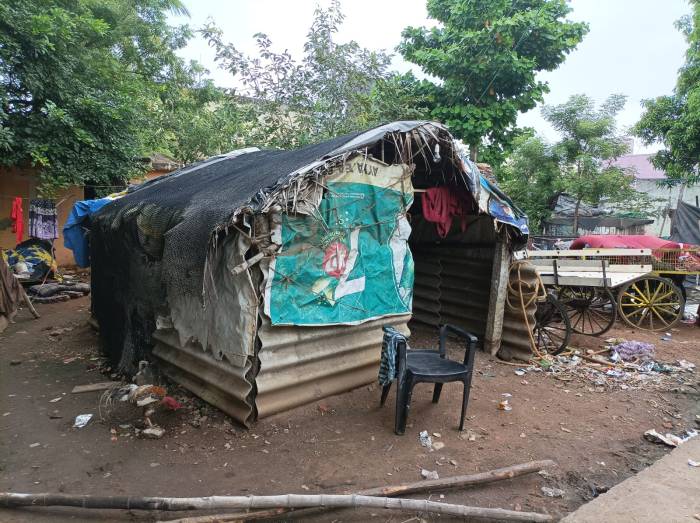
A hut in Mappedu, on the outskirts of Chennai, India.

The Narikuravar: A community in need of protection

In January 2023, CSW visited the Narikuravar community in Mappedu, on the outskirts of Chennai, and met with members of a community who for decades have suffered discrimination on the grounds of gender, and more recently on the grounds of religion as well. The following blog offers some reflections on the visit. Please note that the names have been changed for security reasons.

Radhika, a mother of three young girls, sat inside a little room with a thatched roof. With folded hands and a scarf over her head, she knelt down and prayed earnestly before turning to speak with me.  As a woman from a disregarded community who is also subject to restrictive gender-specific traditions, she would be excused for lamenting her circumstances but says that her new-found faith gives her the hope to live each day.

Radhika belongs to the Narikuravar community, a semi-nomadic tribe who were originally hunters and gatherers. She lives with around 30 other Narikuravar families in a tiny colony in Mappedu on the outskirts of Chennai. The Narikuravars have faced and continue to face discrimination in all spheres of life, including education, employment and even in securing accommodation.

Continue reading “The Narikuravar: A community in need of protection”