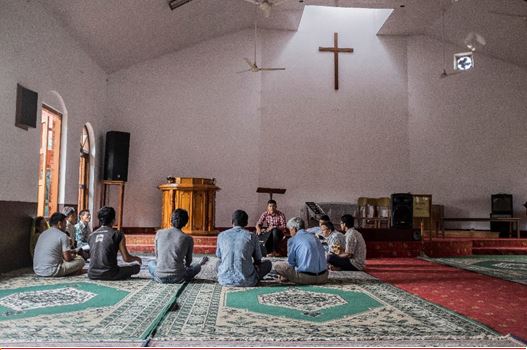
Nepal’s criminalisation of conversion seems to protect Hinduism at the expense of other religions.

Three years on from the date that Nepal adopted its new constitution, there are concerns about its ‘anti-conversion’ clause, which seemed designed to specifically protect Hinduism at the expense of other religions.

The clause, in Article 26 (3) of the constitution, states:

“No person shall, in the exercise of the right conferred by this Article, do, or cause to be done, any act which may be contrary to public health, decency and morality or breach public peace, or convert another person from one religion to another or any act or conduct that may jeopardize other’s religion and such act shall be punishable by law.”

These provisions were strengthened in the Penal Code 2017 which came into force in August 2018. Section 158 states that “No person shall convert any one from one religion to another or make attempt to or abet such conversion”  and carries a punishment of up to five years imprisonment and a fine of up to fifty thousand rupees.

The criminalisation of conversion is a direct infringement on freedom of religion or belief as it robs individuals of the right to change their religion. These provisions also threaten the right to freedom of expression as they could be used to prohibit a range of legitimate expressions of religion or belief such as charitable activities or speaking about one’s faith.

Continue reading “Nepal’s criminalisation of conversion seems to protect Hinduism at the expense of other religions.”
Warning Signs Unheeded: The Kandhamal Tragedy

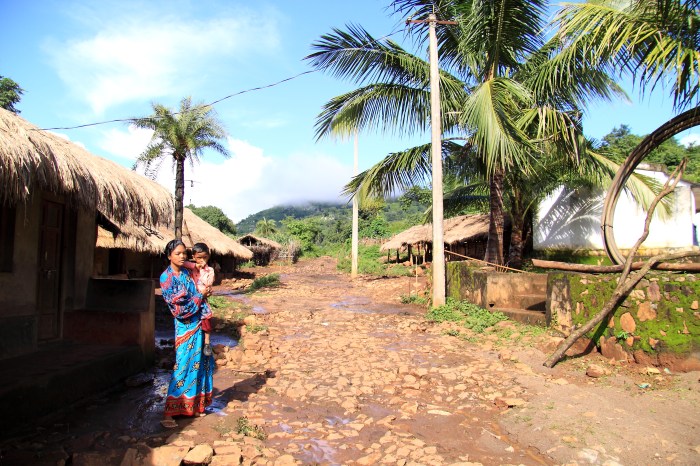
Kandhamal district is among the poorest and most marginalised in Odisha (formerly Orissa) state, India. On 25 August 2008, it was the epi-centre of communal attacks against the Christian community in India. Local monitoring groups have estimated that over 90 people were killed with at least 54,000 displaced and over 300 churches destroyed by groups belonging to the Rashtriya Swayamsevak Sangh (RSS) that espouses the Hindutva ideology.

Ten years on, attacks on religious minorities and on freedom of expression by groups belonging to the RSS continue. The lack of official condemnation towards acts of intimidation and violence has further empowered these groups. As with recent attacks against religious minorities in India, the carnage that unfolded in Kandhamal was not a one-off isolated incident devoid of a historical narrative.

Continue reading “Warning Signs Unheeded: The Kandhamal Tragedy”

As a newly elected member of the Human Rights Council, Nepal must practice what it pledges

All elected Member States of the United Nations Human Rights Council (HRC) have a special obligation to protect and promote human rights. While every State has a responsibility to uphold human rights, in theory and in practice, Member States on the Council are in a unique position; and to that end, it is important that they practice what they’re supposed to preach.

During the HRC elections, candidates submit voluntary pledges, committing to the promotion and protection of human rights, and once elected, to maintaining high standards towards the protection and promotion of human rights.

Often, a State’s campaign for election is not free from criticism. Indeed, current HRC Council Members include Saudi Arabia, Pakistan, and China; countries which are frequently pulled up for serious human rights violations.

“While every state has a responsibility to uphold human rights, in theory and in practice, Member States on the Council are in a unique position; and to that end, it is important that they practice what they’re supposed to preach.”

In 2017, Nepal was elected as a Member of the HRC. The country will serve for a period of three years, and could serve up to two consecutive terms. It is important that Nepal embraces its position on the Council, calls out human rights abuses, makes recommendations, and promotes peace and reconciliation and supports the work of Special Procedures among other human rights mechanisms.

Continue reading “As a newly elected member of the Human Rights Council, Nepal must practice what it pledges”

NGOs in Partnership with International Parliamentarians

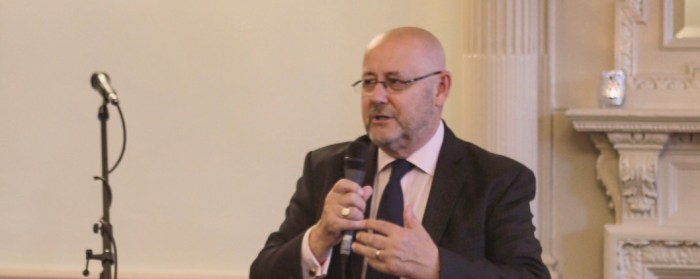
LONG READ: “NGOs in Partnership with International Parliamentarians” is the speech delivered by CSW’s Chief Executive Mervyn Thomas at the UK’s Foreign and Commonwealth’s (FCO) Conference,  ‘Preventing violent extremism by building inclusive and plural societies: How freedom of religion or belief can help’, 19 -20 October 2016. 


As we’ve already heard today, the fundamental human right to Freedom of Religion or Belief (FoRB), embedded in Article 18 of the International Covenant on Civil and Political Rights is one that at first can appear daunting and difficult to raise. Professor Heiner Bielefeldt, UN Special Rapporteur on FoRB has said that “it is the most challenging of all human rights, it is the spice in the soup of human rights.” However, although daunting it is extremely important to intensify our joint efforts to promote it.

The latest information from the Pew Research Center stated that in 2014, 74% or roughly ¾ of the world’s population, live in countries with either high or very high restrictions on religious freedom. That means that over 5.1 billion people in this world are not able to fully recognise their inalienable human right to practice or change the religion or belief system of their choice.

Furthermore, FoRB is part and parcel of peace and stability; a cornerstone of democratic societies, and it can provide an important antidote to rising violent extremism. High-levels of discrimination based on religion or belief and FoRB restrictions can undermine peaceful development and in fact increase the grounds for the rise of extremism.

It is clear that some of the most significant foreign affairs challenges the international community are currently grappling with, involve violent extremism, and many of the challenges are deeply rooted in violations of the right to freedom of religion or belief.

Continue reading “NGOs in Partnership with International Parliamentarians”

Dare I speak? Defending freedoms in Bangladesh

The voices of extremism and violence infiltrating Bangladesh’s society have delivered a clear and frightening message: independent expressions on religious issues will not be tolerated.

A pattern of appalling attacks that began in 2013 and took the lives of four secular bloggers in 2015 shocked the nation and caught the attention of international media. The stream of violence reflects a forceful assault on freedom of religion or belief and freedom of expression, theoretically enshrined in Bangladesh’s secular constitution and ratified international conventions.

The need for a clear counter-narrative to fundamentalism

If the values of a secular democracy are to be protected, fundamentalism must be met with a positive counter narrative from governing authorities. Unfortunately, in Bangladesh, neither political leaders nor members of the police force have succeeded in articulating a message of tolerance safeguarding the human rights and freedoms of its citizens.

On 8 August 2015, Niloy Chatterjee was the fourth blogger to be brutally murdered that year following the killings of Avijit Roy on 27 February 2015, Washiqur Rahman Babu on 30 March 2015 and Ananta Bijoy Das on 12 May 2015.

Continue reading “Dare I speak? Defending freedoms in Bangladesh”