El Código de Familia de Cuba cumple dos años

El 22 de julio de 2024 se cumplieron dos años desde que la Asamblea Nacional aprobó el Código de Familia de Cuba y, tal como advirtió la CSW, la legislación se ha extendido mucho más allá de la igualdad para la comunidad LGBT+. Aunque este aspecto fue el foco de los esfuerzos del gobierno para alentar el voto por el “sí” en el referendo público que siguió, solo un puñado de los 474 artículos eran relevantes para ese tema.

La aplicación de la legislación ha obligado a familias enteras a emigrar para proteger a sus hijos y no perder la custodia parental, como es una posibilidad real en virtud del artículo 191 del código. La legislación permite que los menores sean transferidos al cuidado del Estado, si los padres no cumplen con las responsabilidades detalladas en el artículo 138 del código, entre ellas “inculcar el amor a la familia, a la patria, el respeto a sus símbolos… las normas de convivencia social [basadas en la ideología del Partido Comunista de Cuba] y el respeto a las autoridades”. Los padres corren riesgo si muestran una conducta que “induzca a su hija o hijo a cometer un acto delictivo…” (191 (c)) y/o “[sean responsables de] una conducta viciosa, corrupta o delictiva que sea incompatible con el debido ejercicio de la responsabilidad parental…” (151 (e)).

A primera vista el código puede parecer inofensivo, sin embargo, es necesario comprender que todos los conceptos de patria, familia, respeto a los símbolos patrios, acto delictivo y conducta viciosa o corrupta se interpretan en el marco del sistema socialista en el que se fundamenta la constitución de 2019. Sin embargo, las continuas protestas, como la del 11 de julio de 2021 y otros levantamientos sociales de menor escala desde entonces,1 indican que la población está rechazando el sistema que la constitución obliga a los ciudadanos cubanos a defender, incluso con su vida.2
Continue reading “El Código de Familia de Cuba cumple dos años”

A change in government in Venezuela can only benefit the religious sector

Over the past 11 years of President Nicolas Maduro’s leadership, Venezuelan religious leaders have increasingly practiced a form of self-censorship when it comes to preaching or speaking on topics like social justice, peace, poverty, or any topic that might be perceived negatively by the dictatorship. While they may appear to have imposed this censorship on themselves, it comes from a very real fear having witnessed the cruelty that President Maduro has unleashed against those he and his regime identify as political enemies.

Elections are due to be held on Sunday, 28 July. In the run up, the Maduro regime has dedicated itself to attacking the opposition and creating an environment of terror with warnings of a ‘bloodbath’ and ‘civil war’ if Maduro does not win a third six-year term. It has been heavily implied that he could refuse to recognize the victory of Edmundo González Urrutia, the most popular candidate according to several polls.

In response to Maduro’s threats, the Inter-American Court of Human Rights (IACHR) warned that ‘this type of discourse by the highest authority of the State and the security forces has the effect of intimidating and curtailing the political freedom of the electorate… These actions affect democratic institutions and the freedoms of association, assembly, and expression, as they discourage the political participation of opposition individuals, their electorate, and the general public.’

Continue reading “A change in government in Venezuela can only benefit the religious sector”

Un Cambio de Gobierno en Venezuela podría beneficiar al sector religioso

Durante los últimos 11 años de liderazgo del presidente Nicolás Maduro, los líderes religiosos venezolanos han practicado cada vez más una forma de autocensura en sus predicaciones o discursos sobre temas como la justicia social, la paz, la pobreza, o cualquier tema que pueda ser percibido negativamente por la dictadura. Aunque puede parecer que se han impuesto esta censura a sí mismos, proviene de un temor muy real al haber presenciado la crueldad que el presidente Maduro ha desatado contra aquellos que él y su régimen identifican como enemigos políticos.

Las elecciones se celebrarán el domingo 28 de julio. En el período previo, el régimen de Maduro se ha dedicado a atacar a la oposición y a crear un ambiente de terror con advertencias de un “baño de sangre” y “guerra civil” si Maduro no gana un tercer mandato de seis años. Se ha insinuado fuertemente que podría negarse a reconocer la victoria de Edmundo González Urrutia, el candidato más popular según varias encuestas.

En respuesta a las amenazas de Maduro, la Corte Interamericana de Derechos Humanos (CIDH) advirtió que “este tipo de discurso por parte de la máxima autoridad del Estado y las fuerzas de seguridad tiene el efecto de intimidar y coartar la libertad política del electorado… Estas acciones afectan las instituciones democráticas y las libertades de asociación, reunión y expresión, ya que desalientan la participación política de las personas opositoras, de su electorado y de la ciudadanía en general.”

Continue reading “Un Cambio de Gobierno en Venezuela podría beneficiar al sector religioso”

Where the laws don’t apply: Rural Christian communities in Laos and Mexico face similar challenges

Pastor Mum and five members of his church – Liang, Pa, Laen, Lan and Khoon – have been prisoners in their own village since 22 June. 

The six Christians were arrested by the chief of Tahae village, in Laos’ Khammouane Province, after they held a small church service in Pastor Mum’s home, which was deemed ‘illegal’ as their church is not officially registered. 

It has proven challenging to get updates since – perhaps as to be expected of a small remote village in a rural province in central Laos – however when CSW first reported on the arrests five days after they took place, the group had not been formally charged or permitted to see their families or access legal counsel.  

Continue reading “Where the laws don’t apply: Rural Christian communities in Laos and Mexico face similar challenges”

India’s Muslims voted for justice and equality, but this remains a distant future

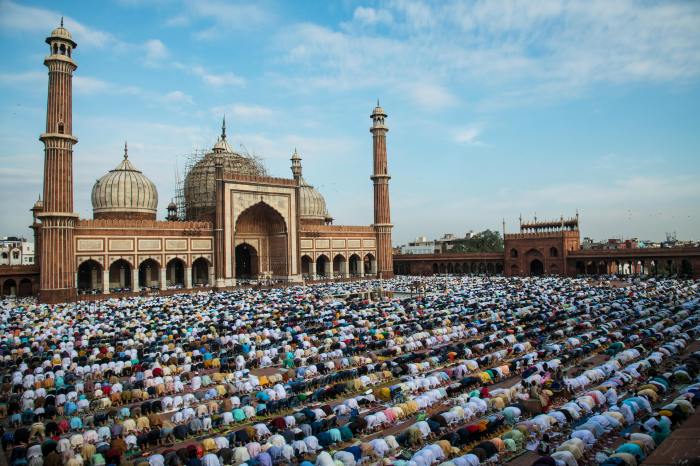
India is home to more than two hundred million Muslims, one of the largest Muslim populations in the world. However, in a crowd of close to 1.5 billion people, even this large community is reduced to a minority, accounting for just 14% of the population. In recent years, the community has been constantly reminded of this fact, having to fight to prove that they are equals and that they deserve the same rights as the Hindu majority.

Although the majority of India’s Muslims are native to the country, with a very small number of them having emigrated there from the Arab world, most Muslims today would agree that they are not made to feel equal to other Indian citizens.

Their plight has deteriorated significantly since India’s ruling Bharatiya Janata Party (BJP) came to power in 2014 under the leadership of Prime Minister Narendra Modi, with Muslims treated largely as second-class citizens by a government that has embraced a dangerous Hindu nationalist rhetoric.

Continue reading “India’s Muslims voted for justice and equality, but this remains a distant future”