Mexico: Protestants Cut Off From Basic Services

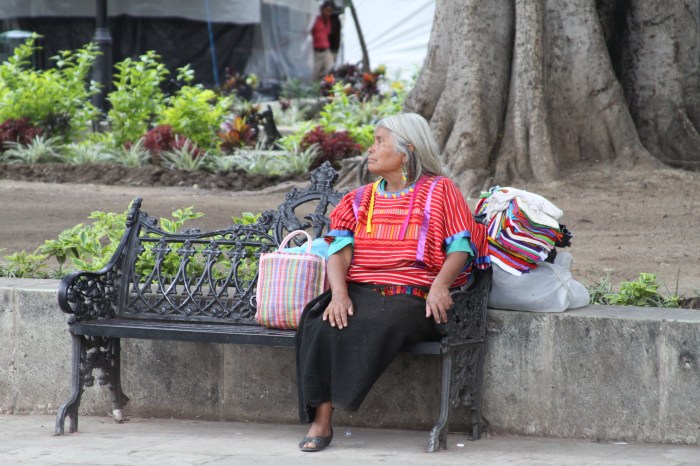
Chiapas, Oaxaca and Hidalgo are all home to some of the largest and most varied indigenous populations in Mexico. Unfortunately, this diversity sometimes provokes division, and the three states have some of the highest numbers of documented violations of freedom of religion or belief (FoRB) in the country, with the number of documented cases highest in Chiapas.

In Mexico, state and federal governments have a designated office to deal with religious affairs, a responsibility to address violations of religious freedom and to actively mediate a solution to religious conflicts. However, the officials are almost always distinctly under-resourced and lack training in human rights – especially religious freedom.

At best, state and municipal governments are unable or unwilling to protect the religious freedom of their citizens and to address these human rights violations. At worst, they are passively or actively complicit in the violations. A particularly concerning way FoRB is violated in these states is through the cutting off of basic services, like water and electricity, to Protestant families by the local authorities – as is often the case, the violation of one right leads to others

One of the most striking aspects of the cases Christian Solidarity Worldwide (CSW) has profiled in its latest report is the lack of official intervention to resolve them – apart from a few exceptions, for most of the people affected, little has changed.

Continue reading “Mexico: Protestants Cut Off From Basic Services”
No Ifs, No Buts: Torture Should Be Universally Condemned

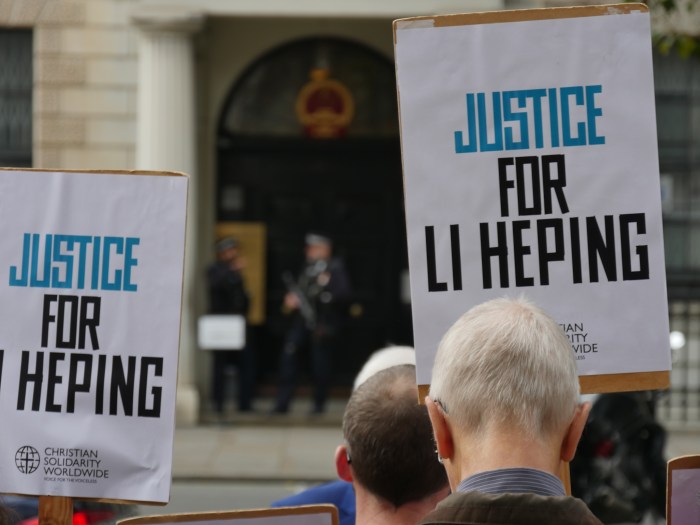
“He was forced to take medicine. They stuffed the pills into his mouth… After taking the pills he felt pain in his muscles and his vision was blurred… He was beaten. He endured gruelling questioning while being denied sleep for days on end…” 

Wang Qiaoling describing the torture of her husband, lawyer Li Heping

“Even our breaths were suppressed. No voices. No texts. No images. No talking. No walking. Our hands, feet, our posture…every body movement was strictly limited. We needed permission for even the most trivial action”.

 Lawyer Zhao Wei, the youngest legal assistant detained in the 709 Crackdown

“Prisoners were also put in cages submerged mostly in water, and left inside for seven days, the entire body underwater with a space to breath at the top. As they stood in the water and tried to sleep, rats would scurry about outside the cage, biting their nose and ears.” 

Letter to world leaders by ‘709’ Family Members

These are just a few accounts of the torture experienced by human rights lawyers in China. Over 300 lawyers, activists, colleagues and family members were detained, interrogated or disappeared in a sweeping crackdown beginning on 9 July 2015, dubbed the 709 Crackdown. Two years on, most have been released, some on “bail” conditions amounting to house arrest, but with news of their release have come numerous testimonies of physical and psychological torture including frequent beatings, sleep deprivation, forced medication, violent threats, and prolonged isolation.

Use of torture in China

Lawyers and activists are by no means the only victims of torture. Many of the lawyers caught up in the crackdown had defended clients who had been tortured by police or security agents, including those arrested in connection with their religion or belief such as Falun Gong practitioners and Christians associated with unregistered churches, as well as those accused of crimes not related to politics or religion.

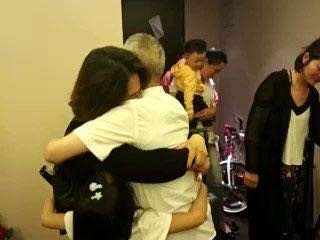
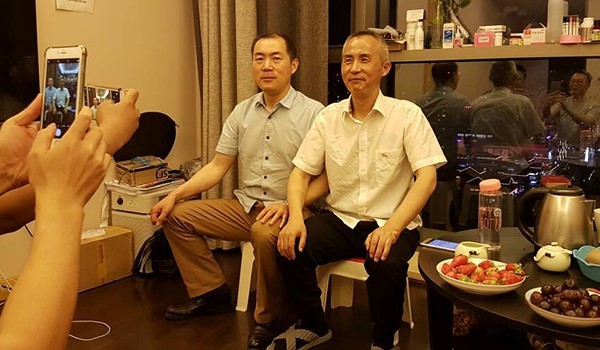
Li Heping reunion
Human rights lawyer, Li Heping (right) pictured with his brother Li Chunfu (left) following his release from detention.
Continue reading “No Ifs, No Buts: Torture Should Be Universally Condemned”

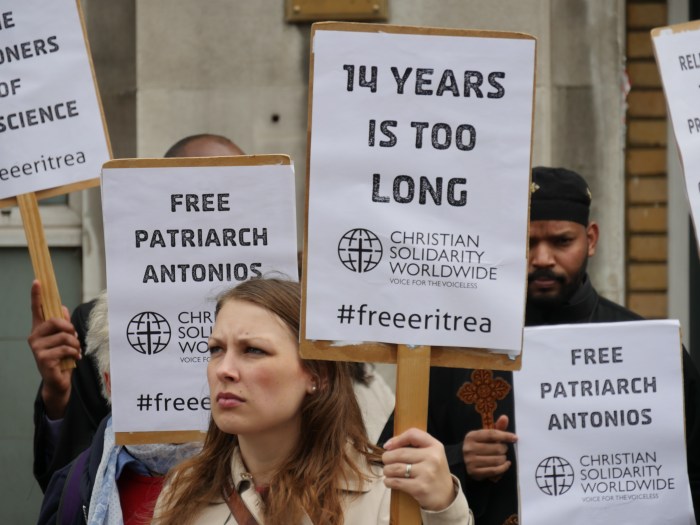
Eritrea Protest Vigil 2017

Three years ago, I found myself at the United Nations Human Rights Council (HRC), playing a game with an eight year old girl – I would say the name of an animal and she would draw it.  She was an Eritrean refugee and had come to the HRC with her parents as part of a delegation who were there to give testimony at a side event. Her entire family had been detained by the government, locked up with others in a shipping container. She shared memories of the entire place smelling awful, of being freezing cold at night and roasting hot during the day and of how she and her other siblings joked about which family member was covered with the most lice. A serious issue was turned into a game as their parents did  their best to shield their children from the full force of the horrors they were experiencing.

Continue reading “Eritrea Protest Vigil 2017”

What Difference Does a Special Envoy on Freedom of Religion or Belief Make?

As Ján Figel starts his second year as the EU Special Envoy for the Promotion of Freedom of Religion or Belief (FoRB) outside the European Union, the last 12 months of his time in this new mandate show the respect for this role that has developed amongst sceptics and the potential for his role going forward.

In under 12 months Mr Figel has raised the profile of FoRB as a human rights priority for the EU, highlighting the important role religion and belief, including the right not to believe, plays in the daily experience of millions across the globe.

Early on in his first term the Special Envoy said “FoRB is a litmus test for general human rights… Those who don’t understand, religion and the abuse of religion can’t comprehend what is going on in the world today.” At the end of his first year, there has been a visible widening of EU engagement on this sensitive human right, as part of its dialogue and development policies.

“FoRB is a litmus test for general human rights… Those who don’t understand, religion and the abuse of religion can’t comprehend what is going on in the world today.” – Ján Figel, EU Special Envoy for the Promotion of Freedom of Religion or Belief

Sudan is one of several countries with poor human rights records which Mr Figel has visited in his first year. Such visits open up opportunities for a senior EU diplomat to engage with religious leaders and religious communities to address societal hostilities, in addition to working with government officials.

Continue reading “What Difference Does a Special Envoy on Freedom of Religion or Belief Make?”

Li Heping’s Release – A Moment to Celebrate or a Continuing Case of Concern?

Li Heping’s reunion with his family on 9 May 2017 was a moment for celebration; the celebration of an innocent man’s reunion with his long-suffering family and the celebration of the end of a period of torture, interrogation and imprisonment. But the joy of Li Heping’s reunion with his family is tempered by continuing concerns for his safety, and the injustice of his situation.

Who is Li Heping?

Li Heping is one of China’s most experienced and high profile human rights lawyers. He began working on sensitive cases around 2002 and is well known for defending the human rights of religious minorities, including Christians and Falun Gong practitioners, as well as activists and victims of torture.

His work on these cases led to a confrontation with the state. A Chinese security agent reportedly once told him that, in the eyes of Beijing, Li had become “more dangerous than Bin Laden”. In September 2007, Li was abducted, stripped and tortured by security forces. He then had his lawyers’ license revoked in 2009, and continued to be consistently monitored.

Continue reading “Li Heping’s Release – A Moment to Celebrate or a Continuing Case of Concern?”