What Difference Does a Special Envoy on Freedom of Religion or Belief Make?

As Ján Figel starts his second year as the EU Special Envoy for the Promotion of Freedom of Religion or Belief (FoRB) outside the European Union, the last 12 months of his time in this new mandate show the respect for this role that has developed amongst sceptics and the potential for his role going forward.

In under 12 months Mr Figel has raised the profile of FoRB as a human rights priority for the EU, highlighting the important role religion and belief, including the right not to believe, plays in the daily experience of millions across the globe.

Early on in his first term the Special Envoy said “FoRB is a litmus test for general human rights… Those who don’t understand, religion and the abuse of religion can’t comprehend what is going on in the world today.” At the end of his first year, there has been a visible widening of EU engagement on this sensitive human right, as part of its dialogue and development policies.

“FoRB is a litmus test for general human rights… Those who don’t understand, religion and the abuse of religion can’t comprehend what is going on in the world today.” – Ján Figel, EU Special Envoy for the Promotion of Freedom of Religion or Belief

Sudan is one of several countries with poor human rights records which Mr Figel has visited in his first year. Such visits open up opportunities for a senior EU diplomat to engage with religious leaders and religious communities to address societal hostilities, in addition to working with government officials.

Continue reading “What Difference Does a Special Envoy on Freedom of Religion or Belief Make?”

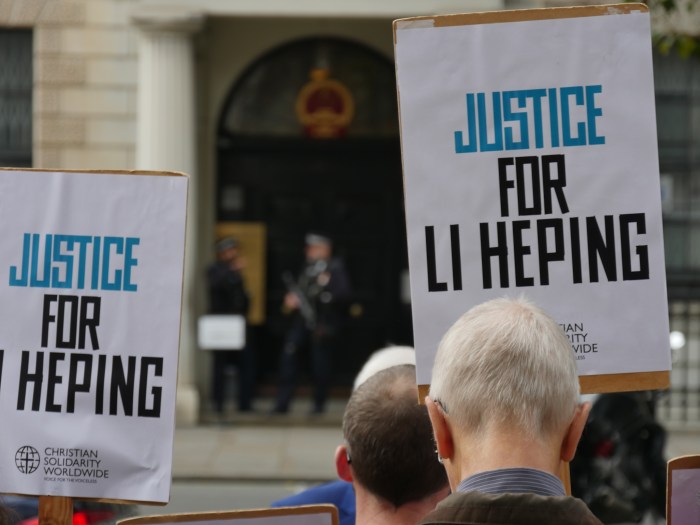
Li Heping’s Release – A Moment to Celebrate or a Continuing Case of Concern?

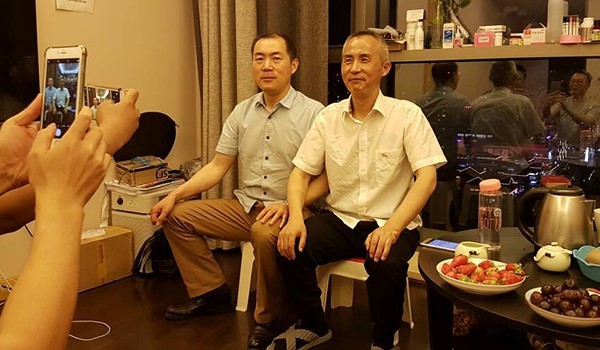
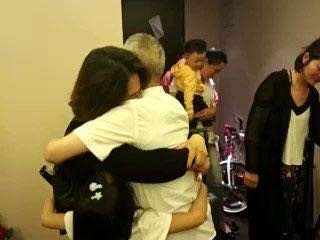
Li Heping’s reunion with his family on 9 May 2017 was a moment for celebration; the celebration of an innocent man’s reunion with his long-suffering family and the celebration of the end of a period of torture, interrogation and imprisonment. But the joy of Li Heping’s reunion with his family is tempered by continuing concerns for his safety, and the injustice of his situation.

Who is Li Heping?

Li Heping is one of China’s most experienced and high profile human rights lawyers. He began working on sensitive cases around 2002 and is well known for defending the human rights of religious minorities, including Christians and Falun Gong practitioners, as well as activists and victims of torture.

His work on these cases led to a confrontation with the state. A Chinese security agent reportedly once told him that, in the eyes of Beijing, Li had become “more dangerous than Bin Laden”. In September 2007, Li was abducted, stripped and tortured by security forces. He then had his lawyers’ license revoked in 2009, and continued to be consistently monitored.

Continue reading “Li Heping’s Release – A Moment to Celebrate or a Continuing Case of Concern?”

Turkey: Growing Religious Intolerance is Undermining Constitutional Commitments

American Pastor Andrew Brunson and his wife have been living in Turkey for 23 years running a church in Izmir with the full knowledge of the Turkish authorities.

However, on the 7 October 2016, they were summoned by the local police and accused for being a “threat to the national security”, with no further details supplied. While his wife was eventually released, Pastor Brunson was held in an immigration detention facility, where he was denied family visits and access to a bible. After two months in solitary confinement he was transferred to a high security prison in Izmir, before being brought before a court on 9 December, where he was informed he would be imprisoned due to his alleged links to the Gulen movement, the organisation deemed responsible for the attempted military coup in July 2016. The court did not reveal the source of this accusation. An appeal against the pastor’s imprisonment was turned down on 29 December, and a fresh appeal is expected to be launched at a higher court.

Deterioration in Human Rights and Rise in Ultra-nationalism

Pastor Brunson’s case is illustrative of the significant deterioration in human rights situation that occurred in the aftermath of the foiled military coup. Thousands of journalists, academics, activists, writers, teachers, judges and thinkers have been arrested since July 2016, accused of being “traitors and collaborators against national interests”, while others have been forced to adopt lower profiles and live in anticipation of being arrested.

Continue reading “Turkey: Growing Religious Intolerance is Undermining Constitutional Commitments”

Iran: How the Judicial System is used to Target Religious and Ethnic Minorities

Five Iranian Christians were arrested by Iranian Intelligence (VEVAK) Officers on 26 August while picnicking with their wives in a private garden in Firouzkooh, an area 90 miles east of Tehran. They were not holding a religious service. They were simply enjoying a picnic. Now they are detained in Evin Prison in Tehran.

Since President Rouhani came to office in August 2013 there has been an increase in the number of religious minorities imprisoned on account of their faith. The rise in harassment, arrests and restrictions on freedom of religion or belief (FoRB) are a major concern for non-Muslims, converts to Christianity, members of the Baha’i faith and minority Muslim groups.

Continue reading “Iran: How the Judicial System is used to Target Religious and Ethnic Minorities”

Enforced Disappearance: No Answers, No Accountability

Pictured: Widows Donatilda and Adalgiza

Ten years ago I sat in a small, hot room in Trujillo, Peru with a colleague and three women each clutching a folder. They held the folders as if they contained a fortune, and we leaned forward as one by one they carefully opened their folder to show us the precious contents. There were a few old photographs and scores of documents peppered with government stamps. When they finished, each woman closed her folder, looked at us, and said “I still don’t know where he is.”

The three women were talking about their husbands, victims of enforced disappearance. Some twenty years earlier the police had taken their husbands somewhere, making assurances to their young wives that they just needed to ask them a few questions and they’d soon be home. Days, then weeks, then years went by and their husbands did not return. The women went from police station to police station, then to the prisons, the hospitals and morgues but no one could tell them where they went, or rather, where they had been taken.

As we listened to them, I watched the way they treated the folders, holding them close to their chests, caressing the documents and photos as they showed them to us. I realised why the folders were so precious t them. It was because this was all they had left of their husbands. Without them, it was as if they had never existed at all.

Torturous Hope

Enforced disappearance is one of the cruellest human rights crimes.

There is the crime against the primary victim – who has disappeared – and this is compounded by the crime committed against their families and loved ones who endure years and even decades of wondering what has happened to them.

In the vast majority of these cases, the victim has been killed but the lack of a body or even information about their fate opens the door to hope that maybe they are out there somewhere. Hope, which is something we usually view as a positive thing, is distorted into a kind of torture as their families exhaust all their resources, financial as well as physical and emotional, to try to establish what has happened.

Continue reading “Enforced Disappearance: No Answers, No Accountability”