FoRB in China: The UK needs to speak out


Prime Minister Theresa May’s first official visit to China, which begins today, is billed as an opportunity to boost trade with an important ally. But it will also take place against the backdrop of the country’s violations of fundamental human rights, including freedom of religion or belief.

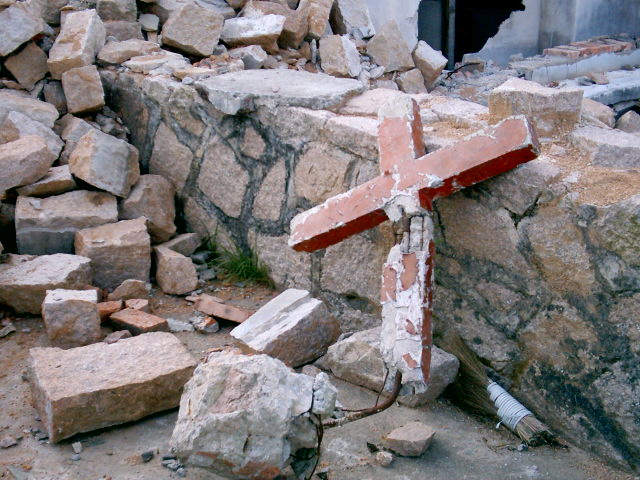
In the last month, Christians have been detained, and unregistered churches shut down or destroyed ahead of the implementation of revised Regulations on Religious Affairs, which strengthen state control over religious activities in China.

Unregistered churches, sometimes called house churches, are independent churches which have not registered with the state-sanctioned Three Self Patriotic Movement. The new regulations are due to come into force tomorrow, giving Mrs May a rare opportunity to speak directly to the Chinese government and publicly to reiterate the UK’s commitment to defending human rights.

Continue reading “FoRB in China: The UK needs to speak out”

The European Parliament’s Watchdog on Freedom of Religion or Belief: Bark or Bite?

European Union (EU) policy on the right to freedom of religion or belief (FoRB) has seen several positive developments over the past decade, one of the most significant being the 2013 EU Guidelines on the Promotion and Protection of FoRB.

Achieving consensus on the guidelines was no easy task as the 28 Member States have various models of church-state relations; some even have legislation or internal challenges that constitute obstacles to FoRB and can undermine its human rights message overseas, such as blasphemy laws. However agreement on the guidelines produced a common reference point for Member States and commits the EU to using a variety of tools to protect the victims of FoRB violations worldwide.

The European Parliament (EP) Intergroup on Freedom of Religion or Belief and Religious Tolerance aims to be the watchdog that ensures their implementation.

Continue reading “The European Parliament’s Watchdog on Freedom of Religion or Belief: Bark or Bite?”

UK General Election: an opportunity to reiterate a commitment to human rights

Coming less than a year after the EU referendum, the UK’s snap General Election on Thursday will provide a fresh opportunity to ensure human rights are at the heart of government policies.

Amid competing priorities, it remains important that the new government pledges to uphold the UK’s commitment to human rights, including the right to freedom of religion or belief (FoRB) in all aspects of foreign policy, including diplomacy, international aid and trade.

Freedom of Religion or Belief matters

According to the United States Commission for International Religious Freedom (USCIRF), the state of international religious freedom is worsening in both the depth and breadth of violations. Its new report states:

“the blatant assaults have become so frightening—attempted genocide, the slaughter of innocents, and wholesale destruction of places of worship—that less egregious abuses go unnoticed or at least unappreciated.”

Against this backdrop, it’s increasingly important that the government shows its commitment to protecting this right. It must speak with boldness in challenging FoRB violations and allocate adequate resources, in addition to using its diplomatic and political capital, to address them.

Continue reading “UK General Election: an opportunity to reiterate a commitment to human rights”

What Difference Does a Special Envoy on Freedom of Religion or Belief Make?

As Ján Figel starts his second year as the EU Special Envoy for the Promotion of Freedom of Religion or Belief (FoRB) outside the European Union, the last 12 months of his time in this new mandate show the respect for this role that has developed amongst sceptics and the potential for his role going forward.

In under 12 months Mr Figel has raised the profile of FoRB as a human rights priority for the EU, highlighting the important role religion and belief, including the right not to believe, plays in the daily experience of millions across the globe.

Early on in his first term the Special Envoy said “FoRB is a litmus test for general human rights… Those who don’t understand, religion and the abuse of religion can’t comprehend what is going on in the world today.” At the end of his first year, there has been a visible widening of EU engagement on this sensitive human right, as part of its dialogue and development policies.

“FoRB is a litmus test for general human rights… Those who don’t understand, religion and the abuse of religion can’t comprehend what is going on in the world today.” – Ján Figel, EU Special Envoy for the Promotion of Freedom of Religion or Belief

Sudan is one of several countries with poor human rights records which Mr Figel has visited in his first year. Such visits open up opportunities for a senior EU diplomat to engage with religious leaders and religious communities to address societal hostilities, in addition to working with government officials.

Continue reading “What Difference Does a Special Envoy on Freedom of Religion or Belief Make?”

Brexit Wounds – The UK’s Post-EU Human Rights Challenges

As the Prime Minister assembled her new cabinet following the UK referendum on its membership of the European Union (EU), attention was rightly being paid to the how the new-look Government would deal with Britain’s decision to leave. Those appointed by Theresa May know that, whatever their brief, a significant proportion of the Government’s work will be negotiating, executing and accounting for the UK’s withdrawal from EU.

While it is understandable that this unprecedented task will be time consuming for the UK Government, this must not be allowed to supersede its obligation to promote and protect human rights worldwide.

Human Rights within the European Union

For all the debated successes and failures of the EU, what is undeniable is that its various institutions engage in significant human rights work.

Continue reading “Brexit Wounds – The UK’s Post-EU Human Rights Challenges”