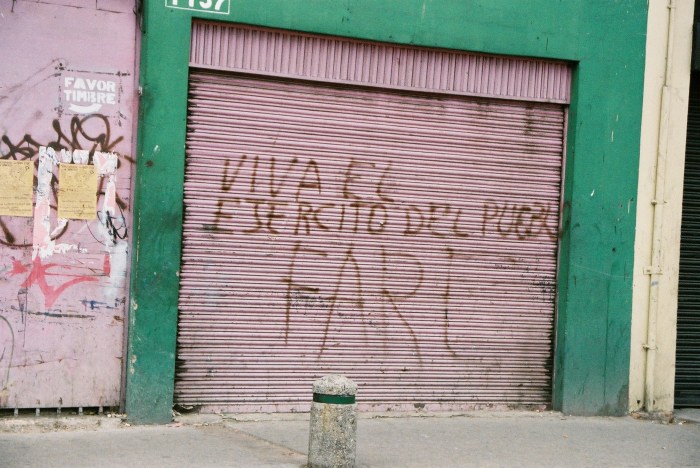
Graffiti in Colombia reads 'Viva el ejercito del pueblo FARC' i.e. 'Long live the army of the people, FARC'

Colombia debe finalmente enfrentarse al elemento religioso de su conflicto interno que lleva décadas

En Colombia la oscuridad llega rápidamente debido a su proximidad al ecuador, y no fue diferente el jueves 5 de julio de 2007.  Esa noche, Joel Cruz García, un pastor de 27 años, escuchó golpes en la puerta principal de la pequeña casa que compartía con su esposa Yuvy y su hija de nueve meses, en el pueblo de El Dorado en el departamento de Huila. Cuando el pastor abrió la puerta, se encontró con un grupo de individuos fuertemente armados y vestidos con el uniforme de la Brigada 17 de las Fuerzas Armadas Revolucionarias de Colombia, mejor conocidas como las FARC, quienes le exigieron que los acompañara.

Al pastor no se le dio otra opción, y su esposa contó más tarde cómo, incluso cuando los guerrilleros lo maltrataban y le ridiculizaban por su fe, Joel les citó un versículo de la Biblia que decía: “Vivir es Cristo y morir es ganancia”.

“Bien”, respondieron los guerrilleros. “Entonces morirás”.

Continue reading “Colombia debe finalmente enfrentarse al elemento religioso de su conflicto interno que lleva décadas”
Graffiti in Colombia reads 'Viva el ejercito del pueblo FARC' i.e. 'Long live the army of the people, FARC'

Colombia must finally reckon with the religious element of its decades long internal conflict

Darkness falls quickly in Colombia due to its proximity to the equator, and it was no different on the night of Thursday 5 July 2007. As night closed in, Joel Cruz Garcia, a 27-year-old pastor, heard banging on the front door of the small home he shared with his wife Yuvy and their nine-month-old daughter in the village of El Dorado in the department of Huila. When the pastor opened the door, he was faced with a heavily armed group of individuals dressed in the uniform of the 17th Brigade of the Revolutionary Armed Forces of Colombia, better known as the FARC, who demanded that he come with them.  

The pastor was given no choice, and his wife later recounted how even as the guerrillas manhandled him and ridiculed his faith, Joel quoted a Bible verse to them, saying, ‘To live is Christ and to die is gain.’ 

‘Good,’ the guerrillas responded. ‘Then you will die.’ 

Continue reading “Colombia must finally reckon with the religious element of its decades long internal conflict”
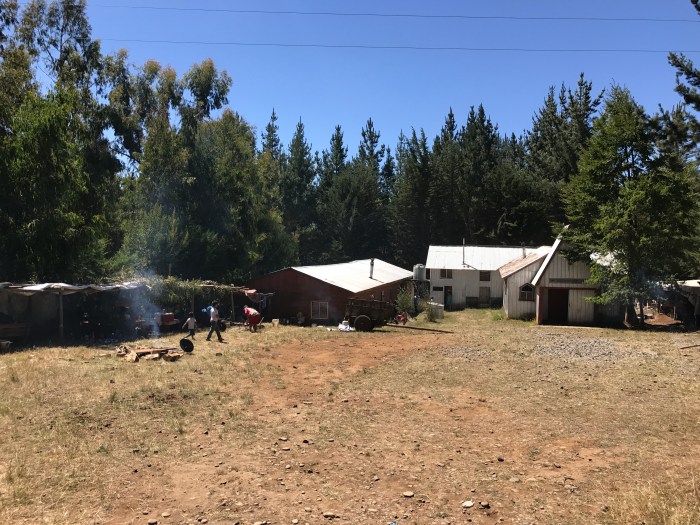
A church in Araucania, Chile.

‘La única iglesia que ilumina es la que arde’: Las brasas ardientes de la historia de éxito de Chile en América Latina

Hoy se cumplen 50 años desde que el golpe de Estado de Augusto Pinochet cambió para siempre el curso de la historia chilena. Su gobierno provocó años de atroces violaciones de derechos humanos, durante los cuales muchos chilenos fueron torturados, asesinados o desaparecidos por la fuerza, y sus cuerpos nunca fueron encontrados.  El trauma aún hoy deja cicatrices en la población.

Pinochet fue derrocado del poder en 1990 después de 17 años de brutal dictadura militar, y cuando el presidente Patricio Aylwin asumió el cargo el 11 de marzo de 1990, declaró: “Chile no quiere violencia ni guerra; quiere paz”. Si bien Chile ha disfrutado de una paz relativa y los derechos humanos en general han sido respetados desde 1990 en comparación con los 17 años anteriores, las palabras de Aylwin todavía suenan ciertas, a más de 30 años después.

El éxito se está agotando

Chile ha sido ampliamente elogiado por su estabilidad durante la última década; próspero y pacífico, en gran medida al margen de los niveles de violencia experimentados por otros países de la región. La historia de éxito latinoamericana está respaldada en gran medida por estadísticas, como las del Índice de Paz Global, que ubicó a Chile en el puesto 58 de 163 países por sus niveles de paz en 2023.

Continue reading “‘La única iglesia que ilumina es la que arde’: Las brasas ardientes de la historia de éxito de Chile en América Latina”
Ruins of Nan Lan Village in Myanmar. Credit: Free Burma Rangers.

The brutal ‘Four Cuts’ strategy is causing untold suffering in Myanmar, yet the international community remains slow to react

The ‘Four Cuts’ strategy, designed to sever insurgents’ supplies of food, funds, information and recruits, is an approach that has been used for decades by a series of military dictatorships in Myanmar/Burma. This devastating tactic is once again being employed, but in one of its bloodiest forms yet.  

Breaking society 

In a remarkable piece of reporting, in a country where foreign journalists have no official access to the true story of Myanmar’s civil war, Sky News recently released details of an undercover mission deep into southeastern Myanmar. Chief correspondent Stuart Ramsay encountered first-hand the Myanmar military regime’s devastating campaign of violence. 

Ramsay and his team discovered shocking evidence of sustained attacks on civilian homes and infrastructure, including daily artillery and aerial bombardment as well as arson attacks, which are forcing people from their homes with over 1.5 million people currently displaced and in desperate need of humanitarian assistance. 

Continue reading “The brutal ‘Four Cuts’ strategy is causing untold suffering in Myanmar, yet the international community remains slow to react”
Joseph Colony in Lahore, Pakistan, which was infamously attacked in March 2013 after Sawan Masih was accused of blasphemy.

Pakistan needs to wake up to its blasphemy law crisis before it is too late

Last month, the desecration and burning of the Quran in Stockholm, Sweden sparked worldwide condemnation. Pakistan witnessed widespread protests and termed the act as blasphemous and deeply damaging to the sentiments of the Muslim community. A banned extremist group in the country, Lashkar-e-Jhangvi, labelled it as an attack by Christians on Muslims and called on their followers to attack Christian settlements and kill Christians, while further vowing that they will make Pakistan a ‘hell for Christians’.

Last week, in the city of Sargodha, in Punjab province, a blasphemous poster was found near a local mosque. It prompted locals to gather in protest and demand that the police find a Christian from the nearby Christian settlement of Maryam Town. Since then, tensions in the area have been high with most of the 3,000-4,000 Christian families fleeing their homes due to fear of a mob related attacks.

Tensions over blasphemy have already had devastating consequences in Pakistan this year. On 6 May, a local cleric in the city of Mardan, Khyber Pakhtunkhwa province, was killed by a mob after he was accused of making a blasphemous reference during a political rally of former Prime Minister Imran Khan’s party. In February a mob in the city of Nankana Sahib, Punjab, stormed the police station and proceeded to lynch and kill a man accused of blasphemy.

Continue reading “Pakistan needs to wake up to its blasphemy law crisis before it is too late”