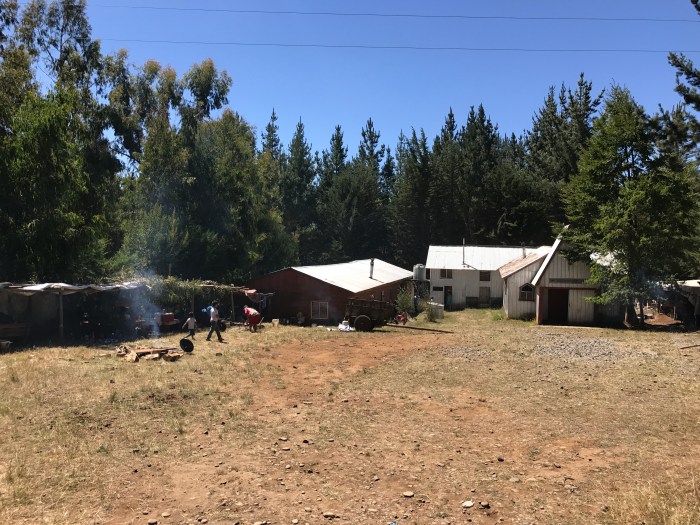
A church in Araucania, Chile.

‘La única iglesia que ilumina es la que arde’: Las brasas ardientes de la historia de éxito de Chile en América Latina

Hoy se cumplen 50 años desde que el golpe de Estado de Augusto Pinochet cambió para siempre el curso de la historia chilena. Su gobierno provocó años de atroces violaciones de derechos humanos, durante los cuales muchos chilenos fueron torturados, asesinados o desaparecidos por la fuerza, y sus cuerpos nunca fueron encontrados.  El trauma aún hoy deja cicatrices en la población.

Pinochet fue derrocado del poder en 1990 después de 17 años de brutal dictadura militar, y cuando el presidente Patricio Aylwin asumió el cargo el 11 de marzo de 1990, declaró: “Chile no quiere violencia ni guerra; quiere paz”. Si bien Chile ha disfrutado de una paz relativa y los derechos humanos en general han sido respetados desde 1990 en comparación con los 17 años anteriores, las palabras de Aylwin todavía suenan ciertas, a más de 30 años después.

El éxito se está agotando

Chile ha sido ampliamente elogiado por su estabilidad durante la última década; próspero y pacífico, en gran medida al margen de los niveles de violencia experimentados por otros países de la región. La historia de éxito latinoamericana está respaldada en gran medida por estadísticas, como las del Índice de Paz Global, que ubicó a Chile en el puesto 58 de 163 países por sus niveles de paz en 2023.

Continue reading “‘La única iglesia que ilumina es la que arde’: Las brasas ardientes de la historia de éxito de Chile en América Latina”
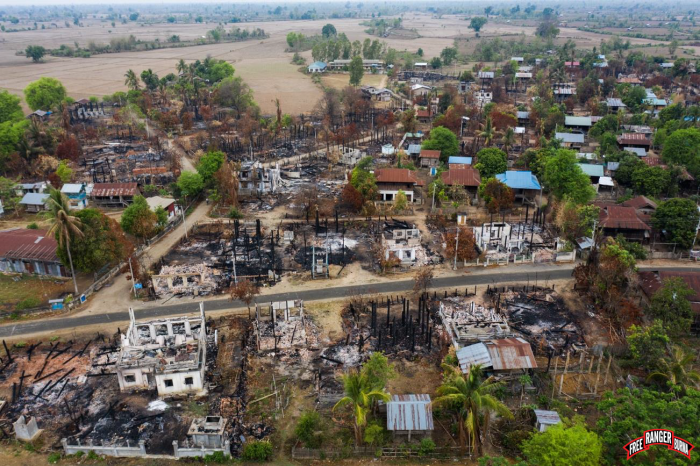
Ruins of Nan Lan Village in Myanmar. Credit: Free Burma Rangers.

The brutal ‘Four Cuts’ strategy is causing untold suffering in Myanmar, yet the international community remains slow to react

The ‘Four Cuts’ strategy, designed to sever insurgents’ supplies of food, funds, information and recruits, is an approach that has been used for decades by a series of military dictatorships in Myanmar/Burma. This devastating tactic is once again being employed, but in one of its bloodiest forms yet.  

Breaking society 

In a remarkable piece of reporting, in a country where foreign journalists have no official access to the true story of Myanmar’s civil war, Sky News recently released details of an undercover mission deep into southeastern Myanmar. Chief correspondent Stuart Ramsay encountered first-hand the Myanmar military regime’s devastating campaign of violence. 

Ramsay and his team discovered shocking evidence of sustained attacks on civilian homes and infrastructure, including daily artillery and aerial bombardment as well as arson attacks, which are forcing people from their homes with over 1.5 million people currently displaced and in desperate need of humanitarian assistance. 

Continue reading “The brutal ‘Four Cuts’ strategy is causing untold suffering in Myanmar, yet the international community remains slow to react”
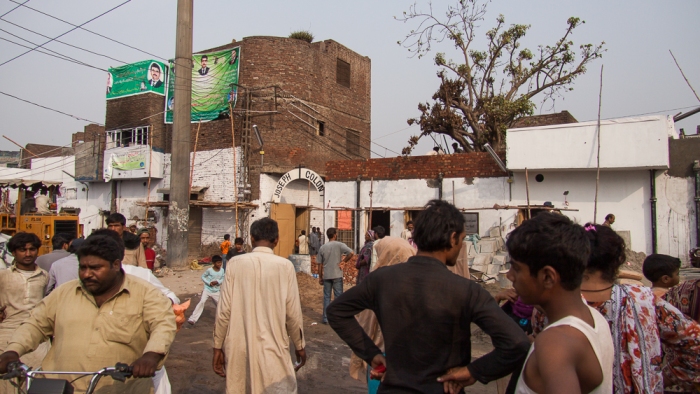
Joseph Colony in Lahore, Pakistan, which was infamously attacked in March 2013 after Sawan Masih was accused of blasphemy.

Pakistan needs to wake up to its blasphemy law crisis before it is too late

Last month, the desecration and burning of the Quran in Stockholm, Sweden sparked worldwide condemnation. Pakistan witnessed widespread protests and termed the act as blasphemous and deeply damaging to the sentiments of the Muslim community. A banned extremist group in the country, Lashkar-e-Jhangvi, labelled it as an attack by Christians on Muslims and called on their followers to attack Christian settlements and kill Christians, while further vowing that they will make Pakistan a ‘hell for Christians’.

Last week, in the city of Sargodha, in Punjab province, a blasphemous poster was found near a local mosque. It prompted locals to gather in protest and demand that the police find a Christian from the nearby Christian settlement of Maryam Town. Since then, tensions in the area have been high with most of the 3,000-4,000 Christian families fleeing their homes due to fear of a mob related attacks.

Tensions over blasphemy have already had devastating consequences in Pakistan this year. On 6 May, a local cleric in the city of Mardan, Khyber Pakhtunkhwa province, was killed by a mob after he was accused of making a blasphemous reference during a political rally of former Prime Minister Imran Khan’s party. In February a mob in the city of Nankana Sahib, Punjab, stormed the police station and proceeded to lynch and kill a man accused of blasphemy.

Continue reading “Pakistan needs to wake up to its blasphemy law crisis before it is too late”
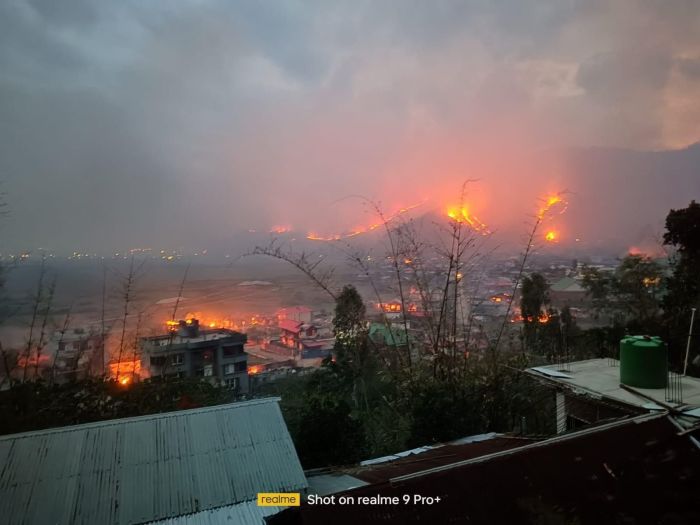
Fires in India's Manipur state.

‘We don’t know how we can restart our lives’ – stories from Manipur

‘On 3 May, around 10pm, we heard people throwing stones at our house. We didn’t understand what was happening. In the morning, we woke up and we were cooking. We saw that there was a frenzy outside. Everyone was walking out of their homes with their bags packed. They asked us why we were still at home and explained the situation. We were scared.’

Runa, Imphal

India’s Manipur State has been engulfed in violence for two and a half months now. Sparked by a protest on 3 May in which an estimated 60,000 people marched in opposition to the Manipur High Court’s request to the state government to send a recommendation to the central government to include the non-tribal Meitei community in the Scheduled Tribe (ST) category, the unrest has claimed at least 100 lives, with local sources suggesting that the death toll is significantly higher.

Thousands of homes have been burned down and tens of thousands of people have been forcibly displaced in a dispute over whether the predominantly Hindu Meitei community should be granted access to the same benefits afforded to the state’s typically more disadvantaged tribal communities.

Continue reading “‘We don’t know how we can restart our lives’ – stories from Manipur”
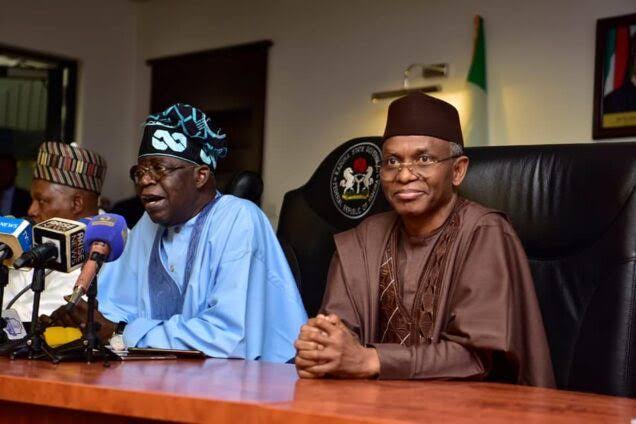
Former governor of Kaduna State Nasir El-Rufai with current Nigerian president Bola Ahmed Adekunle Tinubu.

We must not let Nigeria slide any further into failed statehood

‘Of course, we do consider religion, but I would not tell them that…’. It seems that Nasir El-Rufai, governor of Nigeria’s Kaduna State from May 2015 until May 2023, is no longer hiding his biases.

Addressing a group of Muslim clerics on his penultimate day in office after his party, the All Progressives Congress (APC), was declared the winner of the Kaduna State gubernatorial election, El-Rufai spoke extensively about how the APC had capitalised on religion, including by running on a Muslim-Muslim ticket, to secure electoral victory.

‘What we are able to achieve in Kaduna, we’ve now achieved on the national level,’ he added – a reference to the controversial and disputed victory of the APC in the presidential elections in February this year, also via a Muslim-Muslim ticket.

Continue reading “We must not let Nigeria slide any further into failed statehood”