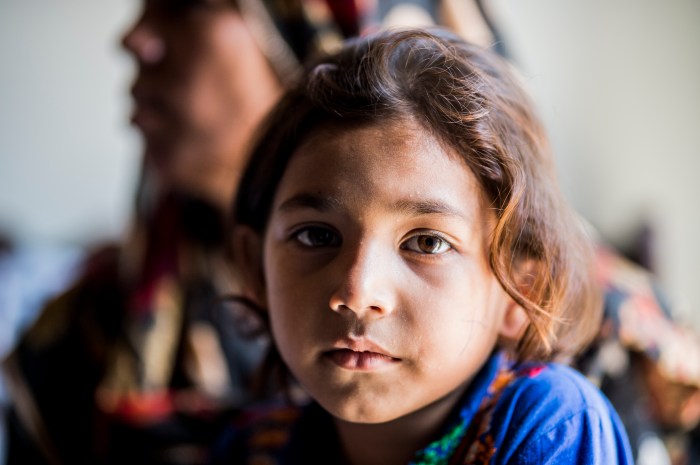
Youhanabad: This Is Our Land, This Is Our Spirit

For 65 years we have tolerated aggression against us so something must have drastically gone wrong that day for that to happen.’

Walking into Youhanabad on the outskirts of Lahore you notice the busyness of life; children playing, street vendors selling fruit and delicious fried snacks and motorbikes and scooters whizzing pass. Two years ago that the scene was transformed – chaos, carnage and confusion ensued on the morning of Sunday 15th March in 2015 when two suicide bombers approached Christ Church and St John’s Catholic Church and blew themselves up killing 15 and injuring around 70 people. After the bombing a mob was instigated, protest turned into violence and violence resulted in two people being lynched.

‘Within a few minutes victims became aggressors’

Continue reading “Youhanabad: This Is Our Land, This Is Our Spirit”

The Courage of Cuba’s Ladies in White

Every Sunday Cuba’s Ladies in White (Damas de Blanco, in Spanish) have been forcibly and often violently prevented from attending Sunday morning services. Every Sunday since the group was formed in 2003, the women attend (or at least attempt to attend) Sunday Mass dressed in white to symbolise peace and walk through the streets in silent protest afterwards.

The Ladies in White movement was formed in response to the Black Spring in 2003 – a mass crackdown by the Cuban government on dissidents and journalists. Since 2010, all of the Black Spring prisoners have now been released. However, political prisoners remain in Cuba and the Ladies in White, a movement largely comprised of wives and other female relatives of former and current political prisoners remain active.

As the world marks International Women’s Day on 8 March, CSW commends their courage and peaceful protest, which saw them awarded the European Parliament’s Sakharov Prize for Freedom of Thought in 2005.

Continue reading “The Courage of Cuba’s Ladies in White”

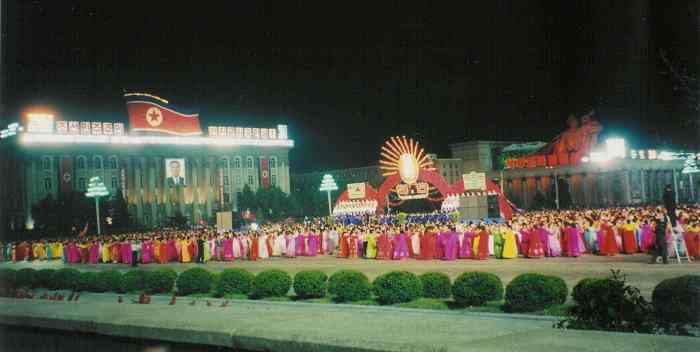
We Must Use Every Creative Tool To Prise Open North Korea

Exactly two years ago, on 22 February 2014, the United Nations (UN) finally shone a light on the darkest corner of the world, North Korea. Its year-long Commission of Inquiry, chaired by Australian judge Michael Kirby, published a damning report concluding that “the gravity, scale and nature” of the horrific human rights violations in North Korea “reveal a State that does not have any parallel in the contemporary world” and that the catalogue of abuses amounting to crimes against humanity should lead to a referral to the International Criminal Court (ICC).

International community calls for justice and concrete action

In January 2016, the UN Special Rapporteur on human rights in North Korea, Marzuki Darusman, said it is “now imperative to pursue criminal responsibility” of the North Korean leadership. “Not much has changed in the country almost two years after the report of the Commission of Inquiry,” he added.

The European Parliament also passed a resolution calling for an end to impunity and for those responsible for crimes against humanity to be brought before the ICC and be subject to targeted sanctions.

Continue reading “We Must Use Every Creative Tool To Prise Open North Korea”

Mexico: Going Home – Casto’s Case Update

                                               Pictured: Casto Hernández Hernández (right) with his pastor

Casto Hernández Hernández and his cousin Juan Placido Hernández Hernández were first imprisoned and then forcibly displaced in March 2015 after they refused to renounce their Protestant beliefs. Despite the open admission by a village leader in early court hearings that he had attempted to force the men to change their religious beliefs, the case dragged on for almost eleven months, with the Public Ministry repeatedly cancelling or postponing hearings [See more].

Agreement on religious freedom allows the men to return home

On 2 February, the Public Ministry in the state of Hidalgo, Mexico, reached a decision and put in place an agreement between Casto Hernández and Juan Placido Hernández and authorities from the village of Chichiltepec.

The agreement – drafted by the lawyers affiliated with CSW’s Mexican partner Impulso 18 and endorsed by the Public Ministry – guarantees total freedom of religion or belief (FoRB) in the village of Chichiltepec and Casto and Juan Placido’s right to return, with their full religious rights recognised.

According to the director of Impulso 18, Jorge Lee, the village authorities came to the meeting prepared to fight. When they realized they were ‘one step away from going to jail’, however, they changed their position, signed agreement and promised to uphold religious freedom in Chichiltepec.

While none of the village authorities spent any time in prison despite their criminal actions, we, and most importantly Casto and Juan Placido, feel that this agreed outcome is the right course of action.

It establishes their constitutional rights in a very clear way but also allows them to re-join their community in as harmoniously a way as possible. The concern was that if the authorities were thrown in prison, the levels of hostility would be so high, and the rupture in the indigenous community network so profound that it would be impossible for the two men to ever return home.

Continue reading “Mexico: Going Home – Casto’s Case Update”

Freedom of Religion or Belief in Full

Three quarters of the world’s population lives in countries with severe restrictions on the right to freedom of religion or belief (FoRB) – in fact, it’s one of the most widely-violated human rights in the world.

This blog is all about FoRB; how to better understand the different aspects of this often-overlooked right, the situation in countries where this and other rights are violated – and the perpetrators and victims at the centre of it all.

Expert analysis by members of CSW’s advocacy team, who work in over 20 countries across Asia, Africa, the Middle East and Latin America, will put a spotlight on FoRB issues in the news and CSW’s research.

Continue reading “Freedom of Religion or Belief in Full”