Pope Francis leaves a legacy of standing up for freedom of religion or belief. His successor must build on it. 

‘There can be no peace without freedom of religion, freedom of thought, freedom of expression and respect for the views of others.’ 

It is both fitting and moving that Pope Francis included these words in what was to be his final public address, delivered on his behalf by Master of Liturgical Ceremonies Archbishop Diego Ravelli to a crowd of over 20,000 people at the Vatican’s St. Peter’s Square on Easter Sunday. 

Throughout his 12-year papacy, Francis was a committed friend to the poor and the marginalised, a vocal advocate for freedom of religion or belief (FoRB) and other fundamental human rights, and a man who spoke truth to power right up to the final days of his pontificate. 

At a time when leaders of such humility and integrity appear to be in increasingly short supply, it is essential that his successor follows his example. 

Continue reading “Pope Francis leaves a legacy of standing up for freedom of religion or belief. His successor must build on it. “

A year since over 170 Protestants were forced from their homes, authorities in Mexico’s Hidalgo State must take action to protect religious minorities 

It was the end of 2015 when Rogelio Hernández Baltazar returned to his community in Rancho Nuevo in the Huejutla de Reyes Municipality of Hidalgo State. He had spent several months working in the fields of Coahuila in Northern Mexico, because there were no opportunities for work or to generate income to support his family in his own village. 

This time things were different; he returned to his community transformed after having struggled for years with alcohol addiction and anger management. While he was working in Coahuila a colleague had invited him to the local Fundamental Baptist Church, where he made the decision to convert to Christianity. What he did not know was that it would have serious consequences within his community. 

When Rogelio returned home things seemed not to have changed much, but something inside him had. He had only been attending the church in Coahuila for two months, but when he returned to his indigenous Nahuatl community, people noticed such a significant change in him that they began to wonder what had happened to him in his workplace. With the little understanding that he had, Rogelio began to explain that his radical change was due to what he had read in the Bible, so he invited people to Bible studies in his home.  

Continue reading “A year since over 170 Protestants were forced from their homes, authorities in Mexico’s Hidalgo State must take action to protect religious minorities “

A un año de que más de 170 protestantes fueran expulsados de sus hogares, las autoridades del Estado de Hidalgo, México, deben tomar medidas para proteger a esta minoría religiosa

A finales de 2015, Rogelio Hernández Baltazar regresó a su comunidad en Rancho Nuevo, municipio de Huejutla de Reyes, estado de Hidalgo. Había pasado varios meses trabajando en los campos de Coahuila, en el norte de México, porque no había oportunidades de trabajo ni de generar ingresos para mantener a su familia en su propio pueblo. 

Esta vez las cosas fueron diferentes; regresó a su comunidad transformado tras años de lucha contra la adicción al alcohol y controlar la ira. Mientras trabajaba en Coahuila, un colega lo invitó a la Iglesia Bautista Fundamental local, donde decidió entrar al cristianismo. Lo que no sabía era que esto le traería graves consecuencias en su comunidad. 

Cuando Rogelio regresó a casa, las cosas parecían no haber cambiado mucho, pero algo dentro de él sí. Solo llevaba dos meses asistiendo a la iglesia en Coahuila, pero al regresar a su comunidad indígena náhuatl, la gente notó un cambio tan significativo en él, que empezaron a preguntarse qué le había pasado en su lugar de trabajo. Con la poca comprensión que tenía, Rogelio comenzó a explicar que su cambio radical se debía a lo que había leído en la Biblia, así que invitó a la gente a participar en estudios bíblicos en su casa. 

Continue reading “A un año de que más de 170 protestantes fueran expulsados de sus hogares, las autoridades del Estado de Hidalgo, México, deben tomar medidas para proteger a esta minoría religiosa”

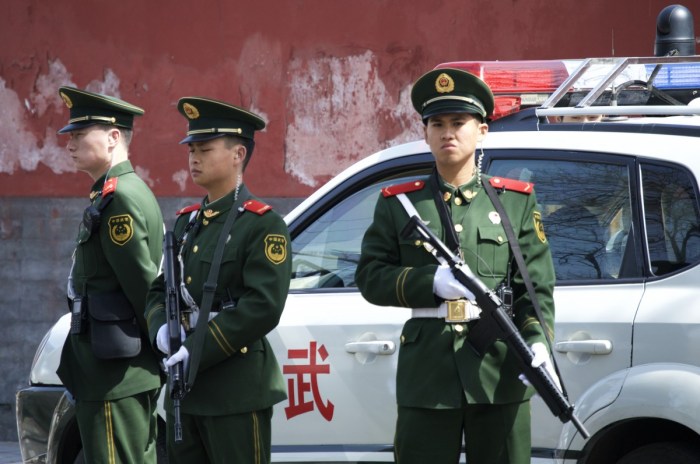
In China’s sprawling, complex legal system, it’s easy to trap the innocent

The Chinese criminal justice system is complex and expansive. There are multiple forms of detention, multiple types of arrest, and countless opportunities for the authorities to delay and defer proceedings – as they have done with increasing frequency in recent years – before a case even makes it to trial. 

This, of course, suits the Chinese Communist Party (CCP). A system that is difficult to navigate is easy to manipulate. It makes it harder for detainees, suspects, their lawyers and family members to know where they stand or even the charges they may be facing; it becomes more challenging for activists and journalists to report on and respond to crucial developments in a case, and ultimately nigh impossible for anyone the CCP is set on imprisoning to clear their name. 

This blog aims to shed light on the key steps in the Chinese judicial process, and how they can be subverted as the authorities take advantage of vague language and myriad loopholes in the country’s Criminal Procedure Law (CPL) to prolong the suffering of those they have arbitrarily detained and imprisoned. 

Continue reading “In China’s sprawling, complex legal system, it’s easy to trap the innocent”

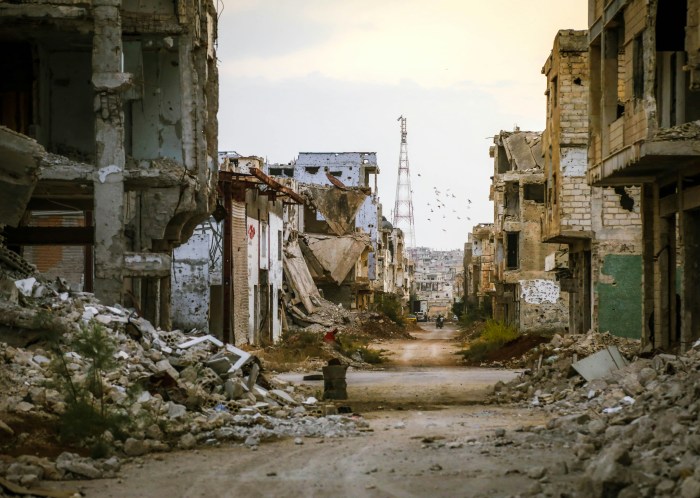
Control of Khartoum may have changed hands, but Sudan’s nightmare is far from over

In late March the Sudan Armed Forces (SAF) claimed a significant victory. After months of fighting, the army declared that it had seized full control of the Sudanese capital Khartoum from the Rapid Support Forces (RSF) militia.

Visiting the presidential palace for the first time since conflict broke out between the two forces almost two years ago, the leader of the SAF Abdel Fattah al-Burhan said, ‘Khartoum is free, it’s done.’

Some residents of the city may have even breathed a small sigh of relief. While both the RSF and SAF stand accused of the gravest of international crimes, it is generally accepted that conditions are marginally better in areas under SAF rule, perhaps because it is the party to the conflict that currently occupies Sudan’s seat in international arenas.

But the country’s nightmare is far from over.

Continue reading “Control of Khartoum may have changed hands, but Sudan’s nightmare is far from over”