‘More that unites us’: Bridging the border between Indians, Pakistanis, Hindus and Muslims

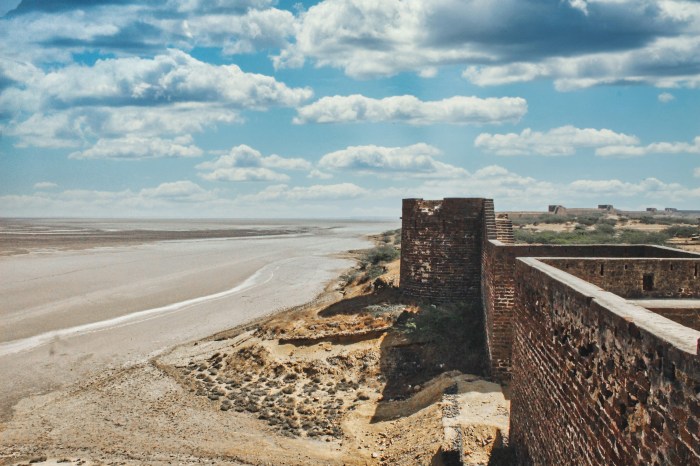
This month marked 77 years since one of the world’s most violent religious conflicts: the partition of India and Pakistan, which claimed more than a million Hindu and Muslim lives and displaced over 15 million people. A people that once lived together were now forced to choose sides. Families were torn apart.  The bloodshed didn’t end there and neither did the hatred, as the countries fought several more wars in the years to come. 

On either side of the border, my generation grew up hearing the worst of each other. Most of the narratives we read in newspapers or watched in the cinema portrayed the other in bad light. The enmity and hatred was and continues to be so deep rooted that it affects religious groups in both nations. 

I cannot count the number of times I have heard an Indian Muslim being called a Pakistani in a derogatory tone. Ever since the Bharatiya Janata Party (BJP) first came to power in 2014, these slurs have only become more frequent and toxic.

Continue reading “‘More that unites us’: Bridging the border between Indians, Pakistanis, Hindus and Muslims”
Every Sunday…

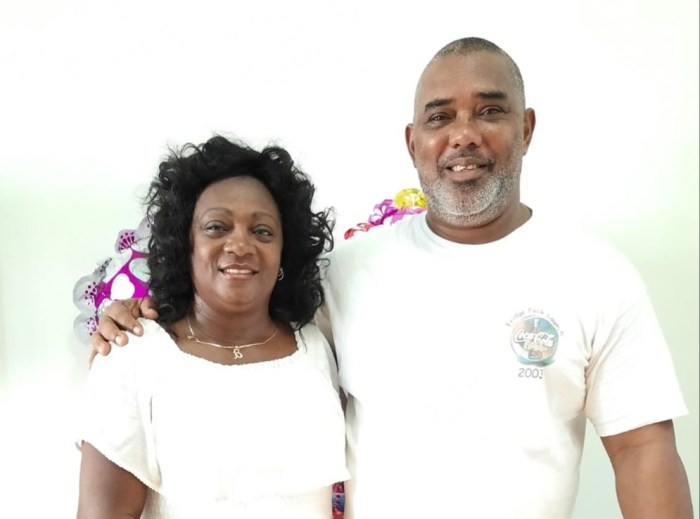
Every Sunday, between 12:30pm and 1pm, Berta Soler Fernández prepares herself.  She and her husband, Ángel Moya Acosta step outside their home, a square, two story building painted red, with a light green porch. They have every intention of making their way to a Roman Catholic Church in the Miramar section of Havana, Cuba. The church is named for Saint Rita of Cascia, the patron saint of abuse, loss, peace, desperate cases and lost causes. They will attend Mass and offer up prayers.  

Berta is dressed all in white. 

Every Sunday, between 12:30pm and 1pm, Berta and Ángel open the door of their home and are met by National Revolutionary Police (NRP) officers and Department of State Security (DSS) agents. Mobs of paramilitary members, some holding signs with offensive and insulting messages, hold up mobile phones as they record the couple’s movements. The two are forced into DSS cars with private license plates and, instead of going to Mass, they are taken to an NRP station. They are ordered to undergo an intrusive medical examination. They refuse because they have not asked for an examination and know that they will not be provided with the results anyway. Those will go to the DSS. Berta and Ángel are then sent to semi-dark prison cells where they will be held until the following morning. They will be taken by car and dropped off near their home, which also serves as the national headquarters for the Ladies in White, a dissident group that has been holding peaceful protests in support of political prisoners since 2003. 

Continue reading “Every Sunday…”

Cada Domingo…

Cada domingo, entre las 12:30pm y las 13:00pm, Berta Soler Fernández se alista. Ella y su marido, Ángel Moya Acosta, salen de su casa, un edificio cuadrado de dos pisos pintado de rojo, con un porche verde claro. Tienen la intención de dirigirse a una iglesia católica romana en la sección Miramar de La Habana, Cuba. La iglesia lleva el nombre de Santa Rita de Casia, la santa patrona de los casos desesperados, del abuso, de la pérdida, de la paz, y de las causas perdidas. Asistirán a misa y ofrecerán sus oraciones. 

Berta está vestida toda de blanco. 

Cada domingo, entre las 12:30pm y las 13:00pm, Berta y Ángel abren la puerta de su casa y son recibidos por oficiales de la Policía Nacional Revolucionaria (PNR) y agentes del Departamento de Seguridad del Estado (DSE). Multitudes de paramilitares, algunos con carteles con mensajes ofensivos e insultantes, sostienen teléfonos móviles mientras graban los movimientos de la pareja. Los dos son obligados a subir a coches del DSE con matrícula privada y, en lugar de ir a misa, los llevan a una comisaría de la PNR. Les ordenan que se sometan a un examen médico invasivo. Se niegan porque no han pedido el examen y saben que, de todos modos, no les proporcionarán los resultados. Éstos irán al DSE. Berta y Ángel son enviados a celdas penitenciarias semioscuras donde permanecerán retenidos hasta la mañana siguiente. Los llevarán en coche y los dejarán cerca de su casa, que también sirve como sede nacional de las Damas de Blanco, un grupo disidente que lleva realizando protestas pacíficas en apoyo de los presos políticos desde 2003. 

Continue reading “Cada Domingo…”

Syria: Ten years on, why does it matter?

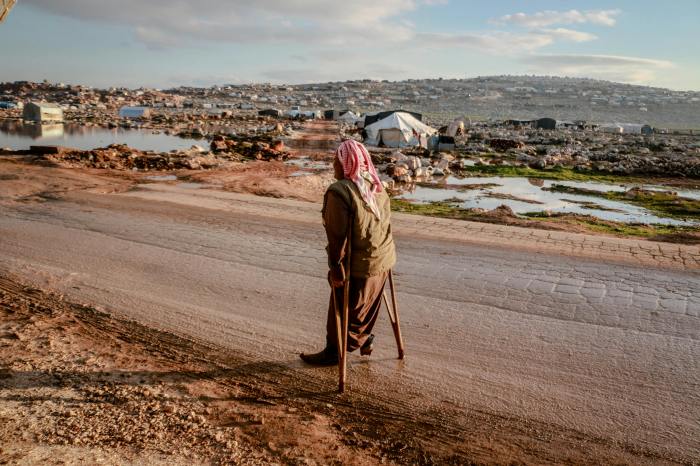
June 2024 marked ten years since the Islamic State (IS) declared a caliphate in Syria. Years of brutal conflict including flagrant and well-documented human rights violations, including atrocity crimes, by a complex web of aggravators resulted in one of the highest death counts of any recent war and the highest number of displaced persons in modern history.

Yet in May of last year, Syria was welcomed back into the Arab League, the same government invited to participate in talks to further international cooperation that, just a decade earlier, had deployed chemical weapons against its own civilians. Furthermore, in summer 2023, Russia vetoed the renewal of a mechanism that had enabled the UN to deliver aid without the Syrian government’s consent to parts of north-west Syria not under its control – a resolution that had been in place for nine years. The year rounded out four months later with Syria present at the COP28 climate conference even as France issued an arrest warrant for President Bashar al-Assad over alleged  complicity in the chemical gas attacks.

Additionally, the Turkish president currently appears to be working towards normalising relations with Syria, despite opposing the Assad regime for over a decade and the ongoing occupation of parts of northern Syria by Turkish forces and allied Islamist militia.

It is clear that the world is beginning to forget the atrocities of the Syrian Civil War as well as the chaotic campaign of IS that saw whole cities reduced to rubble, wreaking havoc on the nation. But beyond the short clips of media coverage that defined our news cycles for years, what exactly happened between 2012 and 2014, and why does it matter today?

Continue reading “Syria: Ten years on, why does it matter?”

The Cuban Family Code two years on

22 July 2024 marked two years since the Cuban Family Code was approved by the National Assembly, and, just as CSW warned, the legislation has extended far beyond equality for the LGBT+ community. Although this aspect was the focus of the government’s efforts to encourage a ‘yes’ vote in the public referendum that followed, only a handful of the 474 articles were relevant to that subject.

Implementation of the legislation has pressured entire families into emigrating, to protect their children and not lose parental custody as is a real possibility under Article 191 of the code. The legislation allows for minors to be transferred into the care of the state, if the parents fail to fulfil the responsibilities detailed in Article 138 of the code including ‘inculcating love for the family, for the homeland, respect for its symbols… the norms of social coexistence [based on the ideology of the Cuban Communist Party] and respect for the authorities’.   Parents are at risk if they demonstrate behaviour that ‘induces their daughter or son to commit a criminal act…’ (191 (c)) and/or ‘[are responsible for] vicious, corrupt or criminal conduct that is incompatible with the proper exercise of parental responsibility…’ (151 (e)).

At first glance the code may appear harmless, however, it is necessary to understand that all the concepts of homeland, family, respect for patriot symbols, criminal act, and vicious or corrupt conduct are interpreted within the framework of the socialist system on which the 2019 constitution is founded. However, continuing protests, such as that of 11 July 2021 and other smaller scale social uprisings since then,1 indicate that the population is rejecting the system that the constitution obligates Cuban citizens to defend, even with their life.2

Continue reading “The Cuban Family Code two years on”