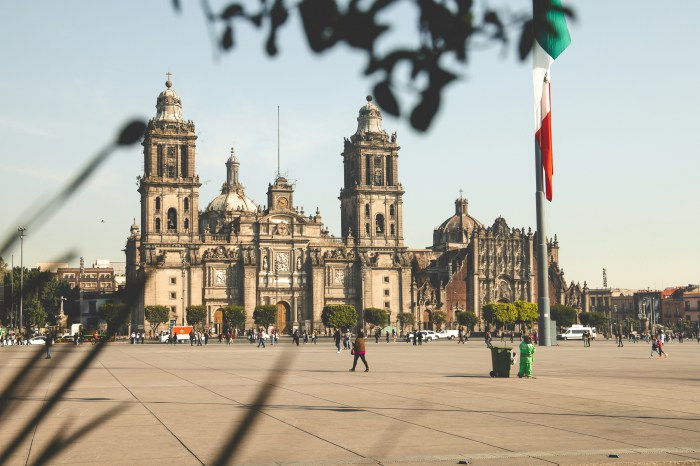
139 Protestant Christians are now living in an auditorium because the Mexican government has not done its job

In 2015, members of a religious minority living in neighbouring villages in the Huasteca region of Hidalgo State, Mexico were informed by their village leaders that they would no longer be permitted to perform their assigned acts of community service.  

To outsiders, this might seem insignificant, especially when compared to violations of freedom of religion or belief (FoRB) elsewhere in Mexico and the world. Being told to do less work might even seem like a positive development. Those in the villages of Rancho Nuevo and Coamila, both located in the municipality of Huejutla de los Reyes, however, understood that the non-completion of this work would mean the loss of recognition as members of the community. And, associated with that recognition are rights, including access to health care, government benefit programmes and education.  

The situation grew worse in 2016, as members of the religious minority were warned against accessing or using their land for cultivating crops, their main source of sustenance and income. Individuals who helped the group, who all belong to the Great Commission Baptist Church, to build a place of worship on privately owned land were threatened and violently assaulted. The Baptists were repeatedly forced to attend community meetings where local leaders demanded that they take part in Roman Catholic festivals including by making financial contributions and actively participating in acts of worship. The leaders warned them that more severe punishment, including permanent removal from the community membership rolls, would follow if they did not comply. 

Continue reading “139 Protestant Christians are now living in an auditorium because the Mexican government has not done its job”

Is European democracy too immature to address freedom of religion or belief? 

While the situation of people in other countries is too rarely a priority electoral issue, some politicisation of human rights is nevertheless common. From the perspective of an advocate for freedom of religion or belief, when done correctly and appropriately, party-political engagement on this human right can of course be expedient. At its best, it can elevate public attention to often severe injustices occurring abroad, and lay a strong policy platform for how they will be addressed post-election. But, at its worst, political positions and electoral tactics can be employed that lack sincerity, nuance, and even basic good will. 

Mistakes in this area are perpetrated by both conservatives and progressives. This piece summarises some of the things that these political blocs tend to get wrong and right, respectively. It is meant both for the benefit of voters, making them more aware of the calculations and strategies happening behind the scenes in party HQs; and also, to hold up a mirror to those directly involved in campaigning, challenging them to think more critically, and constructively, about their approaches. 

Continue reading “Is European democracy too immature to address freedom of religion or belief? “

Después de diez años del secuestro de las niñas de Chibok, el gobierno nigeriano debe por fin proteger a las comunidades vulnerables  

El mes pasado, 137 familias de Kuriga, en el estado de Kaduna, Nigeria, dieron un suspiro colectivo de alivio cuando sus hijos e hijas regresaron a casa después de más de dos semanas de cautiverio terrorista. 

Los niños fueron secuestrados en su escuela el 7 de marzo, cuando asaltantes armados invadieron el plantel justo cuando las clases estaban a punto de comenzar. La escuela informó que se llevaron a 287 estudiantes; sin embargo, el gobernador del estado de Kaduna, Uba Sani, ha intentado desde entonces descartar la cifra como “producto de la imaginación de alguien”, a pesar de que inicialmente él mismo citó la misma cifra. 

De esto surgen algunas preguntas: ¿qué se está haciendo para confirmar que todos los estudiantes han sido efectivamente liberados? ¿Qué pasa con los miles de personas que han sido secuestradas por grupos terroristas en los últimos años? Y, por último, ¿cómo es posible que esto siga sucediendo una década después de que los secuestros masivos en Nigeria aparecieran por primera vez en la agenda internacional?  

Continue reading “Después de diez años del secuestro de las niñas de Chibok, el gobierno nigeriano debe por fin proteger a las comunidades vulnerables  “

Un año mas de conflicto en Sudán: la comunidad internacional debe actuar ahora

Esta semana se cumple un año desde que estalló la guerra entre las Fuerzas Armadas Sudanesas (SAF) y las Fuerzas de Apoyo Rápido (RSF), en la culminación de las tensiones y reclamos que han existido entre los dos grupos desde que despojaron del poder al gobierno de transición en octubre de 2021.

Lo inusual de esta guerra es que comenzó en la capital, Jartum, y se extendió por todo el país. Desde que Sudán obtuvo su independencia en 1956, los conflictos e incluso las revoluciones se han originado fuera de la capital, lo que a menudo ha llevado al aislamiento de las comunidades del centro, y posiblemente del norte de Sudán, de las peores ramificaciones de la inestabilidad. Hoy, sin embargo, son pocos los lugares del país que se han librado de las hostilidades a gran escala entre ambos grupos, y su impacto sobre la población civil ha sido catastrófico.

Cuando el conflicto entró en su segundo año, ya había cobrado la vida de al menos 13,000 personas y más de 33,000 habían resultado heridas. Con la intensificación de la guerra en las ciudades pobladas, el número de desplazados internos ha aumentado a más de nueve millones, y se calcula que el número de quienes padecen hambre asciende ahora a 20 millones. Además, hay más de dos millones de refugiados, la mitad de ellos darfuríes, que también padecen hambre. Trágicamente, por segunda vez en 20 años también hay informes de crímenes atroces, y el Fiscal de la Corte Penal Internacional (CPI) señaló que la situación ahora en Darfur era peor que cuando el Consejo de Seguridad remitió a Sudán a la corte.

Continue reading “Un año mas de conflicto en Sudán: la comunidad internacional debe actuar ahora”

A criminal shouldn’t benefit from his/her criminal activities

This article was originally published on the CSW-Nigeria website.

Christian Solidarity Worldwide Nigeria (CSWN) came across an article written by the British Broadcasting Corporation (BBC) titled: Nigeria’s Chibok Girls: Parent of Kidnapped Children Heartbroken – Again, dated 1st April, 2024. There was also an Arise News programme on April 3rd, 2024, on the morning show, titled: Freed Chibok Girls Wed Captors in Borno. The Arise news program dwells on the BBC article but expands it with more insight.

What the two media outlets were saying is that some of the freed/rescued Chibok secondary school girls, abducted on April 14, 2014, by Boko Haram, have chosen to remain with their de-radicalized, former insurgent husbands at an accommodation provided by the Borno State government under its de-radicalisation program.

The BBC article added that seven of such girls are staying in the government-provided accommodation with their de-radicalised insurgent husbands, while other girls are engaged to former fighters they met at the de-radicalisation camp.

Continue reading “A criminal shouldn’t benefit from his/her criminal activities”