Brexit Wounds – The UK’s Post-EU Human Rights Challenges

As the Prime Minister assembled her new cabinet following the UK referendum on its membership of the European Union (EU), attention was rightly being paid to the how the new-look Government would deal with Britain’s decision to leave. Those appointed by Theresa May know that, whatever their brief, a significant proportion of the Government’s work will be negotiating, executing and accounting for the UK’s withdrawal from EU.

While it is understandable that this unprecedented task will be time consuming for the UK Government, this must not be allowed to supersede its obligation to promote and protect human rights worldwide.

Human Rights within the European Union

For all the debated successes and failures of the EU, what is undeniable is that its various institutions engage in significant human rights work.

Continue reading “Brexit Wounds – The UK’s Post-EU Human Rights Challenges”

The Impact of Sudan’s Identity War on Freedom of Religion or Belief

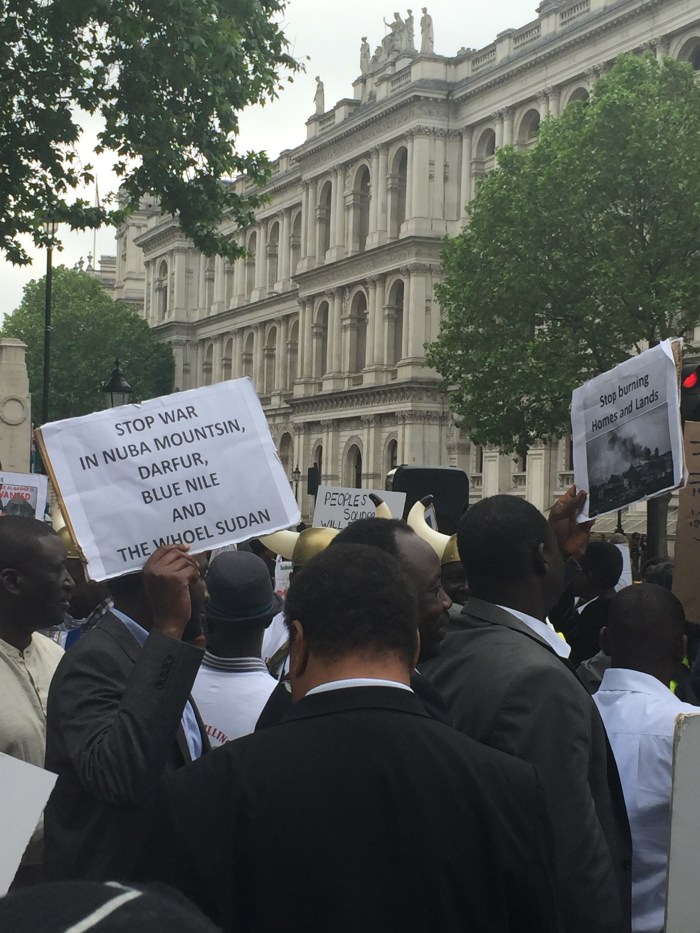
In June 2016, CSW joined a number of African and international civil society organisations in signing and delivering a letter marking the fifth anniversary of the conflicts in South Kordofan and Blue Nile regions, to 10 Downing Street. The letter urged the Prime Minister to use the UK’s considerable influence to ensure that international human rights and humanitarian law are respected.

Protesters walked from the Sudanese Embassy in London to Downing Street to deliver the letter. Among those taking part, it was striking to see veiled and unveiled Sudanese women from the Nuba Mountains, people from other parts of South Kordofan and Darfur, young children, and men in traditional Nuba dress united in calling for an end to all conflicts in Sudan.

This demonstration of unity in diversity was compelling, as was the cry for peace and freedom for all Sudanese citizens. The repression of religious and ethnic diversity in Sudan has been used repeatedly by President al Bashir’s government to sustain his 27-year rule, and what was clearly expressed on that overcast Saturday afternoon in London was the longing for an end to conflicts that serve to perpetuate a divisive government and for a lasting peace in which people can live side by side without fear, regardless of their cultural, linguistic, ethnic or religious differences.

Continue reading “The Impact of Sudan’s Identity War on Freedom of Religion or Belief”

The Lawyers That Were Left

It has been a year since over 300 human rights lawyers, activists, as well as those connected to them (including their friends and family), were detained by the Chinese government. That’s equivalent to one person harassed or disappeared every day since last July. Some of these lawyers have since vanished into China’s prison system. Others were released, but have lived with the threat of re-arrest hanging over them ever since.

Continue reading “The Lawyers That Were Left”

Interview with a Sri Lankan Human Rights Advocate – Part 1

Patterns of discrimination against religious minorities

CSW spoke to a human rights advocate in Sri Lanka whose identity for security reasons has been withheld. This post has been edited for clarity.

Q: Could you comment on religious extremism in Sri Lanka?

A: A recent surge of religious extremism in Sri Lanka began sometime in 2012 during the tenure of the previous government, with the emergence of extremist groups such as Bodu Bala Sena (Buddhist Force Army), or the Sinhala Ravaya, or Hela Bodu Pawura. These groups emerged after the ethnic war, which ended in May 2009. These extremist groups led violent attacks against religious minorities. Most violent attacks were led with impunity and tacit approval. The judiciary was also very much biased.

For example, there was one particular case that was filed against the General Secretary of the Bodu Bala Sena. There was video-document evidence submitted in the High Court of Colombo in that particular case. Even after video evidence was submitted, the General Secretary was released, and the case came to a settlement. The video evidence was not taken into consideration by the court – and this is the High Court of Colombo. That was [how] the situation used to be in Sri Lanka. These Buddhist extremist groups also led a lot of hate campaigns, against Muslim minorities as well. They also used the media as a tool to lead these hate campaigns. And even when they led violent attacks, they also used media to portrayed a biased attitude of the minority victim who actually got attacked rather than the perpetrators themselves.

Continue reading “Interview with a Sri Lankan Human Rights Advocate – Part 1”

Interview with a Sri Lankan Human Rights Advocate – Part 2

Part 2: Circular 2008

CSW spoke to a human rights advocate in Sri Lanka whose identity for security reasons has been withheld. This post has been edited for clarity.

Q: Would you be able to share with us what groups like yours – and other civil society organisations based in Sri Lanka – are doing at the moment to address freedom of religion or belief (FoRB) violations?

A: There are various strategies. One of the core things that we do is to document incidents. We do a lot of advocacy at a local level by meeting government officials and ministers. We also lobby with some of our international partners as well. We file cases on behalf of victims who are religious minorities, and we take up different legal interventions. For example, when there is an attack, we will not file a case immediately but we try first to send out legal letters; working with the national police commission, working with the relevant ministries, and so on. If that does not work out, then of course we will file a case against the authorities in the Supreme Court.

In most instances, we support cases that have been filed against Christians. We also do a lot of other projects where we work on broader human rights issues and we form local networks with community leaders, with pastors. We have consultation processes with them, we train them, we have advocacy seminars – making them aware of their legal rights and teaching them good practices. We also work with the media and journalists, bringing together journalists and the media on good reporting for religious violence.

Q: What can international organisations do to echo the concerns you’ve identified?

Continue reading “Interview with a Sri Lankan Human Rights Advocate – Part 2”