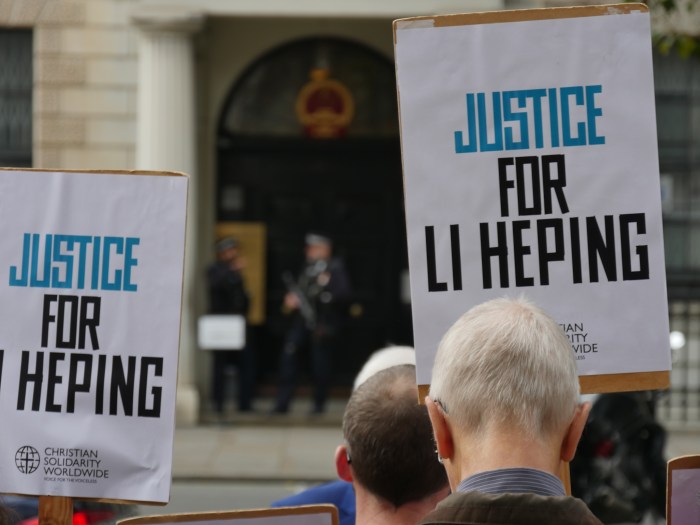
Prime Minister Theresa May’s first official visit to China, which begins today, is billed as an opportunity to boost trade with an important ally. But it will also take place against the backdrop of the country’s violations of fundamental human rights, including freedom of religion or belief.
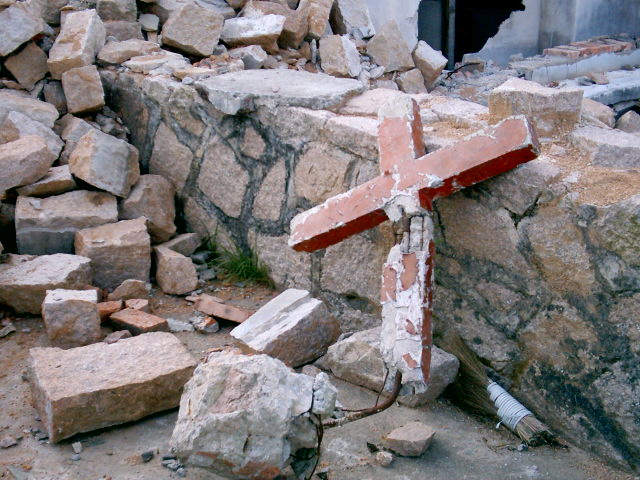
In the last month, Christians have been detained, and unregistered churches shut down or destroyed ahead of the implementation of revised Regulations on Religious Affairs, which strengthen state control over religious activities in China.
Unregistered churches, sometimes called house churches, are independent churches which have not registered with the state-sanctioned Three Self Patriotic Movement. The new regulations are due to come into force tomorrow, giving Mrs May a rare opportunity to speak directly to the Chinese government and publicly to reiterate the UK’s commitment to defending human rights.
Religious conversion was criminalised in India’s Jharkhand State on 11 September with the introduction of the so-called ‘Freedom of Religion’ law, making Jharkhand the seventh State to introduce such legislations after Odhisa (1967), Madhya Pradesh (1968), Chhattisgarh (1968), Arunachal Pradesh (1978), Gujarat (2003) and Himachal Pradesh (2006).
Section 3 of the Jharkhand Freedom of Religion Act 2017 declares “no person shall convert or attempt to convert, either directly or otherwise, any person from one religion/ religious faith to another by the use of force or by allurement or by any fraudulent means, nor shall any person abet any such conversion.” The punishment includes a prison term of up to three years and/or a fine up to fifty thousand rupees (equivalent to about £580).
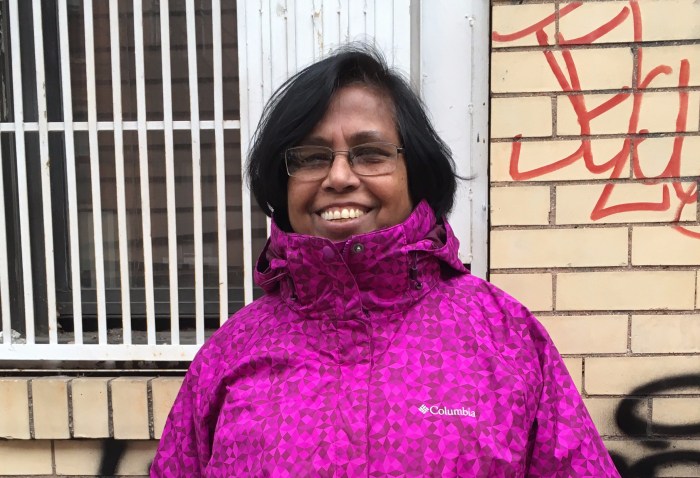
Rosaline (Rosie) Costa, a Bangladeshi human rights activist, was forced to leave the country in July 2016. In 2017, CSW interviewed her in New York. During the interview, Rosie discussed the reasons she had to leave Bangladesh, and shed light on issues of religious freedom in the country.
Rosie’s involvement in human rights work began in 1986, after she left the community of nuns to which she belonged for 17 years to pursue human rights work. She spent time working with women and children in the garment industry, establishing a hostel for rescued children who had been forced into madrasas (colleges for Islamic instruction), and speaking around the world about issues faced by minorities and particularly Hindus.
Forced To Flee
While Rosie had been no stranger to risk in her work, her fears for her safety grew following a number of killings of Christians in Bangladesh, perpetrated by people claiming to belong to Daesh. “I realised that I was being followed by some people, that’s when I left the country … I saw how the people were killed, so if something was to happen to me nobody would be able to rescue me from these people.”
“He was forced to take medicine. They stuffed the pills into his mouth… After taking the pills he felt pain in his muscles and his vision was blurred… He was beaten. He endured gruelling questioning while being denied sleep for days on end…”
Wang Qiaoling describingthe torture of her husband, lawyer Li Heping
“Even our breaths were suppressed. No voices. No texts. No images. No talking. No walking. Our hands, feet, our posture…every body movement was strictly limited. We needed permission for even the most trivial action”.
Lawyer Zhao Wei, the youngest legal assistant detained in the 709 Crackdown
“Prisoners were also put in cages submerged mostly in water, and left inside for seven days, the entire body underwater with a space to breath at the top. As they stood in the water and tried to sleep, rats would scurry about outside the cage, biting their nose and ears.”
These are just a few accounts of the torture experienced by human rights lawyers in China. Over 300 lawyers, activists, colleagues and family members were detained, interrogated or disappeared in a sweeping crackdown beginning on 9 July 2015, dubbed the 709 Crackdown. Two years on, most have been released, some on “bail” conditions amounting to house arrest, but with news of their release have come numerous testimonies of physical and psychological torture including frequent beatings, sleep deprivation, forced medication, violent threats, and prolonged isolation.
Use of torture in China
Lawyers and activists are by no means the only victims of torture. Many of the lawyers caught up in the crackdown had defended clients who had been tortured by police or security agents, including those arrested in connection with their religion or belief such as Falun Gong practitioners and Christians associated with unregistered churches, as well as those accused of crimes not related to politics or religion.
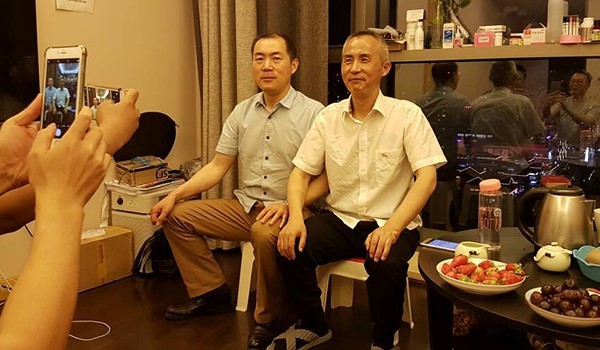
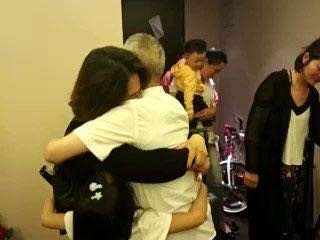
Human rights lawyer, Li Heping (right) pictured with his brother Li Chunfu (left) following his release from detention.
Li Heping’s reunion with his family on 9 May 2017 was a moment for celebration; the celebration of an innocent man’s reunion with his long-suffering family and the celebration of the end of a period of torture, interrogation and imprisonment. But the joy of Li Heping’s reunion with his family is tempered by continuing concerns for his safety, and the injustice of his situation.
Li Heping is one of China’s most experienced and high profile human rights lawyers. He began working on sensitive cases around 2002 and is well known for defending the human rights of religious minorities, including Christians and Falun Gong practitioners, as well as activists and victims of torture.
His work on these cases led to a confrontation with the state. A Chinese security agent reportedly once told him that, in the eyes of Beijing, Li had become “more dangerous than Bin Laden”. In September 2007, Li was abducted, stripped and tortured by security forces. He then had his lawyers’ license revoked in 2009, and continued to be consistently monitored.