FoRB on the Frontlines: Fighting for freedom as long as it’s necessary

The Ladies in White are a Cuban peaceful protest movement comprising the wives and other female relatives of jailed dissidents. Last year CSW interviewed their leader, Berta Soler, about her experiences, and the challenges facing Cuba:

“My activism really got started in 2003 when the government took [imprisoned] 75 men and one woman just because they defended the Declaration of Human Rights.

I and the other Ladies in White are women who are prepared, very well prepared, and aware that we are in a struggle for the freedom of political prisoners and for respect for human rights in my country. And we, the Ladies in White and I, are very conscious that in my country we need freedom and rights, especially for the men and women who are in prison just for demanding this and promoting and defending the Universal Declaration of Human Rights.

Continue reading “FoRB on the Frontlines: Fighting for freedom as long as it’s necessary”

The time capsule: Reflections from Cuba

CSW’s Latin America Advocacy Officer reflects on the island where things are supposed to changing politically, but in many ways stay the same.

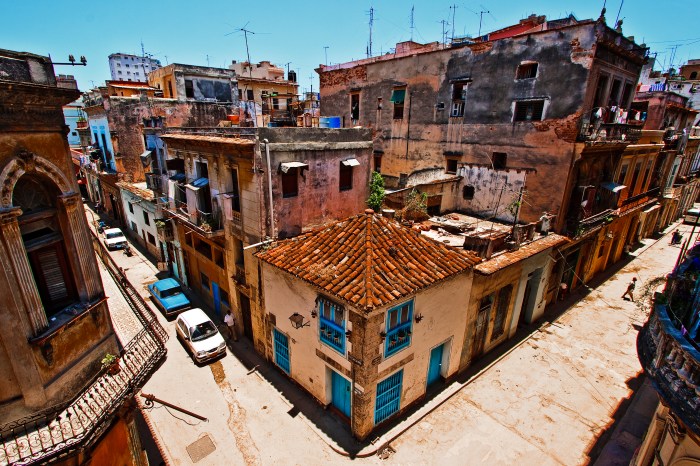
Visitor numbers are soaring, with over 2 million tourists arriving in Cuba each year.  And why wouldn’t they be? Historic Havana, churches, cigar factories, vintage cars, live music, art galleries and museums, UNESCO heritage sites, beautiful beaches and the warm climate all make for the perfect holiday destination.

Cuba, a land where you can experience the past, in the present. When people think of Cuba, isn’t this what comes to mind?

But much of the world remains unaware that travelling off the  beaten path leaves a bittersweet taste in the mouth. In a country with some of the most hospitable and generous people you will ever meet, you will also find that many live on less than $2 a day – and for a number of reasons, the exact figure of those living in poverty is hard to ascertain.

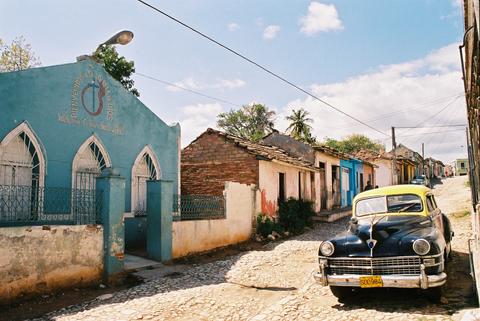
Outside the capital most people cannot afford the comfortable luxury of a Chevrolet and many get around by horse and carriage or ‘cogiendo botella’; in other words, they hitch a ride with whoever is passing by. And whilst a horse and carriage may make for a true Cuban experience and a good photo opportunity, it is also symbolic of a time warp that isn’t so positive for its citizens.

Continue reading “The time capsule: Reflections from Cuba”

Update: The Status of 2,000 AoG Churches Threatened with Confiscation in Cuba

In January 2015, approximately 2,000 churches linked to the Assemblies of God (AoG) denomination were declared illegal in Cuba under Legal Decree 322, putting them at risk of confiscation and, in some cases, demolition. CSW’s July 2017 report details a new development in the case.

In May 2017, the superintendent of the denomination was summoned to the Office for Religious Affairs (ORA), where government officials gave verbal assurances that the churches were no longer under threat of confiscation. While verbal assurances have been provided in the past have not been honoured, on this occasion a document was provided that officially rescinded the demolition order for one of the AoG churches.

At the same meeting, the superintendent received verbal promises from ORA officials that they would help legalise the churches that had been under threat. This is tentatively being considered a positive development, however it remains dependent on implementation.

Continue reading “Update: The Status of 2,000 AoG Churches Threatened with Confiscation in Cuba”

Guilty by Association: Increased Targeting of Family Members in Cuba

The Cuban government has a long-standing policy of targeting the children and other family members of church leaders and activists who it deems to be a problem; one of many tactics designed to ratchet up the pressure on them.

Religious leaders are increasingly standing up to government pressure and becoming bold in their efforts to defend religious freedom in the country, as the Cuban government’s Office for Religious Affairs (ORA) cracks down on unregistered religious groups and other groups that it perceives to be unsupportive of the government.

CSW’s latest report on freedom of religion or belief (FoRB) in Cuba reveals that the death of Fidel Castro in November 2016 failed to mark any significant improvements to FoRB in Cuba; instead, the arbitrary detention, harassment, restriction and surveillance of religious leaders and adherents has continued throughout the first half of 2017, as has the confiscation of church properties. In addition, several cases of family members of church leaders and activists singled out for harassment and discrimination have been brought to CSW’s attention in recent months.

Continue reading “Guilty by Association: Increased Targeting of Family Members in Cuba”

Life in Cuba under the Castros

This post has been edited for clarity. For the Spanish translation click here. [Se puede ver la traducción en español, aquí]

Mario Felix Lleonart Barroso is a prominent Cuban Baptist pastor and human rights activist from Cuba. In the following interview with CSW, he shares his perspective as a Cuban national, on the recent death of Fidel Castro and the potential impact this could have on freedom of religion or belief (FoRB) on the island.

What is the symbolic significance for Cubans of the death of Fidel Castro?

Many years ago, the Cuban people collectively resolved to accept that nothing would really change until Fidel Castro died. In this sense, the objective which the Cuban people have themselves imposed, has been fulfilled; Fidel Castro treated Cuba throughout all of his time in power as if it was his own land. Undoing the legacy of destitution which this man brought to Cuba in every way will not be easy. To sever the ties of his relatives and accomplices will be an even bigger challenge. However, we all know that an era has ended for the Cuban people and that from now on, the string will begin to unravel. With the death of Fidel Castro, it is as if the curse has been broken.

Continue reading “Life in Cuba under the Castros”