#FREELEAH

A guest blog by the Rt Hon Dame Caroline Spelman MP. 

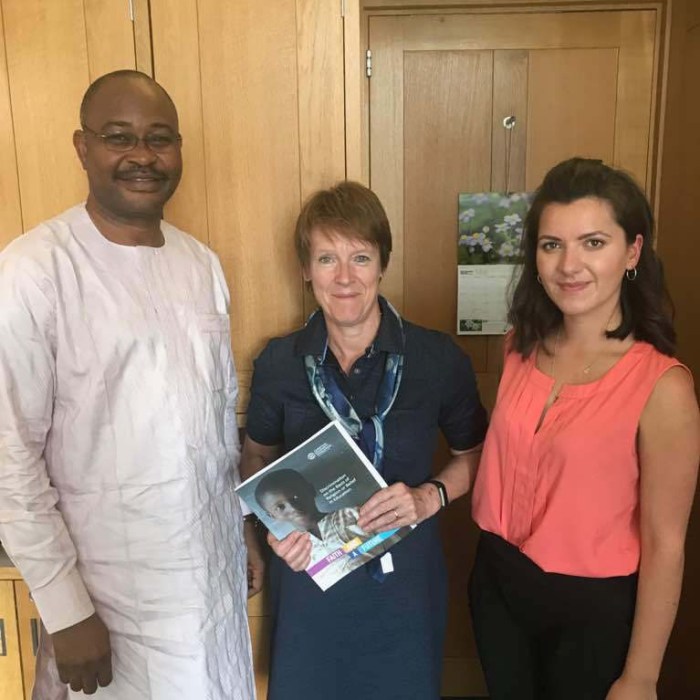
The Rt Hon Dame Caroline Spelman MP is Conservative Member of Parliament for Meriden and Second Church Estates Commissioner. In May 2018 she met with Rev Yunusa Nmadu, CEO of CSW Nigeria and CSW UK’s Parliamentary Officer, Alice Braybrook to discuss freedom of religion or belief in Nigeria.

Today is the 15th birthday of Leah Sharibu. But, unlike most young girls around the world, she will be spending her birthday in captivity.

On 19 February 2018, Leah was among 110 girls who were abducted from the Government Girls Science and Technical College in Dapchi, north eastern Nigeria, by the al-Barnawi faction of Boko Haram. The oldest abductees were 18 years of age; the youngest were 11.

On 21 March 2018, over a month after their capture, Boko Haram returned 105 of the girls to Dapchi, following negotiations with the government. Five had reportedly died during the arduous journey to Boko Haram’s hideout.

However, returnees confirmed that Leah Sharibu, the sole Christian among them, remained in captivity due to her refusal to convert and wear a hijab. Her friends said they begged her to feign conversion so they could all leave together.  However, a tearful Leah is reported to have informed them she could not live with herself if she did so. She also asked them to tell her mother, Rebecca Sharibu, to pray for the will of God to be done in her life. In a comment to Nigerian media her father Nathan Sharibu said: “They gave her the option of converting in order to be released but she said she will never become a Muslim. I am very sad… but I’m also jubilating too because my daughter did not denounce Christ.” 

Continue reading “#FREELEAH”
Justice Delayed is Justice Denied

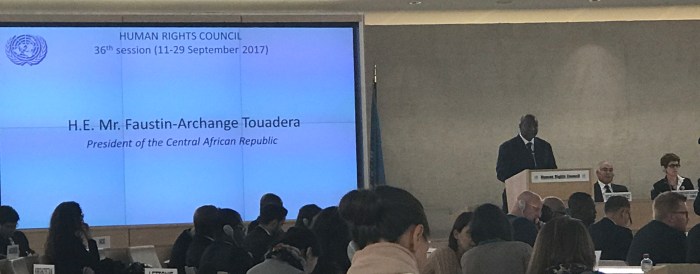
Next week the United Nations’ (UN) Human Rights Council (HRC) is holding a high level dialogue to assess the situation in the Central African Republic (CAR). The last time the HRC considered the situation of CAR was in September 2017, when President Faustin-Archange Touadéra made an unexpected appearance, and addressed member states, nongovernmental organisations (NGOs) and human rights mandate holders.

Christian Solidarity Worldwide (CSW) was present during this address and noted the positive engagement CAR maintains with the UN’s human rights mechanisms, including by granting access to the Independent Expert on CAR, Ms. Marie-Therese Keita Bocoum.

End of transition was not the end of the security crisis

During his speech, President Touadéra noted that the end of the transitional government and the return to democracy did not bring an end to the security crisis in CAR. Since November 2016, armed groups that were once part of the Seleka Alliance have clashed in the north and eastern regions. This violence has been characterised by the targeting of civilians and destruction of civilian infrastructure leading to mass displacement.

Continue reading “Justice Delayed is Justice Denied”

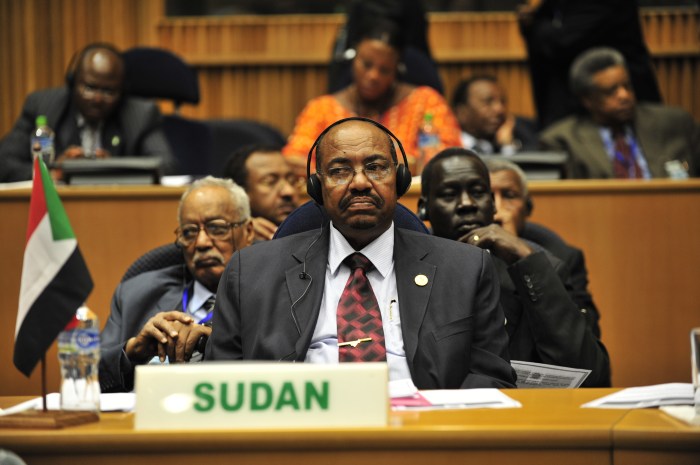
Will Lifting Sanctions improve Human Rights in Sudan?

The recent decision by the United States (US) to lift two decades of sanctions on Sudan has been welcomed by some international actors, but received criticism from human rights organisations, campaigners and Sudanese opposition politicians.

The significance of this achievement for the government of Sudan cannot be understated.

Sudan has invested heavily in efforts towards the lifting of sanctions, including bringing the African Union on board and supporting the appointment of the UN Special Rapporteur on the negative impact of the unilateral coercive measures on the enjoyment of human rights. The mandate holder is tasked with investigating the human rights impact of economic measures applied by one State to change policy of another State. After the creation of the role, the Special Rapporteur’s first visit was Sudan, where he advocated for the lifting of US sanctions.

Continue reading “Will Lifting Sanctions improve Human Rights in Sudan?”

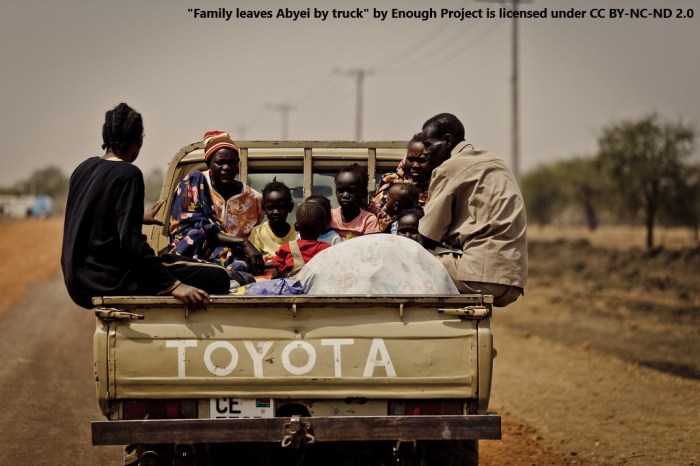
“Between a Rock and a Hard Place”: the Future of Abyei

It has now been six and a half years since the people of Abyei should have decided their future.

Abyei, an oil-rich region situated between Sudan and South Sudan, was due to have a self-determination referendum on the 9 January 2011; the day South Sudan decided to become an independent nation. However, disagreements between Sudan and South Sudan regarding voter eligibility has meant that the people of Abyei are still waiting to hold an official vote.

These disagreements centre on whether the nomadic Arab Misseriya tribe who spend a portion of the year in Abyei are eligible to vote. Despite a ruling by the Permanent Court of Arbitration (PCA) stating that only the Ngok Dinka tribe, and those permanently residing in Abyei for a period of 3 years, may vote, the government of Sudan failed to accept these terms.

As the delay continued, the Ngok Dinka General Conference conducted what was termed a “People’s Referendum”: it was an unofficial vote but 98% of registered Ngok Dinka voters participated, of which 99.9% voted to join South Sudan. Sudan and South Sudan, as well as the African Union and international community, rejected the outcome of the referendum but both Khartoum and Juba have laid claim to Abyei.

Since the Peoples Referendum, South Sudan has descended into chaos, while Bashir’s grip on Sudan appears to be strengthening. With chaos to the South and oppression to the North, the decision may not be as simple as it was a few years ago – Abyei and its people are clearly trapped between a rock and a hard place.

Continue reading ““Between a Rock and a Hard Place”: the Future of Abyei”

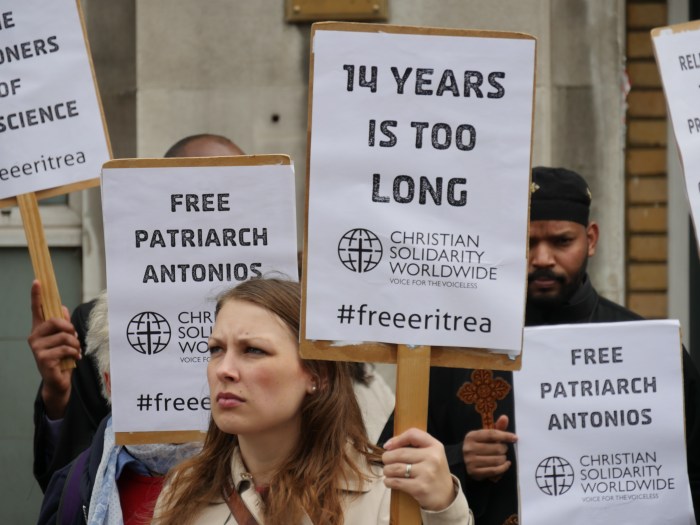
Eritrea Protest Vigil 2017

Three years ago, I found myself at the United Nations Human Rights Council (HRC), playing a game with an eight year old girl – I would say the name of an animal and she would draw it.  She was an Eritrean refugee and had come to the HRC with her parents as part of a delegation who were there to give testimony at a side event. Her entire family had been detained by the government, locked up with others in a shipping container. She shared memories of the entire place smelling awful, of being freezing cold at night and roasting hot during the day and of how she and her other siblings joked about which family member was covered with the most lice. A serious issue was turned into a game as their parents did  their best to shield their children from the full force of the horrors they were experiencing.

Continue reading “Eritrea Protest Vigil 2017”