Pakistan must be made to end its decades-long tolerance and encouragement of the violent persecution of the Ahmadiyya community 

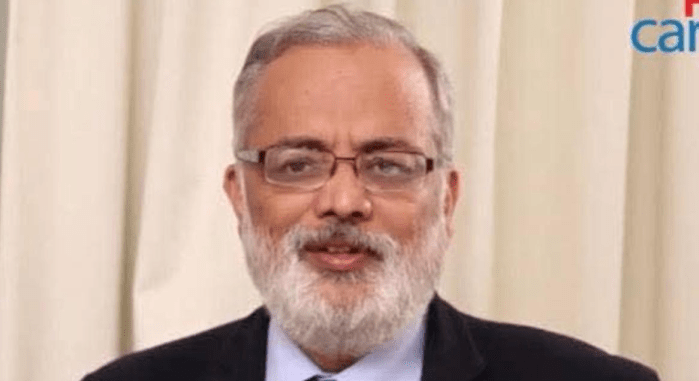
At 2.30pm on 16 May, Dr Sheikh Mahmood arrived at Fatima Hospital in Sargodha, Punjab Province, Pakistan and proceeded to attend to his patients as per his routine. A highly respected gastroenterologist and hepatologist, Dr Mahmood was widely known for his dedication, professional excellence and compassionate nature.  

But on this day – as he walked through the corridor of the hospital that he had worked in for the past seven years – an unidentified gunman opened fire on him from behind before fleeing the scene while openly brandishing a pistol. He sustained two gunshot wounds and was immediately transferred to Civil Hospital Sargodha, where he succumbed to his injuries. He leaves behind a mother, wife, two daughters and two sons. 

Dr Mahmood, 58, had no known personal enmities and Sargodha police have yet to confirm the motive behind the killing, however recent developments in Pakistan give much and highly-concerning reason to believe that he was likely targeted because of his faith – that is, because he was an Ahmadi Muslim.
Continue reading “Pakistan must be made to end its decades-long tolerance and encouragement of the violent persecution of the Ahmadiyya community “

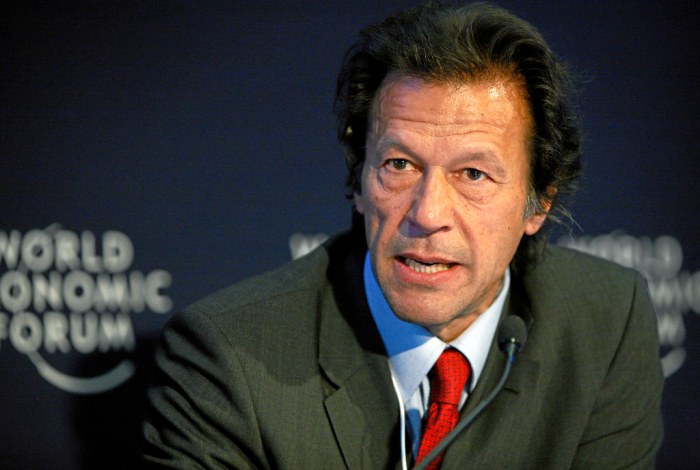
Imran Khan: Defender of Islam or political opportunist?

On 17 September 2021, less than a month after seizing control of the country, the Taliban effectively banned girls from secondary schools in Afghanistan after they ordered schools to resume classes for boys only.

The move marked a realisation of fears that had been raised ever since the Taliban regained power, and was met with widespread and routine international condemnation from countries and human rights organisations alike. One of the more surprising critics however was Pakistani Prime Minister Imran Khan, who told the BBC that preventing women from accessing education would be ‘un-Islamic’.

The reason for such surprise is that while Prime Minister Khan has expressed somewhat mixed feelings regarding the Taliban’s takeover of Afghanistan, he has encouraged the international community, and particularly the United States, to recognise their authority. In addition, his own government has entered into talks with the organisation, and Khan himself has pledged to ‘forgive’ members of the group if reconciliation is achieved.

Developments such as these already start to make Khan’s criticisms of the Taliban ring hollow, but they are made even more interesting when considered in conjunction with his own rhetoric regarding what is and isn’t un-Islamic in his own country.

Continue reading “Imran Khan: Defender of Islam or political opportunist?”

Criminalisée, victime de meurtres et maudite : le sort de la communauté ahmadie du Pakistan

Le 11 février, Abdul Qadir, un médecin homéopathe ahmadi de 65 ans, a été abattu devant sa clinique dans le quartier de Bazikhel, à Peshawar, dans le nord-ouest du Pakistan. Ce meurtre est le dernier d’une série d’attaques à motivation religieuse contre les ahmadis, en particulier à Peshawar. 

L’année dernière, CSW a recensé au moins cinq autres cas de meurtres d’ahmadis, dont un incident au cours duquel un médecin de 31 ans, Tahir Mahmood, a été assassiné devant sa famille à son domicile de Murch Balochan, dans le district de Nankana Sahib, au Pendjab. 

Le fait que la communauté ahmadie du Pakistan soit depuis longtemps victime de harcèlement, discrimination, violence et autres violations des droits humains ne laisse guère de doute quant à la motivation religieuse de ces meurtres. On voit aussi clairement se dessiner un schéma selon lequel des médecins et des universitaires éminents ont été spécifiquement ciblés par les extrémistes. 

Il est fort probable que, dans une certaine mesure, ces personnes aient été tuées car elles occupaient des places importantes dans la société. Pour les extrémistes du pays qui refusent d’accepter les ahmadis comme musulmans, l’idée que des membres de ladite communauté puissent occuper des postes à responsabilité, par exemple dans des hôpitaux ou des universités, est sans aucun doute un affront à leur interprétation fondamentaliste de l’islam. 

Continue reading “Criminalisée, victime de meurtres et maudite : le sort de la communauté ahmadie du Pakistan”

Criminalised, killed and cursed: The plight of Pakistan’s Ahmadiyya community

On 11 February, Abdul Qadir, a 65-year-old Ahmadi homeopathic doctor, was shot dead outside his homeopathic clinic in the Bazikhel area of Peshawar in north-western Pakistan. His killing marked the latest in a concerning uptick in religiously motivated attacks on Ahmadis, particularly in Peshawar.

Last year, CSW documented at least five other instances in which Ahmadis were killed, including an incident in which 31-year-old doctor, Tahir Mahmood, was murdered in front of his family at his home in Murch Balochan in Nankana Sahib District, Punjab.

The fact that Pakistan’s Ahmadiyya community has a long history of experiencing harassment, discrimination, violence and other human rights violations within Pakistani society leaves little doubt that these murders are religiously motivated. A pattern is also clearly emerging whereby prominent doctors and academics have been specifically singled-out by extremists.

Continue reading “Criminalised, killed and cursed: The plight of Pakistan’s Ahmadiyya community”

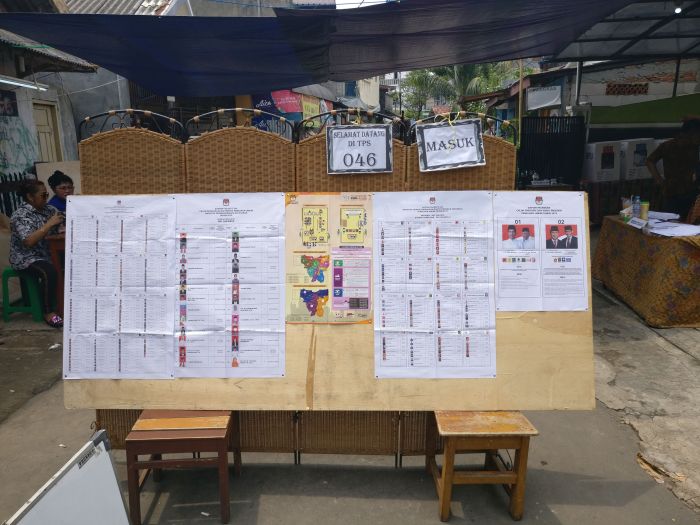
Indonesia’s elections reveal a nation at the crossroads between pluralism and intolerance

When the official results confirming the re-election of Joko Widodo as President of Indonesia were announced on 21 May, supporters of his rival, former General Prabowo Subianto, took to the streets. Riots led to carnage in the capital, Jakarta, with at least six people dead. The divisions unleashed by the election campaign were exposed in their ugliest form.

Until that point, Indonesia’s elections had been peaceful and orderly, despite what almost all observers describe as the most divisive campaign in the country’s recent history. On 17 April, over 190 million people cast their votes for the presidency and the national, regional and local legislatures, in one of the world’s biggest and most complex democratic exercises in recent times. To conduct such a poll, in the world’s third largest democracy and fourth most populous nation, across the world’s largest archipelago of 17,508 islands stretching from the Indian to the Pacific Oceans, is a significant feat.

I spent three weeks in Indonesia during the election period. I witnessed the final week of the campaign, election day itself, and the first twelve days after the elections. I travelled to four cities – Jakarta, Medan in North Sumatra, Surabaya in East Java, and Pontianak in West Kalimantan – where I met civil society activists, religious communities and government advisers. I left Indonesia with profoundly mixed feelings.

Continue reading “Indonesia’s elections reveal a nation at the crossroads between pluralism and intolerance”