The Story of the Loc Hung Vegetable Garden, Part 1: “Their whole world collapsed around them”

In January 2019 Vietnamese authorities carried out a massive operation in the Loc Hung Vegetable Garden in Ho Chi Minh City (Saigon), Vietnam, which saw the forcible eviction of thousands of residents and the destruction of over 500 homes. Today, nearly two years later the residents of Loc Hung continue to await justice.

Over the next few weeks, CSW will be telling the story of the Loc Hung Vegetable Garden through a series of interviews with those who lived there. For our first instalment, we spoke to Cao Ha Truc, one of those leading efforts for the residents to receive some form of compensation.

How long have you lived in the Loc Hung Vegetable Garden and how did you come to live there?

My family have lived here for four generations, ever since my grandparents and parents heeded the call from President Ngo Dinh Diem to migrate from the north to the south after the Geneva Accords of 1954. I was born here and so were my children. I farmed on the land here from the day I got married until the day it was taken from my family.

Initially my family made a living from farming vegetables in the garden, but as we grew in size we needed to expand our living space so we built more houses on the land – some to live in and a few more to rent out to subsidise the income from the vegetable garden.

Continue reading “The Story of the Loc Hung Vegetable Garden, Part 1: “Their whole world collapsed around them””
Father Stan Swamy: The Indian authorities target one of the country’s oldest human rights defenders

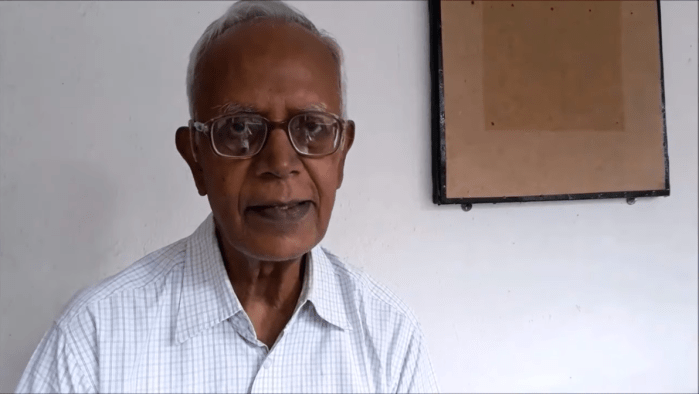
On 8 October, members of India’s National Investigation Agency (NIA) arrested Father Stan Swamy, a Jesuit priest and long-time activist on tribal rights in the country. While the targeting of those who stand up for human rights in India is nothing new, Father Swamy’s case has drawn particular international attention because, at 83-years-old, he is one of the country’s oldest human rights defenders (HRDs).

“The oldest person to be accused of terrorism in India”

Father Swamy has been working with India’s Adivasis (Scheduled Tribes) for over three decades. Even in his old age, and despite suffering from numerous health issues, he has continued to advocate for the group right up to the present day. In a video released just days before his arrest, Father Swamy said that he had filed a case in the Jharkhand High Court on behalf of 3,000 young Adivasis who had been imprisoned.

He was arrested at the Jesuit-owned Bagaicha social centre in Ranchi, the capital of Jharkhand state, and was subsequently informed that he would be remanded in custody in Taloja Jail near Mumbai until 23 October.

Continue reading “Father Stan Swamy: The Indian authorities target one of the country’s oldest human rights defenders”

“I’m not buying it, China”: The cost of fast fashion for religious and ethnic minorities in China’s Uyghur region

A new cotton jumper arrived in my post this week, with three words on the label that sent my mind spinning: ‘Made in China.’ Whereabouts in China? Was it made in the Uyghur region? Was this jumper a product of forced labour? A token of a part I had played – albeit unknowingly – in fuelling an industry which I knew to be entrenched in the plight of China’s religious and ethnic minorities?

Where does China’s cotton come from?

China is one of the world’s largest cotton producers and most of its cotton is produced in the Xinjiang Uyghur Autonomous Region (Uyghur Region), referred to by many Uyghurs as ‘East Turkestan.’ Credible reports claim that the Uyghur Region produces 84% of China’s cotton output, and it is the main supplier and exporter of cotton, apparel, and textile products to Chinese factories, within China and internationally.[1] The Coalition to End Uyghur Forced Labour believes that 20% of the world’s cotton comes from the Uyghur Region.

Continue reading ““I’m not buying it, China”: The cost of fast fashion for religious and ethnic minorities in China’s Uyghur region”

Voices from Cuba: Alain Toledano Valiente

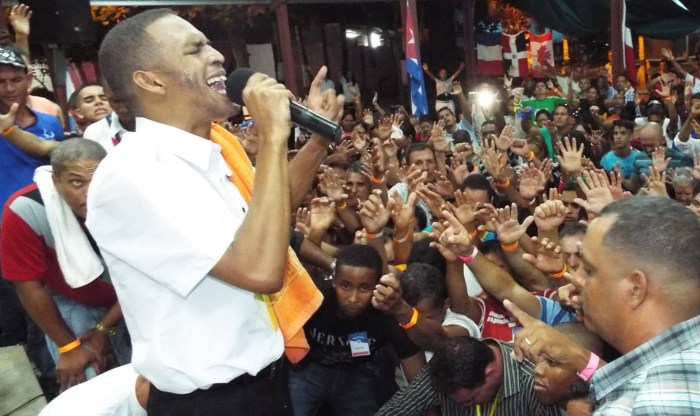
Apostle Alain Toledano Valiente is a prominent leader in the Apostolic Movement in Cuba. He also leads Emanuel Church in Santiago de Cuba along with his wife, Marilín Alayo Correa. Pastor Toledano and his wife have experienced intense harassment at the hands of the Cuban authorities for over two decades.

In February 2016, over 200 church leaders in Pastor Toledano’s denomination were detained as the authorities demolished the Emanuel Church building. Pastor Toledano was out of the country at the time. Since then he has been prevented from leaving Cuba, subjected to repeated police summons, and threatened with imprisonment on multiple occasions.

In recent months, Pastor Toledano and his family have continued to experience severe harassment, even in spite of the ongoing COVID-19 pandemic and related lockdown measures.

Continue reading “Voices from Cuba: Alain Toledano Valiente”

Voces de Cuba: Alain Toledano Valiente

El apóstol Alain Toledano Valiente es un líder prominente en el Movimiento Apostólico en Cuba. También pastorea la Iglesia Emanuel en Santiago de Cuba con su esposa, Marilín Alayo Correa. Por más de dos décadas, han experimentado hostigamiento por parte de las autoridades cubanas.

En febrero del 2016, más de 200 líderes perteneciente a la denominación del Pastor Toledano fueron detenidos mientras las autoridades demolieron el edificio de la Iglesia Emanuel. El Pastor Toledano estaba fuera del país cuando la demolición ocurrió. Desde entonces ha sido frecuentemente impedido de viajar del país, sujetado a citaciones repetidas de la policía, y amenazado con el encarcelamiento en varias ocasiones.

En recientes meses, el Pastor Toledano y su familia ha continuado a experimentar acoso severo, a pesar de la pandemia COVID-19 y sus medidas relacionadas con el confinamiento.”

Continue reading “Voces de Cuba: Alain Toledano Valiente”