Twenty years is too long: The Eritrean government must release imprisoned church leaders

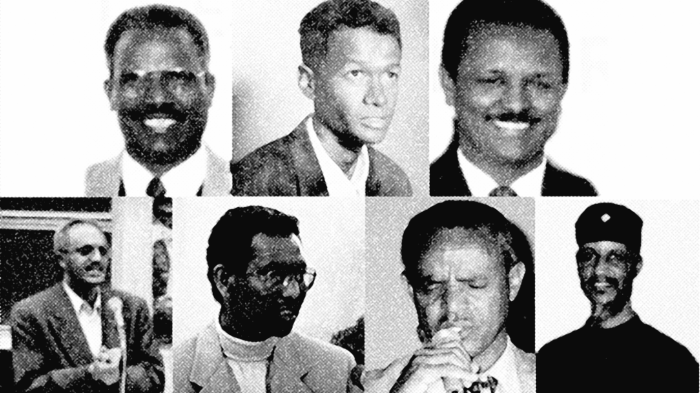
Twenty years ago today the Eritrean authorities arrested Reverend Haile Naizge and Dr Kuflu Gebremeskel. Both were prominent religious leaders in the country, the former serving as the chair of the Full Gospel Church, and the latter as chair of the Eritrean Evangelical Alliance and a visiting lecturer at the former University of Asmara.

They have been detained incommunicado ever since.

The arrests of Reverend Naizge and Dr Gebremeskel are not the only anniversaries Eritrea marks this month. In May 2002 the government effectively outlawed religious practices not affiliated with Sunni Islam or the Catholic, Evangelical Lutheran or Orthodox Christian denominations. Since then, all other religious groups have been required to register in order to freely practise their faith, but the process to do this is onerous, intrusive and ultimately inconclusive, as the final step consists of the president’s signature.

Continue reading “Twenty years is too long: The Eritrean government must release imprisoned church leaders”

The growing cost of standing up for human rights in Nicaragua and Cuba  

Olesia Auxiliadora Muñoz Pavon is a choir director for the Santa Ana Parish in Niquinohomo in Nicaragua’s Masaya Department. Age 52, she has been imprisoned on false charges since 6 April 2023, having previously served a sentence from August 2018 until June 2019 – also on false charges. 

Since the middle of January this year, like several others in the Women’s Holistic Penitentiary System commonly known as La Esperanza, Ms Muñoz Pavon has been denied any time outdoors where before she was allowed out once a week. 

Her crime? Praying out loud. 

Continue reading “The growing cost of standing up for human rights in Nicaragua and Cuba  “

El alto precio de defender los derechos humanos en Nicaragua y Cuba 

Olesia Auxiliadora Muñoz Pavón era la directora del coro de la Parroquia Santa Ana en Niquinohomo en el Departamento de Masaya en Nicaragua. Tiene 52 años y está encarcelada por cargos falsos desde el 6 de abril de 2023, habiendo cumplido previamente una condena desde agosto de 2018 hasta junio de 2019, también por cargos falsos. 

Desde mediados de enero de este año, como a muchos otros en el Sistema Penitenciario Integral para Mujeres comúnmente conocido como La Esperanza, a la Sra. Muñoz Pavón se le ha negado cualquier tiempo al aire libre, donde antes se le permitía salir una vez por semana. 

¿Su crimen? Orar en voz alta. 

Continue reading “El alto precio de defender los derechos humanos en Nicaragua y Cuba “
A street with flags flying in Michoacán, Mexico.

Religious minorities in Michoacán, Mexico just wanted to be treated equally

Michoacán is a state located in central Mexico. This region of mountains and forests is inhabited by the P’urhépecha indigenous populations, whose language P’urhe is still spoken today and who are renowned for their fine work with the different types of wood found in the area. The P’urhépecha are concentrated in 22 municipalities across the breadth of the state.

Michoacán is also known for its natural beauty and the richness of its land and climate, making it a favourable place for the cultivation of different fruits exported internationally, including the avocado. Mexico is the largest producer worldwide of this precious product which has an annual economic impact of billions of dollars.

The P’urhépecha Plateau is home to around 70% of Mexico’s national avocado production. This has given rise to clashes in Michoacán between organized crime groups as they vie for control of the territory and avocado market. The situation has led, in turn, to the formation of community militias and self-defence groups who, fed up with the extortion and the abuses committed by the organized crime groups, have taken up arms to protect their lands. In some cases, however, these community militias and self-defence groups have also been involved in the violation of human rights.

Continue reading “Religious minorities in Michoacán, Mexico just wanted to be treated equally”
A street with flags flying in Michoacán, Mexico.

México: Las minorías religiosas en Michoacán solo desean ser tratadas con igualdad y respeto

Michoacán es un estado ubicado en el centro de México. Esta región de montañas y bosques está habitada por las poblaciones indígenas P’urhépecha, cuya lengua P’urhe aún se habla hoy en día y que son reconocidos por su fino trabajo y artesanías con los diferentes tipos de madera que se encuentran en la zona. Los p’urhépecha se concentran en 22 municipios a lo largo del estado. 1

Michoacán también es conocido por su belleza natural y la riqueza de su tierra y clima, lo que lo convierte en un lugar propicio para el cultivo de diferentes frutas que se exportan a nivel internacional, entre ellas el aguacate. México es el mayor productor a nivel mundial de este preciado producto que tiene un impacto económico anual de miles de millones de dólares.

La meseta de P’urhépecha alberga alrededor del 70% de la producción nacional de aguacate de México. Esto ha dado lugar a enfrentamientos en Michoacán entre grupos del crimen organizado que se disputan el control del territorio y el mercado del aguacate. La situación ha provocado, a su vez, la formación de milicias comunitarias y grupos de autodefensa que, hartos de la extorsión y los abusos cometidos por los grupos del crimen organizado, han tomado las armas para proteger sus tierras. En algunos casos, sin embargo, estas milicias comunitarias y grupos de autodefensa también han estado involucrados en la violación de los derechos humanos.

Continue reading “México: Las minorías religiosas en Michoacán solo desean ser tratadas con igualdad y respeto”