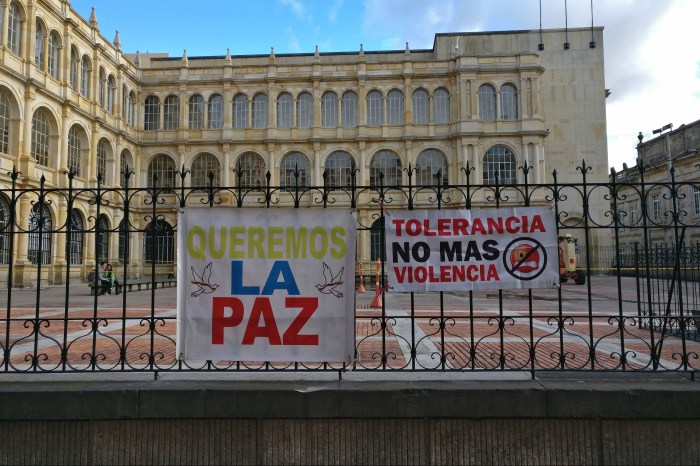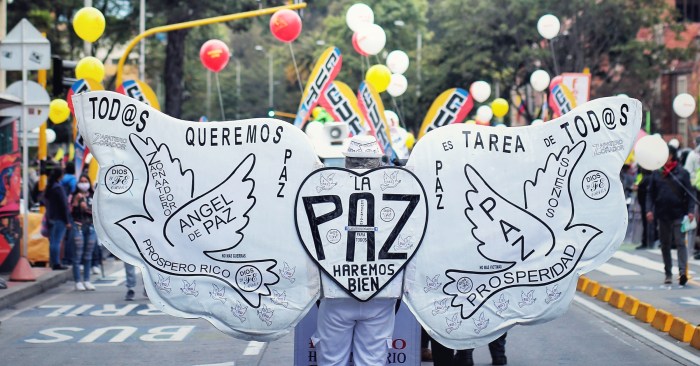
Despite government promises, ‘Total Peace’ remains elusive in Colombia today

On 4 April Maribel Silva, Isaíd Gómez and Isaíd’s uncle, Carlos Valero obeyed the summonses of an illegal armed group operating in the Calamar Municipality of Colombia’s Guaviare Department. The next day, James Caicedo, Jesús Valero, Maryuri Hernández, Nixon Peñalosa and Oscar García did the same. 

After the individuals failed to return home to their families in the hamlet of Agua Bonita in Pueblo Seco their family members reached out to representatives of the illegal armed group who had issued the summonses, but the group denied that any summonses had been issued. Later, the family members were indirectly warned that they should stop looking for their loved ones and ‘consider the case to be closed.’  

So their families were left waiting, in the horrific uncertainty of what might have happened to them, wondering whether to sit tight, holding onto hope that their family members still might return home, or to flee the region out of fear of reprisals and for the safety and protection of the lives of the children and parents of the disappeared individuals. All eight individuals had already relocated and settled in Guaviare after being displaced from Arauca Department due to violence and severe violations of freedom of religion or belief (FoRB), including the closure of churches and the targeting of Protestant pastors by illegal armed and criminal groups over the past decade.  

Continue reading “Despite government promises, ‘Total Peace’ remains elusive in Colombia today”
A pesar de las promesas del Gobierno, la «Paz Total» sigue siendo una utopía en Colombia

El 4 de abril, Maribel Silva, Isaíd Gómez y el tío de este, Carlos Valero, se dirigieron a acudir a una reunioón solicitada por un grupo armado ilegal que opera en el Municipio de Calamar, Departamento de Guaviare, Colombia. Al día siguiente, James Caicedo, Jesús Valero, Maryuri Hernández, Nixon Peñalosa y Óscar García hicieron lo mismo. 

Tras no regresar a sus hogares en el paraje de Agua Bonita, en Pueblo Seco, sus familiares contactaron a representantes del grupo armado ilegal que había emitido las citaciones, pero ellos negaron haberlas emitido. Posteriormente, se advirtió indirectamente a los familiares que debían dejar de buscar a sus seres queridos y «considerar el caso cerrado». 

Así, sus familias quedaron en el limbo, sumidas en la terrible incertidumbre de lo que les habría ocurrido, preguntándose si debían permanecer allí, aferrándose a la esperanza de que sus familiares regresaran a casa, o huir de la región por temor a represalias y por la seguridad y protección de la vida de los hijos y padres de las personas desaparecidas. Esas mismas ocho personas y sus familias se habían reubicado y establecido en Guaviare tras ser desplazadas del Departamento de Arauca debido a la violencia y las graves violaciones a la libertad de religión o de creencias, incluyendo el cierre de iglesias y los ataques contra pastores protestantes, por parte de grupos armados y criminales ilegales durante la última década. 

Continue reading “A pesar de las promesas del Gobierno, la «Paz Total» sigue siendo una utopía en Colombia”

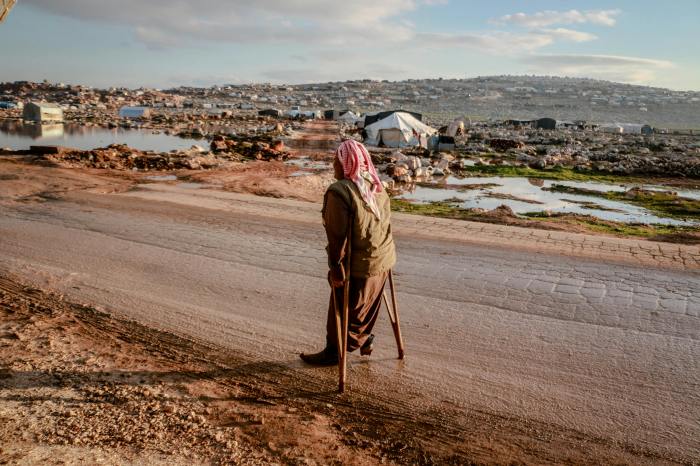
Syria: Ten years on, why does it matter?

June 2024 marked ten years since the Islamic State (IS) declared a caliphate in Syria. Years of brutal conflict including flagrant and well-documented human rights violations, including atrocity crimes, by a complex web of aggravators resulted in one of the highest death counts of any recent war and the highest number of displaced persons in modern history.

Yet in May of last year, Syria was welcomed back into the Arab League, the same government invited to participate in talks to further international cooperation that, just a decade earlier, had deployed chemical weapons against its own civilians. Furthermore, in summer 2023, Russia vetoed the renewal of a mechanism that had enabled the UN to deliver aid without the Syrian government’s consent to parts of north-west Syria not under its control – a resolution that had been in place for nine years. The year rounded out four months later with Syria present at the COP28 climate conference even as France issued an arrest warrant for President Bashar al-Assad over alleged  complicity in the chemical gas attacks.

Additionally, the Turkish president currently appears to be working towards normalising relations with Syria, despite opposing the Assad regime for over a decade and the ongoing occupation of parts of northern Syria by Turkish forces and allied Islamist militia.

It is clear that the world is beginning to forget the atrocities of the Syrian Civil War as well as the chaotic campaign of IS that saw whole cities reduced to rubble, wreaking havoc on the nation. But beyond the short clips of media coverage that defined our news cycles for years, what exactly happened between 2012 and 2014, and why does it matter today?

Continue reading “Syria: Ten years on, why does it matter?”
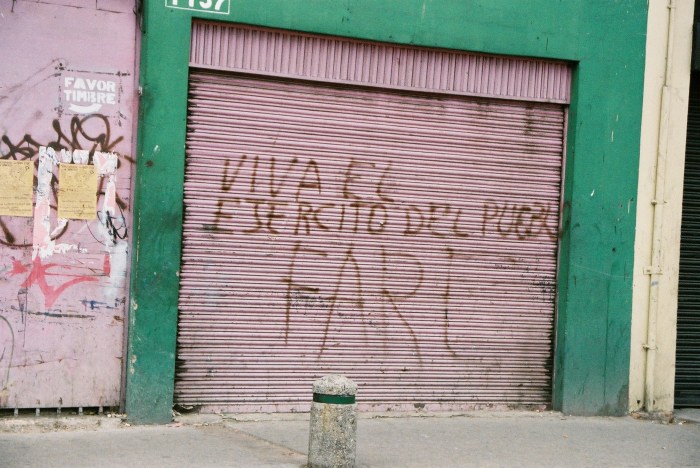
Graffiti in Colombia reads 'Viva el ejercito del pueblo FARC' i.e. 'Long live the army of the people, FARC'

Colombia must finally reckon with the religious element of its decades long internal conflict

Darkness falls quickly in Colombia due to its proximity to the equator, and it was no different on the night of Thursday 5 July 2007. As night closed in, Joel Cruz Garcia, a 27-year-old pastor, heard banging on the front door of the small home he shared with his wife Yuvy and their nine-month-old daughter in the village of El Dorado in the department of Huila. When the pastor opened the door, he was faced with a heavily armed group of individuals dressed in the uniform of the 17th Brigade of the Revolutionary Armed Forces of Colombia, better known as the FARC, who demanded that he come with them.  

The pastor was given no choice, and his wife later recounted how even as the guerrillas manhandled him and ridiculed his faith, Joel quoted a Bible verse to them, saying, ‘To live is Christ and to die is gain.’ 

‘Good,’ the guerrillas responded. ‘Then you will die.’ 

Continue reading “Colombia must finally reckon with the religious element of its decades long internal conflict”

The cost of backtracking: delays in Colombia’s peace process risk a return to violence

In November 2016 a revised peace agreement was signed between the government of Colombia and the Revolutionary Armed Forces of Colombia–Army of the People (FARC-EP). The deal was considered a big win by many, bringing an end to a conflict which spanned over five decades and claimed hundreds of thousands of lives.

This celebration has been considered both “justified and premature.” In the following years parts of Colombia have enjoyed a somewhat fragile peace, but recent developments have raised concerns that this peace could shatter altogether.

Government foot-dragging

Particularly concerning is the current government’s approach to the 2016 agreement. Since his election in June 2018, the President Iván Duque Márquez-led administration has consistently slowed down the process of implementation.

Continue reading “The cost of backtracking: delays in Colombia’s peace process risk a return to violence”