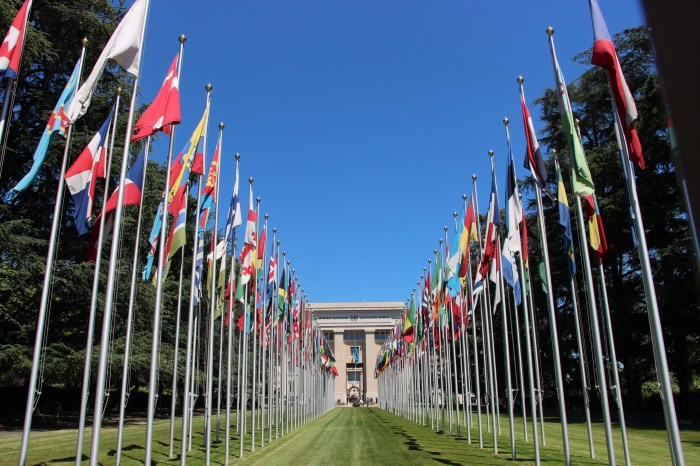
No matter how hard it tries, the Nicaraguan government cannot make the evidence of its human rights violations disappear

On 24 February, the United Nations Group of Human Rights Experts on Nicaragua (GHREN) published its latest report to the UN Human Rights Council (HRC).  

The GHREN, tasked with conducting thorough and independent investigations into all alleged human rights violations and abuses committed in Nicaragua since April 2018, focused its report on the institutions and individuals responsible for violations in Nicaragua, complete with an annex of 10 functional diagrams ‘illustrating the de jure and de facto connexions between different State and non-State entities.’  The report also drew attention to the four-phase strategy of the Ortega-Murillo regime designed to gain absolute control of the country and to how the regime’s recent constitutional reforms provide unchecked executive authority.  

The findings of the GHREN’s report are supported by a total of more than 1,500 interviews and 7,500 documents, and are also backed by reports by civil society organisations (CSOs) who have consistently and independently documented human rights violations. CSW, for example, documented 222separate cases involving violations of freedom of religion or belief (FoRB) in 2024 alone, with most involving multiple violations and some affecting thousands of people. 

Continue reading “No matter how hard it tries, the Nicaraguan government cannot make the evidence of its human rights violations disappear”
Por más que lo intente, el gobierno de Nicaragua no puede hacer desaparecer la evidencia de sus violaciones a los derechos humanos

El 24 de febrero, el Grupo de Expertos de las Naciones Unidas en Derechos Humanos para Nicaragua (GHREN) publicó su último reporte ante el Consejo de Derechos Humanos de las Naciones Unidas (CDH).  

El GHREN, encargado de realizar investigaciones exhaustivas e independientes sobre todas las presuntas violaciones y abusos de los derechos humanos cometidos en Nicaragua desde abril de 2018, centró su informe en las instituciones y personas responsables de las violaciones en Nicaragua, con un anexo de diez diagramas funcionales “que ilustran las conexiones de iure y de facto entre diferentes entidades estatales y no estatales.” El informe también llamó la atención sobre la estrategia de cuatro fases del régimen de Ortega y Murillo, diseñada para obtener el control absoluto del país, y sobre cómo las recientes reformas constitucionales del régimen otorgan una autoridad ejecutiva sin control.  

Las conclusiones del informe del GHREN se sustentan en más de 1500 entrevistas y 7500 documentos, así como en informes de organizaciones de la sociedad civil (OSC) que han documentado de forma consistente e independiente las violaciones de derechos humanos. CSW, por ejemplo, documentó 222 casos separados que implicaban violaciones de la libertad de religión o creencias (LdRC) en 2024, la mayoría de los cuales implicaban múltiples violaciones y algunos afectaban a miles de personas.

Continue reading “Por más que lo intente, el gobierno de Nicaragua no puede hacer desaparecer la evidencia de sus violaciones a los derechos humanos”
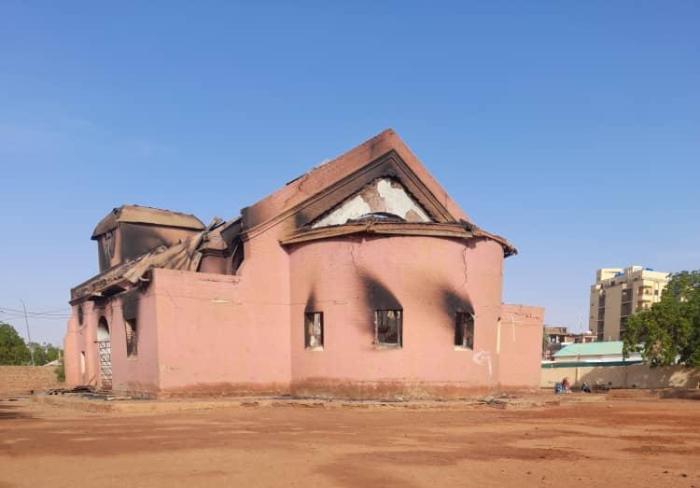
The Episcopal/Evangelical Church in Omdurman, which was shelled on 1 November 2023.

No se debe permitir que Sudán quede fuera de la agenda internacional

“La tierra es valiosa y será más fácil apoderarse de ella si los edificios han sido destruidos por la guerra”.

Esta fue la reacción de una fuente de CSW ante el bombardeo de iglesias y propiedades en Omdurman y Jartum El-Shajara en Sudán a principios de mes.

El 1 de noviembre, las Fuerzas Armadas Sudanesas bombardearon y destruyeron por completo una iglesia utilizada por las denominaciones episcopal y evangélica en Omdurman. Era la iglesia más grande y la segunda más antigua de la zona, y su destrucción se produjo apenas tres semanas después de que también fueran bombardeadas la Escuela Comercial Evangélica y la Escuela Secundaria Evangélica.

Continue reading “No se debe permitir que Sudán quede fuera de la agenda internacional”
The Episcopal/Evangelical Church in Omdurman, which was shelled on 1 November 2023.

Sudan must not be allowed to slip off the international agenda

‘The land is valuable, and it will be easier to seize it if the buildings have been destroyed by war.’

This was the reaction of a CSW source to the bombing of churches and properties in Omdurman and Khartoum El-Shajara in Sudan at the start of the month.

On 1 November the Sudanese Armed Forces (SAF) shelled and completely destroyed a church that was used by the Episcopal and Evangelical denominations in Omdurman. It was the largest and second oldest church in the area, and its destruction came just three weeks after the Evangelical Commercial School and the Evangelical Secondary School were also bombed.

Continue reading “Sudan must not be allowed to slip off the international agenda”
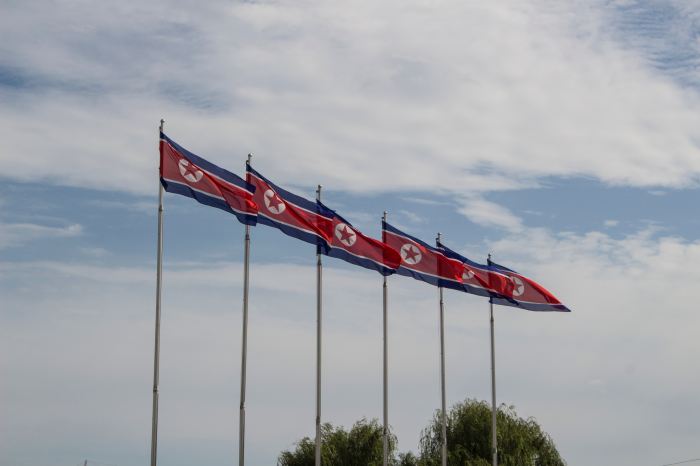
North Korea flags.

With echoes of ‘the most difficult time in North Korean history’, the international community must do more to bring about change

Earlier this month, the BBC released information gathered from exclusive interviews with three individuals living inside North Korea. Their reports have brought the country back into the headlines, revealing the devastating reality of the situation for North Korean citizens since the COVID-19-triggered border closure in January 2020. They describe widespread starvation and brutal repression, without feasible means of escape.

Hanna Song from the North Korean Database Centre for Human Rights (NKDB) said in an interview with the BBC ‘This [report] takes us back to the most difficult time in North Korean history.’

Song is referring here to the widespread famine of the 1990s known as the arduous march.

The Democratic People’s Republic of Korea (DPRK) was founded in 1948 under the leadership of Kim Il-Sung. The communist nation’s economy was built on a system of state control: a public distribution system for food and material goods, and a state-assigned job system dictating citizen employment.

Continue reading “With echoes of ‘the most difficult time in North Korean history’, the international community must do more to bring about change”