Attacks on places of worship: Armed groups raise the stakes in the Central African Republic

Attacks on places of worship in the Central African Republic (CAR) are not a new phenomenon.

In March 2013, the predominantly Muslim rebel alliance, Seleka, seized power, and in the crisis that followed, there were reports of looting and attacks on worshipers in churches initially, spreading to mosques and other places of worship as the conflict assumed an increasingly religious dimension.

Even after the election of President Faustin-Archange Touadéra three years later, attacks on places of worship continue at a disturbing rate.

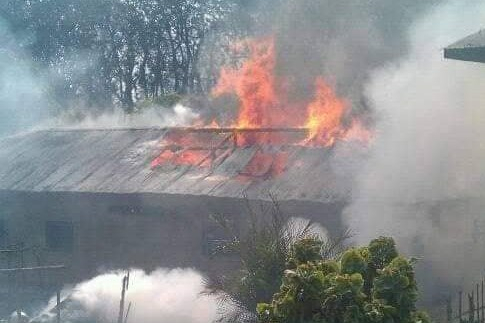
In the capital city Bangui, tensions flare periodically near the KM5 district. In May 2018, at least 15 people, including a clergyman, were killed and 100 injured in an attack on the Our Lady Fatima Catholic Church. On 7 February 2017, three churches were burned and a pastor killed in the same district.

Attacks such as these have taken a new and alarming turn since November 2018.
Continue reading “Attacks on places of worship: Armed groups raise the stakes in the Central African Republic”

FoRB on the Frontlines: Fighting misconceptions on a daily basis

In the run-up to Human Rights Day on 10 December and the 20th anniversary of the UN Declaration on Human Rights Defenders on 9 December, CSW has been speaking with HRDs across South Asia to find out what it means to be a FoRB defender in the region.

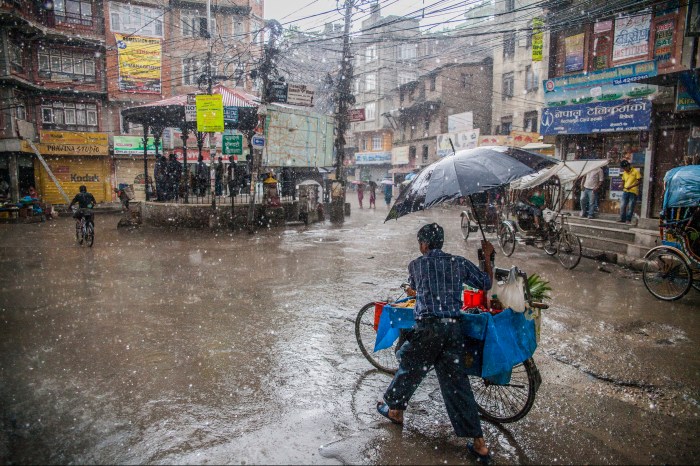
John* is a human rights defender working in Nepal:

“It has been almost a decade since I was (first) involved in human rights advocacy. Initially, it was a learning phase as a member of an international movement, which later turned into social action.

Since then I have been supporting public advocacy for the full realisation of freedom of religion or belief (FoRB) for all in Nepal, especially in the current context as we welcome a new constitution and political environment.

Aside from this I have been raising areas of concern regarding conflicts of interest in non-governmental sectors. A fully functioning and empowered civil society is vital for Nepal to achieve its transitional aims, and I view this as an important part of my work, especially when trying to encourage and defend the right for all to practice their religion or belief, regardless of racial class or social background.

Continue reading “FoRB on the Frontlines: Fighting misconceptions on a daily basis”

The Rohingya Crisis One Year On: Burma’s Work of Healing Cannot be Postponed Any Longer

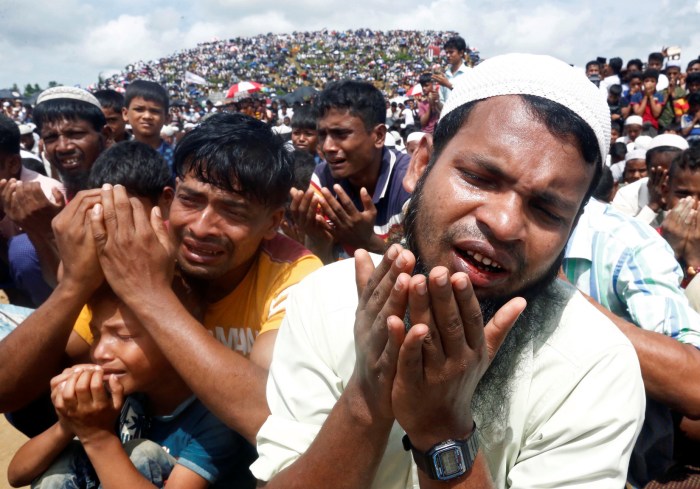
On 25 August last year, the Burma army unleashed its attack on the Rohingya people of northern Rakhine state, precipitating the country’s most severe human rights and humanitarian crisis since independence in 1949. The United Nations’ outgoing High Commissioner for Human Rights, Zeid Ra’ad al-Hussein, described this crisis as “a textbook example of ethnic cleansing”, and the UN Special Rapporteur on human rights in Burma, Yanghee Lee, warned of “the hallmarks of genocide”. After the genocides in Rwanda and Srebrenica the world lamented with the words: “Never again”. But a year ago in Burma, “never again” happened all over again.

“They made it impossible for us to stay – how could we survive?”

In March this year, I travelled to the refugee camps on the Bangladesh-Burma border, to meet survivors. Almost everyone I talked to had seen loved ones killed and villages burned. Accounts of mass rape were widespread. I met Rohingyas whose eyes had been shot out and limbs blown off, and heard of others whose eyes had been gouged out, throats slit and limbs hacked off.

Continue reading “The Rohingya Crisis One Year On: Burma’s Work of Healing Cannot be Postponed Any Longer”

Never Again: Reflections on ten years since the Kandhamal Tragedy in India

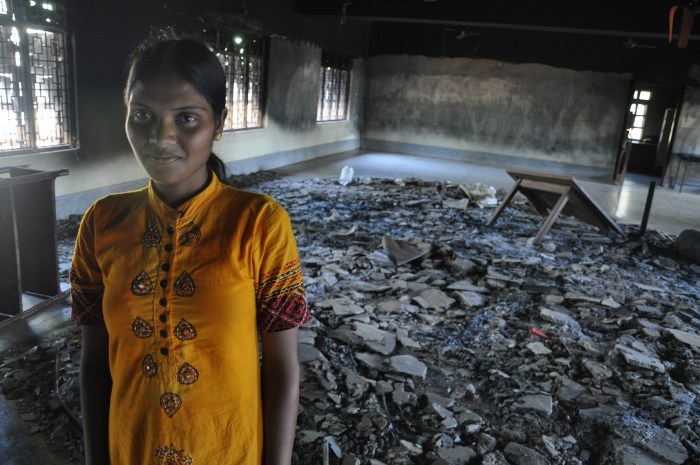
In 2008, the Christians of Kandhamal District in Odisha state in India experienced the most severe outbreak of anti-Christian violence in the country’s history. The attacks claimed over 100 lives, forced 56,000 people to flee their homes and saw the destruction of 5,600 homes and 300 churches. Father Ajaya Kumar Singh, a survivor of the tragedy in Kandhamal, sought to equip himself with the ability to advocate for fellow survivors following the attacks, and has campaigned tirelessly for compensation and justice.

On the 10th anniversary since the outbreak of the attacks, Father Ajaya spoke to CSW about the current situation in Kandhamal, and about what can be done by both the government of India and the international community to help bring justice, and to ensure that an event like the one which took place in Kandhamal never happens again.

Continue reading “Never Again: Reflections on ten years since the Kandhamal Tragedy in India”

Impunity Breeds Distrust – Religious Leaders as Human Rights Defenders in Mexico

Who do you trust to look after your community? According to the 2018 Edelman Trust Barometer survey, 71% of Mexican citizens would rather put their trust in non-governmental organisations (NGOs) than the government, which has the confidence of a mere 24% of the population.

These stark statistics beg the question: what could be driving such levels of distrust in the Mexican government?

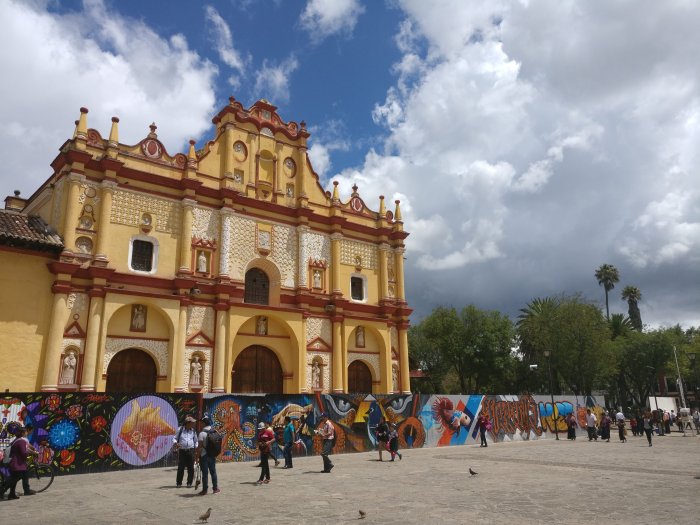
Currently, Mexico is the second most dangerous country in the world to be a Catholic priest. Other religious leaders are also increasingly targeted; between November 2013 and April 2018, 30 religious leaders were killed. In April 2018 alone, three religious leaders were killed. Moreover, Mexico is the second most dangerous country in the world to be a journalist.

Religious leaders often take on the role of human rights defenders (HRDs), engaging with various human rights initiatives in order to bring the issues of their respective communities to the attention of those who can provide legal, practical or advocacy assistance. As such, these religious leaders often fulfil the role of community leaders as well as HRDs. It’s dangerous work. In 2017, 32 HRDs were killed according to a report by Front Line Defenders.

Continue reading “Impunity Breeds Distrust – Religious Leaders as Human Rights Defenders in Mexico”