For authorities in Cuba’s prisons, the right to freedom of religion or belief is a tool to manipulate 

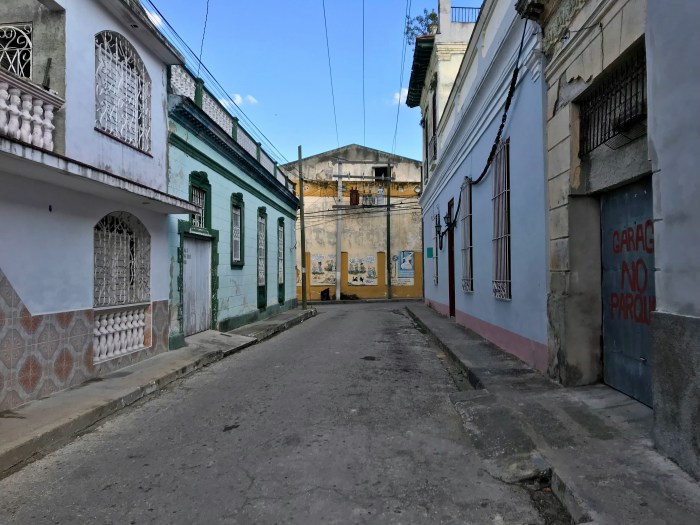
It has been understood for decades that conditions in Cuba’s maximum-security prisons are terrible. They have only grown worse over the past few years as the entire country has experienced an economic and infrastructure crisis, with critical shortages of food and medicine across the country alongside the repeat failure of the island’s entire electrical grid, sometimes for days at a time.  

Since 1989, the Cuban government has refused access to the International Committee of the Red Cross to monitor or assess prison conditions. Prisoners are held in unhygienic, sometimes overcrowded conditions, in cells infested with mosquitoes and bedbugs. The food served to prisoners is unpalatable, riddled with insects and worms, and low in nutrition. Despite rampant disease, including tuberculosis, dengue, and dysentery outbreaks, throughout the prison facilities, medical attention is inadequate, if provided at all.  

During the hot and humid summer months, temperatures inside the cells can rise to dangerous levels. Multiple former political prisoners have told CSW that the only water they had extremely limited access to, both for drinking and personal hygiene, was cloudy or dirty.  

Continue reading “For authorities in Cuba’s prisons, the right to freedom of religion or belief is a tool to manipulate “
Para las autoridades de las cárceles cubanas, el derecho a la libertad de religión o creencias es solo una herramienta de manipulación

Durante décadas es bien sabido que las condiciones en las cárceles de máxima seguridad de Cuba son terribles. Estas condiciones no han hecho más que empeorar en los últimos años, , pues el país entero está hundido en una crisis económica y de infraestructura, agravada por la escasez de alimentos y medicamentos en toda la isla, aunado a los repetidos fallos de la red eléctrica de la  nación, a veces durante días. 
 
Desde 1989, el gobierno cubano ha negado el acceso al Comité Internacional de la Cruz Roja para supervisar o evaluar las condiciones carcelarias. Los presos se encuentran recluidos en condiciones insalubres, a veces de hacinamiento, en celdas infestadas de mosquitos y chinches. La comida que se les sirve es insípida, plagada de insectos y gusanos, y de bajo valor nutritivo. A pesar de la proliferación de enfermedades, como la tuberculosis, el dengue y los brotes de disentería, en las instalaciones penitenciarias, la atención médica es insuficiente, o incluso nula.

Durante los calurosos y húmedos meses de verano, las temperaturas dentro de las celdas pueden alcanzar niveles peligrosos. Numerosos ex presos políticos han declarado a CSW que el agua a la que tenían acceso,  tanto para beber como para su higiene personal, estaba extremadamente limitada, además de turbia o sucia.  

Continue reading “Para las autoridades de las cárceles cubanas, el derecho a la libertad de religión o creencias es solo una herramienta de manipulación”

Caught between two paranoid and barbaric military forces, nowhere is safe for the people of Sudan 

‘We live under miserable conditions and lack all basic needs.’ 

A resident of Al Thora Mobe village, which has been under RSF control since December 2023 

It has been 20 months and counting since a conflict broke out between the Rapid Support Forces (RSF) and the Sudan Armed Forces (SAF) in April 2023, described by the UN High Commissioner for Human Rights as ‘marked by an insidious disregard for human life.’  

The grim toll of the violence so far is at least 14,600 dead and 26,000 injured, with civilians trapped between the warring sides and bearing the brunt of the casualties. One study estimates that the true death toll could be as high as 61,000. 

Continue reading “Caught between two paranoid and barbaric military forces, nowhere is safe for the people of Sudan “

“There is no excuse”: The international community must finish the work of holding North Korea to account

Content warning: This blog contains descriptions of rape, sexual violence and violence against infants


By Benedict Rogers

Almost exactly twenty years ago, CSW began to investigate the human rights situation in North Korea, and in particular the persecution of Christians.

It is fair to say that we were one of the very first human rights organisations to sound the alarm about the gravity and scale of human rights atrocities in the world’s most closed and most repressed nation.

The tragedy is that twenty years on, little has changed and the world continues to turn a blind eye.

Dislodging the bricks

In 2007 we published one of the first and most comprehensive studies of the atrocity crimes in North Korea, in a report titled North Korea: A Case to Answer, a Call to Act. In so doing, we became one of the first organisations to call for the establishment of a United Nations Commission of Inquiry to investigate crimes against humanity.

Continue reading ““There is no excuse”: The international community must finish the work of holding North Korea to account”

Arrests, torture, violence and oppression, and yet there is still hope for Myanmar/Burma

By Benedict Rogers

Last week, people in Myanmar/Burma marked 100 days since the military coup with yet more protests. For over three months since General Min Aung Hlaing seized power on 1 February, overthrowing the democratically-elected civilian government, people have courageously taken to the streets throughout the country. Almost 5,000 have been arrested, just under 4,000 are currently in jail, and almost 800 have been killed, yet still the demonstrations continue.

Myanmar now stands on the brink of a humanitarian disaster. The economy has collapsed, and a Civil Disobedience Movement (CDM) by public sector workers has led to thousands losing their homes and salaries. Many are facing extreme poverty and starvation.

For those detained by the military, torture is “almost ‘automatic’” according to survivors and eyewitnesses in evidence documented by the Chin Human Rights Organisation (CHRO). “Systematic torture practices are used by Burmese soldiers to extract information or forced confessions from people arrested for exercising their right to peaceful protest or other anti-junta activities,” CHRO report.

According to one former detainee, “Once inside the interrogation center, we are made to kneel down, hands tied behind our backs, blindfolded and forced to lie on our belly on the ground. That’s when the interrogation and beatings begin. Depending on how quickly the soldiers obtain the information they want, detainees are caned with up to 40 lashes, some detainees are made to dig holes in the ground to make them think that they are about to be killed and they are digging their own grave.”

Continue reading “Arrests, torture, violence and oppression, and yet there is still hope for Myanmar/Burma”