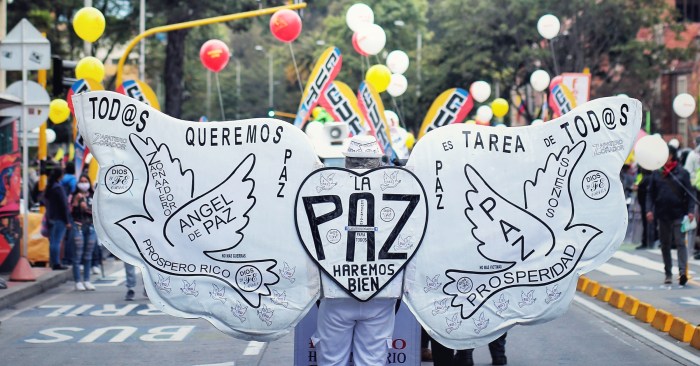
A pesar de las promesas del Gobierno, la «Paz Total» sigue siendo una utopía en Colombia

El 4 de abril, Maribel Silva, Isaíd Gómez y el tío de este, Carlos Valero, se dirigieron a acudir a una reunioón solicitada por un grupo armado ilegal que opera en el Municipio de Calamar, Departamento de Guaviare, Colombia. Al día siguiente, James Caicedo, Jesús Valero, Maryuri Hernández, Nixon Peñalosa y Óscar García hicieron lo mismo. 

Tras no regresar a sus hogares en el paraje de Agua Bonita, en Pueblo Seco, sus familiares contactaron a representantes del grupo armado ilegal que había emitido las citaciones, pero ellos negaron haberlas emitido. Posteriormente, se advirtió indirectamente a los familiares que debían dejar de buscar a sus seres queridos y «considerar el caso cerrado». 

Así, sus familias quedaron en el limbo, sumidas en la terrible incertidumbre de lo que les habría ocurrido, preguntándose si debían permanecer allí, aferrándose a la esperanza de que sus familiares regresaran a casa, o huir de la región por temor a represalias y por la seguridad y protección de la vida de los hijos y padres de las personas desaparecidas. Esas mismas ocho personas y sus familias se habían reubicado y establecido en Guaviare tras ser desplazadas del Departamento de Arauca debido a la violencia y las graves violaciones a la libertad de religión o de creencias, incluyendo el cierre de iglesias y los ataques contra pastores protestantes, por parte de grupos armados y criminales ilegales durante la última década. 

Continue reading “A pesar de las promesas del Gobierno, la «Paz Total» sigue siendo una utopía en Colombia”
India’s ‘freedom of religion’ laws have nothing to do with preventing forced conversions

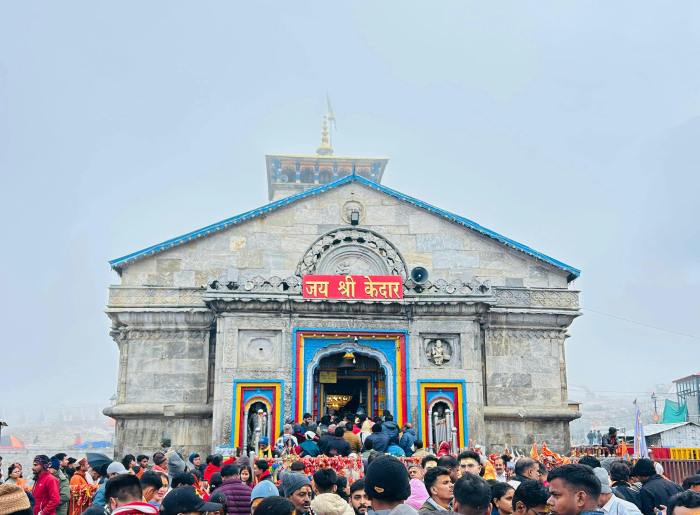
On 20 August India’s Uttarakhand state government introduced significant amendments to its controversial anti-conversion law. Building on the original 2018 legislation and an initial round of amendments made in 2022, the Freedom of Religion and Prohibition of Unlawful Conversion (Amendment) Bill, 2025, imposes harsher punishments on a range of offences.

Individuals convicted of using allurement, misrepresentation or fraud to induce conversion now face anywhere from three to ten years in prison and a minimum fine of 50,000 rupees (approximately GBP £420). If the case involves a minor, a woman, a person with a disability, or a member of a Scheduled Caste or Scheduled Tribe, these penalties are increased to five to 14 years in prison and a fine of at least 100,000 rupees (GBP £840).

‘Mass conversions’ and those involving foreign funding are punishable with seven to 14 years imprisonment and a minimum fine of 100,000 rupees, while punishments for cases involving threats, assault, human trafficking, or marriage as a pretext for conversion can extend to 20 years or life imprisonment, along with fines covering the victim’s medical and rehabilitation costs.

Continue reading “India’s ‘freedom of religion’ laws have nothing to do with preventing forced conversions”

Pakistan must be made to end its decades-long tolerance and encouragement of the violent persecution of the Ahmadiyya community 

At 2.30pm on 16 May, Dr Sheikh Mahmood arrived at Fatima Hospital in Sargodha, Punjab Province, Pakistan and proceeded to attend to his patients as per his routine. A highly respected gastroenterologist and hepatologist, Dr Mahmood was widely known for his dedication, professional excellence and compassionate nature.  

But on this day – as he walked through the corridor of the hospital that he had worked in for the past seven years – an unidentified gunman opened fire on him from behind before fleeing the scene while openly brandishing a pistol. He sustained two gunshot wounds and was immediately transferred to Civil Hospital Sargodha, where he succumbed to his injuries. He leaves behind a mother, wife, two daughters and two sons. 

Dr Mahmood, 58, had no known personal enmities and Sargodha police have yet to confirm the motive behind the killing, however recent developments in Pakistan give much and highly-concerning reason to believe that he was likely targeted because of his faith – that is, because he was an Ahmadi Muslim.

Continue reading “Pakistan must be made to end its decades-long tolerance and encouragement of the violent persecution of the Ahmadiyya community “

Truth matters: How misinformation and sensationalism undermines support for victims of human rights violations

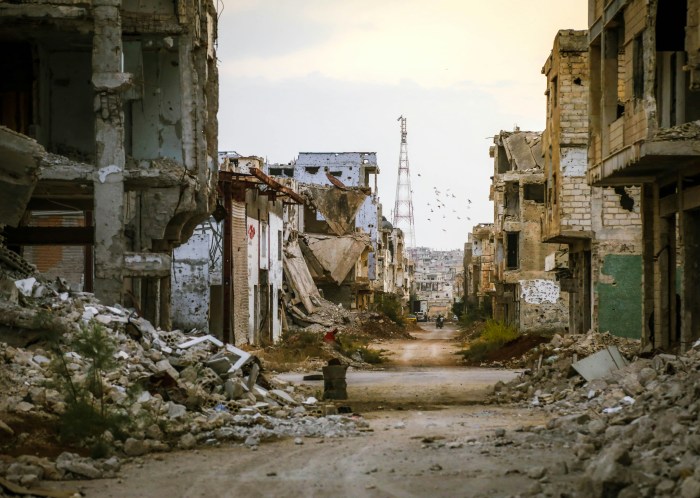
In early March, alarming reports surfaced of the killing of Christians in Syria. As a shocking outbreak of violence claimed the lives of over 1,000 people within just two days, including 745 civilians, many outlets were quick to claim that the country’s Christian community had been the target. 

GB News led with ‘Christians massacred as Syrian jihadist launches killing spree just weeks after toppling Assad’; a writer for the Times of Israel lamented what he identified as the media’s ‘predictable’ disdain for Syrian Christians; the Christian outlet Relevant Magazine claimed that ‘hundreds of Christians’ were among those killed, and countless posts on social media amplified claims of Christians being deliberately targeted and murdered in large numbers. 

Such reporting appeared to confirm the worst fears that many have harboured since December 2024, when President Bashir al-Assad was ousted by a coalition of rebel groups led by the Islamist military organisation Hayat Tahrir al-Sham (HTS), an organisation sanctioned by the US government. In the immediate aftermath of the takeover, many predominantly – though not exclusively – Christian outlets expressed understandable concern over impending threats to the country’s Christian community, with some warning of potential ‘ethnic cleansing’, ‘persecution’ and ‘genocide’. 

Continue reading “Truth matters: How misinformation and sensationalism undermines support for victims of human rights violations”

Control of Khartoum may have changed hands, but Sudan’s nightmare is far from over

In late March the Sudan Armed Forces (SAF) claimed a significant victory. After months of fighting, the army declared that it had seized full control of the Sudanese capital Khartoum from the Rapid Support Forces (RSF) militia.

Visiting the presidential palace for the first time since conflict broke out between the two forces almost two years ago, the leader of the SAF Abdel Fattah al-Burhan said, ‘Khartoum is free, it’s done.’

Some residents of the city may have even breathed a small sigh of relief. While both the RSF and SAF stand accused of the gravest of international crimes, it is generally accepted that conditions are marginally better in areas under SAF rule, perhaps because it is the party to the conflict that currently occupies Sudan’s seat in international arenas.

But the country’s nightmare is far from over.

Continue reading “Control of Khartoum may have changed hands, but Sudan’s nightmare is far from over”