Remembering the Victims of Acts of Violence Based on Religion or Belief

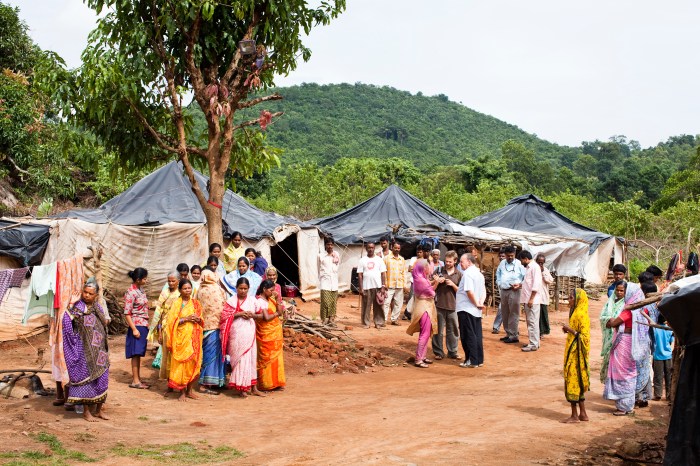
There have been numerous case examples of acts of violence based on religion or belief from every corner of the world – but one that repeatedly stands out for me is the incident that occurred back in 2008, in Kandhamal district, Odisha, India.

Kandhamal is home to some of the poorest and most marginalized communities in Odisha. On 25 August 2008, it was the epicentre of widespread communal violence targeting the Christian community. Local monitoring groups estimate that over 90 people were killed with at least 54,000 displaced, over 300 churches destroyed, and unknown numbers of women brutally sexually assaulted by groups belonging to the Rashtriya Swayamsevak Sangh (RSS) that espouse Hindutva ideology. More than a decade on, and most of the victims are yet to receive justice. In addition, attacks on religious minorities and on freedom of expression continue, and a lack of official condemnation towards acts of intimidation and violence has further empowered these groups. 

International Day Commemorating Victims of Acts of Violence Based on Religion or Belief

In 2019, in an effort to recognise, respond to and prevent such acts from occurring, the United Nations General Assembly (UNGA), designated 22 August as the International Day Commemorating the Victims of Acts of Violence Based on Religion or Belief.

The resolution establishing the international day does not highlight any specific religion or belief group, but refers to all victims, regardless of creed. It strongly deplores all acts of violence against persons on the basis of their religion or belief specifically, and “any such acts directed against their homes, businesses, properties, schools, cultural centres or places of worship, as well as all attacks on and in religious places, sites and shrines that are in violation of international law”.

Remarkably, the resolution received broad support and recognition from UN Member States across the world. It was tabled by Poland alongside Brazil, Canada, Egypt, Iraq, Jordan, Nigeria, Pakistan and the USA, and subsequently cosponsored by over 80 states, including the UK. However, with global recognition comes global responsibility; both the responsibility to commemorate victims of acts of violence based on religion or belief, and the responsibility to protect and promote the right to freedom of religion or belief (FoRB) for all.

Continue reading “Remembering the Victims of Acts of Violence Based on Religion or Belief”

Call for Action to Address Conflict-Related Sexual Violence in Ethiopia’s Tigray Region from Women from Africa and of African Descent

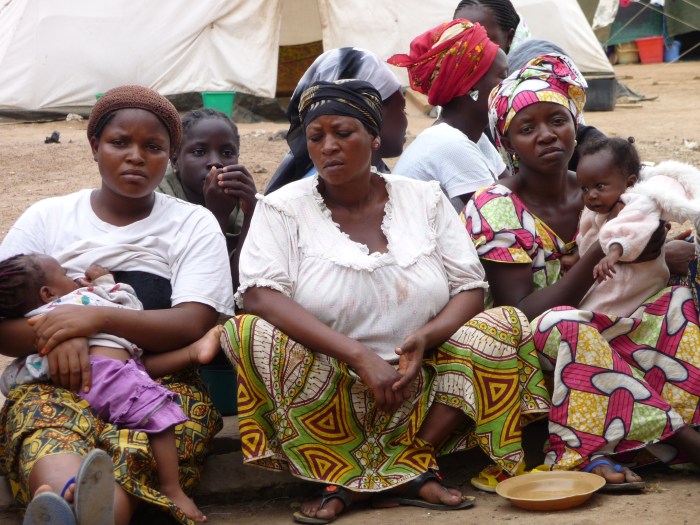
As women from Africa or of African descent, we are marking the International Day for the Elimination of Sexual Violence in Conflict by signing this open letter in solidarity with the women and girls in the Tigray region of Ethiopia, who are being targeted in a campaign of sexual violence which the UN Special Representative on Sexual Violence in Conflict has described as being of “a level of cruelty beyond comprehension.”

During a disturbing briefing to the Nations (UN) Security Council in April, the UN Under-Secretary-General for Humanitarian Affairs and Emergency Relief Coordinator Sir Mark Lowcock reported an unspecified agency operating in Tigray had estimated that 30% of all incidents against civilians involved sexual violence, which he confirmed is being used “as a weapon of war, as a means to humiliate, terrorize and traumatize an entire population today and into the next generation.” The perpetrators were identified as members of the “Ethiopian National Defence Forces, Eritrean Defence forces, Amhara Special Forces, and other irregular armed groups or aligned militia,” and nearly a quarter of the cases involved gang rape over an extended period of time.

Reports continue to emerge from Tigray of wives being raped in front of their husbands; mothers raped in front of their children and vice versa; family members forced to choose between raping female relatives or death, and of women themselves being forced to choose between rape or death. Several victims report their assailants boasted of “cleansing” their bloodline, while others arrive at medical facilities having suffered additional traumatic injuries to their reproductive organs inflicted by attackers to prevent them from bearing children. Researchers from Ghent University in Belgium have concluded this campaign of mass rape fits “a pattern that has been evident in previous genocidal actions, and [is] reminiscent of events in Bosnia and Rwanda.”

Continue reading “Call for Action to Address Conflict-Related Sexual Violence in Ethiopia’s Tigray Region from Women from Africa and of African Descent”

Arrests, torture, violence and oppression, and yet there is still hope for Myanmar/Burma

By Benedict Rogers

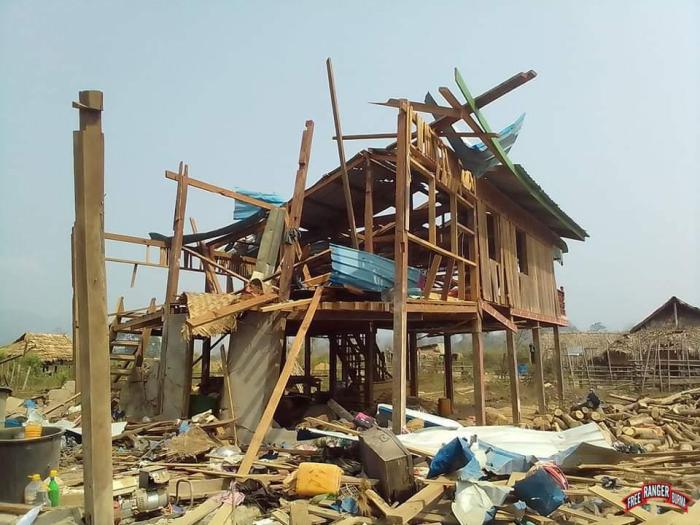
Last week, people in Myanmar/Burma marked 100 days since the military coup with yet more protests. For over three months since General Min Aung Hlaing seized power on 1 February, overthrowing the democratically-elected civilian government, people have courageously taken to the streets throughout the country. Almost 5,000 have been arrested, just under 4,000 are currently in jail, and almost 800 have been killed, yet still the demonstrations continue.

Myanmar now stands on the brink of a humanitarian disaster. The economy has collapsed, and a Civil Disobedience Movement (CDM) by public sector workers has led to thousands losing their homes and salaries. Many are facing extreme poverty and starvation.

For those detained by the military, torture is “almost ‘automatic’” according to survivors and eyewitnesses in evidence documented by the Chin Human Rights Organisation (CHRO). “Systematic torture practices are used by Burmese soldiers to extract information or forced confessions from people arrested for exercising their right to peaceful protest or other anti-junta activities,” CHRO report.

According to one former detainee, “Once inside the interrogation center, we are made to kneel down, hands tied behind our backs, blindfolded and forced to lie on our belly on the ground. That’s when the interrogation and beatings begin. Depending on how quickly the soldiers obtain the information they want, detainees are caned with up to 40 lashes, some detainees are made to dig holes in the ground to make them think that they are about to be killed and they are digging their own grave.”

Continue reading “Arrests, torture, violence and oppression, and yet there is still hope for Myanmar/Burma”

Criminalised, killed and cursed: The plight of Pakistan’s Ahmadiyya community

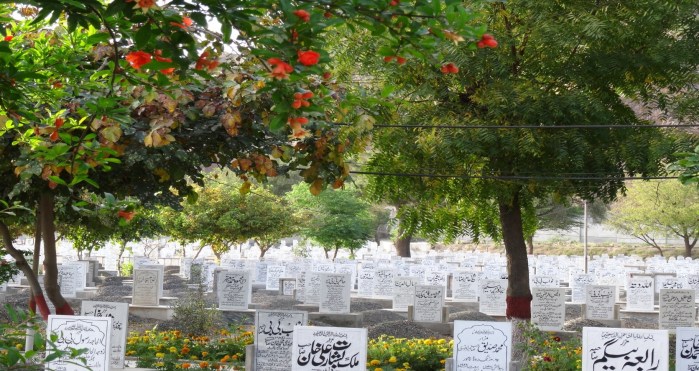
On 11 February, Abdul Qadir, a 65-year-old Ahmadi homeopathic doctor, was shot dead outside his homeopathic clinic in the Bazikhel area of Peshawar in north-western Pakistan. His killing marked the latest in a concerning uptick in religiously motivated attacks on Ahmadis, particularly in Peshawar.

Last year, CSW documented at least five other instances in which Ahmadis were killed, including an incident in which 31-year-old doctor, Tahir Mahmood, was murdered in front of his family at his home in Murch Balochan in Nankana Sahib District, Punjab.

The fact that Pakistan’s Ahmadiyya community has a long history of experiencing harassment, discrimination, violence and other human rights violations within Pakistani society leaves little doubt that these murders are religiously motivated. A pattern is also clearly emerging whereby prominent doctors and academics have been specifically singled-out by extremists.

Continue reading “Criminalised, killed and cursed: The plight of Pakistan’s Ahmadiyya community”

Une tragédie en cours : Le déclin de la diversité religieuse au Moyen-Orient

Billet de Blog par Lord Alton of Liverpool

La région du Moyen-Orient et de l’Afrique du Nord (MOAN) connait un déclin significatif de la diversité religieuse depuis ces dernières années. Si les anciennes communautés chrétiennes ont régulièrement souffert par le passé, aucun groupe religieux n’est cependant épargné par la tragédie actuelle ; les ahmadis, les bahaïs, les juifs, les yazidis et les zoroastriens ont tous été touchés, ainsi que les musulmans chiites et sunnites. Pour de multiples raisons, dans plusieurs pays de la région, des communautés minoritaires ayant des racines profondes remontant à plusieurs générations sont contraintes de quitter leurs terres ancestrales.

Irak et Syrie: Un cycle de violences sans fin

Depuis 2003, le nombre de chrétiens et de yazidis en Irak a considérablement diminué. Des milliers d’entre eux ont été tués et des centaines de milliers ont émigré à cause du terrorisme et de la violence sectaire. Ils ne reviendront jamais.

En 2014, l’État islamique (EI) a conquis Mossoul et les plaines de Ninive. Des milliers d’hommes, de femmes et d’enfants non sunnites ont été tués ou réduits en esclavage. Une étude, réalisée par la Public Library of Science, estime que 3 100 yazidis ont été tués en quelques jours après l’attaque de 2014. Au cours des années suivantes, des dizaines de milliers de chrétiens irakiens ont émigré vers les pays voisins ; le nombre des chrétiens restant en Irak est aujourd’hui estimé à 250 000 contre 2,5 millions avant l’invasion de 2003.

Continue reading “Une tragédie en cours : Le déclin de la diversité religieuse au Moyen-Orient”