‘Salimos a la calle con miedo’: tras el asesinato de dos pastores, los cristianos del norte de Colombia ya no se sienten seguros

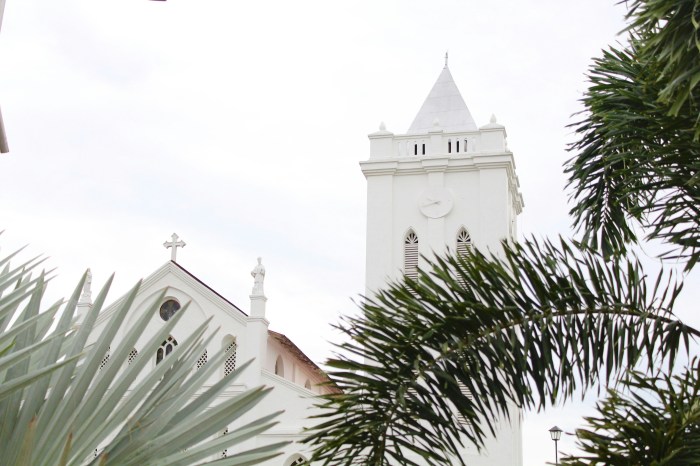
Muchos cristianos de la zona centro-norte de Colombia, que abarca las regiones vecinas de Magdalena y Cesar, están nerviosos tras el asesinato de dos líderes religiosos en el espacio de solo dos semanas. El 29 de diciembre, una familia entera de cuatro personas, el pastor Marlon Lora, su esposa Yurlay y sus hijos adultos Ángela y Santiago, fue asesinada a tiros tras un servicio religioso dominical por la mañana en la Iglesia Bíblica Misionera en el barrio de Villa Paraguay de Aguachica, departamento de Cesar.

En la tarde del 8 de enero, Iván García, un líder religioso de 28 años esposo de una pastora, falleció tras recibir seis disparos, tras salir de un servicio religioso. En ambos casos, los asesinatos fueron llevados a cabo por sicarios enmascarados que iban en motocicletas.

El Sr Ivan García fue seguido por los sicarios cuando caminaba hacia su casa por un camino rural oscuro con su hijastra de 14 años y otras seis personas después de una celebración espiritual en la Iglesia Visión Cristiana del Pueblo de Dios, donde su esposa, la Pastora Karen Nierles, había sido invitada a dirigir un estudio bíblico. La pastora Nierles dirige la Iglesia Nuevo Renacimiento en Cristo en la comunidad de Garital, en la Zona de Cultivo de Banano, en Magdalena. Según los testigos, después de recibir el disparo, el joven predicador cayó de rodillas y levantó las manos en agradecimiento a Dios. Los sicarios se marcharon del lugar sin decir palabra.

Continue reading “‘Salimos a la calle con miedo’: tras el asesinato de dos pastores, los cristianos del norte de Colombia ya no se sienten seguros”

Caught between two paranoid and barbaric military forces, nowhere is safe for the people of Sudan 

‘We live under miserable conditions and lack all basic needs.’ 

A resident of Al Thora Mobe village, which has been under RSF control since December 2023 

It has been 20 months and counting since a conflict broke out between the Rapid Support Forces (RSF) and the Sudan Armed Forces (SAF) in April 2023, described by the UN High Commissioner for Human Rights as ‘marked by an insidious disregard for human life.’  

The grim toll of the violence so far is at least 14,600 dead and 26,000 injured, with civilians trapped between the warring sides and bearing the brunt of the casualties. One study estimates that the true death toll could be as high as 61,000. 

Continue reading “Caught between two paranoid and barbaric military forces, nowhere is safe for the people of Sudan “

Women from Africa and the diaspora call for action to protect women and girls in Sudan from conflict-related sexual violence

As women from Africa and the diaspora, we have signed this open letter to express our solidarity with women and girls in Sudan who are being targeted in a relentless campaign of conflict-related sexual violence (CRSV) and to appeal for the urgent initiation of international protection measures and accountability mechanisms.

The war in Sudan began in April 2023 and has been described as a conflict fought on the bodies of women and girls. A total absence of protection for women and girls heightens the risk of sexual and gender-based violence.

Distressing reports have emerged of rape, gang rape, and forced ‘marriages’, with many of these violations occurring in people’s homes.1

Continue reading “Women from Africa and the diaspora call for action to protect women and girls in Sudan from conflict-related sexual violence”

Syria: Ten years on, why does it matter?

June 2024 marked ten years since the Islamic State (IS) declared a caliphate in Syria. Years of brutal conflict including flagrant and well-documented human rights violations, including atrocity crimes, by a complex web of aggravators resulted in one of the highest death counts of any recent war and the highest number of displaced persons in modern history.

Yet in May of last year, Syria was welcomed back into the Arab League, the same government invited to participate in talks to further international cooperation that, just a decade earlier, had deployed chemical weapons against its own civilians. Furthermore, in summer 2023, Russia vetoed the renewal of a mechanism that had enabled the UN to deliver aid without the Syrian government’s consent to parts of north-west Syria not under its control – a resolution that had been in place for nine years. The year rounded out four months later with Syria present at the COP28 climate conference even as France issued an arrest warrant for President Bashar al-Assad over alleged  complicity in the chemical gas attacks.

Additionally, the Turkish president currently appears to be working towards normalising relations with Syria, despite opposing the Assad regime for over a decade and the ongoing occupation of parts of northern Syria by Turkish forces and allied Islamist militia.

It is clear that the world is beginning to forget the atrocities of the Syrian Civil War as well as the chaotic campaign of IS that saw whole cities reduced to rubble, wreaking havoc on the nation. But beyond the short clips of media coverage that defined our news cycles for years, what exactly happened between 2012 and 2014, and why does it matter today?

Continue reading “Syria: Ten years on, why does it matter?”

‘They realised their guns weren’t fast enough’

As we mark the second anniversary of the Pentecost Sunday massacre in Ondo State, Nigeria, the UK government needs to be doing more to advance FoRB through its foreign policy commitments. 

As Margaret is invited to speak, the room falls silent. We are in Parliament, off the side of Westminster Hall. It is the day of the Autumn budget and the news is flooded with discussion on whether a tax cut of 1% will be announced, how it will happen, and who it will benefit. Experts are pontificating on inflation and Conservative Party posing ahead of the 2024 general election. Seats to watch PMQs and the Chancellor’s statement are fully booked. The overflow queue stretches past the lobby and into St Stephen’s Chapel. There is no real possibility of those at the end of the queue getting in before the Chancellor is back at No. 11; but there is a small glimmer of hope, and so they stay. 

But Margaret is not standing in the queue. In fact, she couldn’t if she’d wanted to. Margaret lost her legs in the massacre at St Francis Xavier Catholic Church in Owo, Ondo State, Nigeria, on 5 June 2022 in the first ever terror attack on a church in the south of the country. This is her first time in the UK. She is supported by her husband Dominic to give a face to this year’s Red Wednesday, an event coordinated by Aid to the Church in Need aimed at raising awareness of Christian persecution. 

Continue reading “‘They realised their guns weren’t fast enough’”