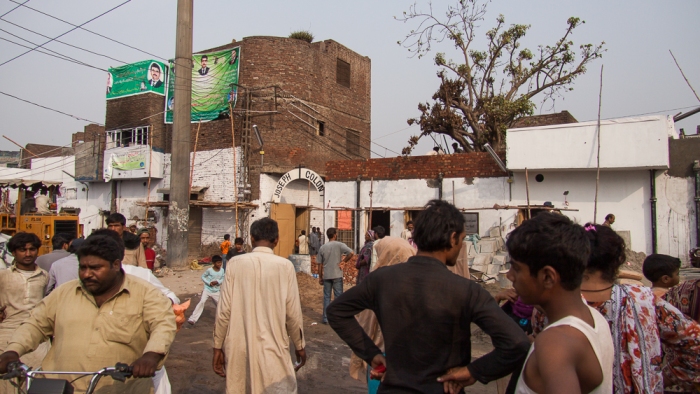
Joseph Colony in Lahore, Pakistan, which was infamously attacked in March 2013 after Sawan Masih was accused of blasphemy.

Pakistan needs to wake up to its blasphemy law crisis before it is too late

Last month, the desecration and burning of the Quran in Stockholm, Sweden sparked worldwide condemnation. Pakistan witnessed widespread protests and termed the act as blasphemous and deeply damaging to the sentiments of the Muslim community. A banned extremist group in the country, Lashkar-e-Jhangvi, labelled it as an attack by Christians on Muslims and called on their followers to attack Christian settlements and kill Christians, while further vowing that they will make Pakistan a ‘hell for Christians’.

Last week, in the city of Sargodha, in Punjab province, a blasphemous poster was found near a local mosque. It prompted locals to gather in protest and demand that the police find a Christian from the nearby Christian settlement of Maryam Town. Since then, tensions in the area have been high with most of the 3,000-4,000 Christian families fleeing their homes due to fear of a mob related attacks.

Tensions over blasphemy have already had devastating consequences in Pakistan this year. On 6 May, a local cleric in the city of Mardan, Khyber Pakhtunkhwa province, was killed by a mob after he was accused of making a blasphemous reference during a political rally of former Prime Minister Imran Khan’s party. In February a mob in the city of Nankana Sahib, Punjab, stormed the police station and proceeded to lynch and kill a man accused of blasphemy.

Continue reading “Pakistan needs to wake up to its blasphemy law crisis before it is too late”
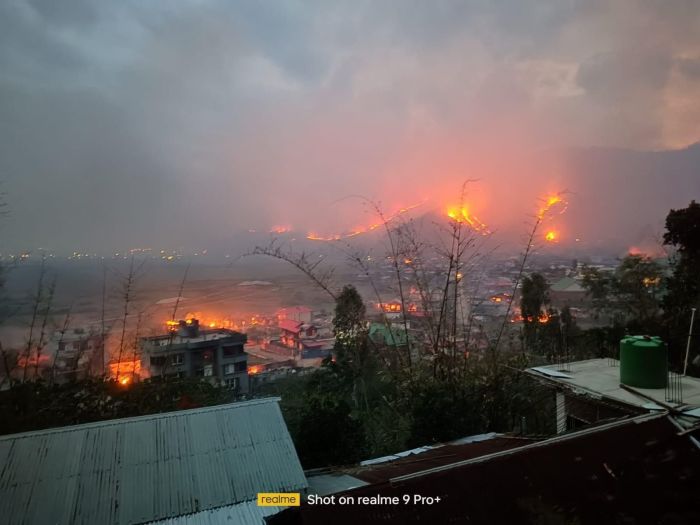
Fires in India's Manipur state.

‘We don’t know how we can restart our lives’ – stories from Manipur

‘On 3 May, around 10pm, we heard people throwing stones at our house. We didn’t understand what was happening. In the morning, we woke up and we were cooking. We saw that there was a frenzy outside. Everyone was walking out of their homes with their bags packed. They asked us why we were still at home and explained the situation. We were scared.’

Runa, Imphal

India’s Manipur State has been engulfed in violence for two and a half months now. Sparked by a protest on 3 May in which an estimated 60,000 people marched in opposition to the Manipur High Court’s request to the state government to send a recommendation to the central government to include the non-tribal Meitei community in the Scheduled Tribe (ST) category, the unrest has claimed at least 100 lives, with local sources suggesting that the death toll is significantly higher.

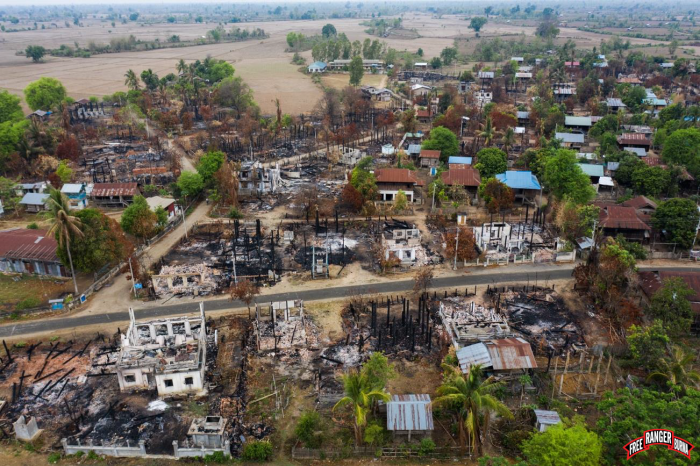
Thousands of homes have been burned down and tens of thousands of people have been forcibly displaced in a dispute over whether the predominantly Hindu Meitei community should be granted access to the same benefits afforded to the state’s typically more disadvantaged tribal communities.

Continue reading “‘We don’t know how we can restart our lives’ – stories from Manipur”
Former governor of Kaduna State Nasir El-Rufai with current Nigerian president Bola Ahmed Adekunle Tinubu.

We must not let Nigeria slide any further into failed statehood

‘Of course, we do consider religion, but I would not tell them that…’. It seems that Nasir El-Rufai, governor of Nigeria’s Kaduna State from May 2015 until May 2023, is no longer hiding his biases.

Addressing a group of Muslim clerics on his penultimate day in office after his party, the All Progressives Congress (APC), was declared the winner of the Kaduna State gubernatorial election, El-Rufai spoke extensively about how the APC had capitalised on religion, including by running on a Muslim-Muslim ticket, to secure electoral victory.

‘What we are able to achieve in Kaduna, we’ve now achieved on the national level,’ he added – a reference to the controversial and disputed victory of the APC in the presidential elections in February this year, also via a Muslim-Muslim ticket.

Continue reading “We must not let Nigeria slide any further into failed statehood”
A sign prohibiting the entry of Protestants into the community of Cuamontax in Huazalingo Municipality of Hidalgo State, Mexico.

Chhattisgarh: un estado donde las minorías religiosas viven con miedo

Cinco meses después de la violencia que una turba provoco y que obligó a cientos de cristianos de la zona tribal de Chhattisgarh a huir de sus hogares, las víctimas dicen que están de vuelta en casa y a salvo por ahora, pero siguen viviendo con miedo.

El 18 de diciembre de 2022, se informaron sobre más de 20 incidentes de violencia anticristiana en varias aldeas de los distritos de Kondgaon y Narayanpur de Chhattisgarh. Los lugareños afirmaron que los presionaron para que abandonaran su religión y que, si se negaban, los golpeaban brutalmente, destrozaban sus casas y destrozaban sus cultivos.

Según informes que surgieron más tarde, cerca de mil cristianos se vieron obligados a huir de sus hogares y buscar refugio en los distritos vecinos. Algunos tuvieron que caminar cientos de kilómetros para buscar refugio en un estadio cubierto.

Continue reading “Chhattisgarh: un estado donde las minorías religiosas viven con miedo”
A sign prohibiting the entry of Protestants into the community of Cuamontax in Huazalingo Municipality of Hidalgo State, Mexico.

Chhattisgarh: A state where religious minorities live in fear

Five months after the mob violence that forced hundreds of Christians from Chhattisgarh’s tribal belt to flee their homes, victims say they are back home and safe for now, but they continue to live in fear.

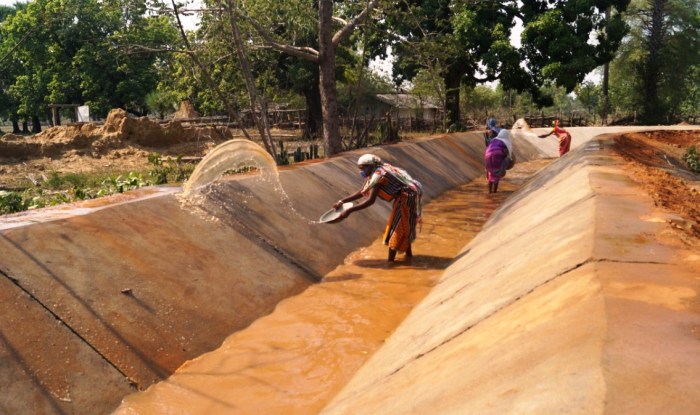
On 18 December 2022, more than 20 incidents of anti-Christian violence were reported in various villages of Chhattisgarh’s Kondgaon and Narayanpur districts. Locals claimed that they were pressured to leave their religion and if they refused, they were beaten up badly, their homes were vandalised and their crops were destroyed.

According to reports that emerged later, close to a thousand Christians were forced to flee their homes and seek shelter in neighbouring districts. Some had to walk hundreds of kilometres to seek shelter in an indoor stadium.

Continue reading “Chhattisgarh: A state where religious minorities live in fear”