All posts

许那:遭遇过两场镇压的人生

六月是个悲伤的季节,对无数的中国人来说,1989年春夏之交发生在北京天安门广场的一切,是一条从未愈合仍在流血的伤口。在中国,“六四”是禁忌的敏感词,任何回忆和纪念都被中共当局视为公然反抗。但每年此时在世界各地都会有很多追思纪念活动。在中国,无数人的生命轨迹因为八九六四发生了巨大的改变。他们至今仍以各自无声的方式坚守着对历史的记忆。 

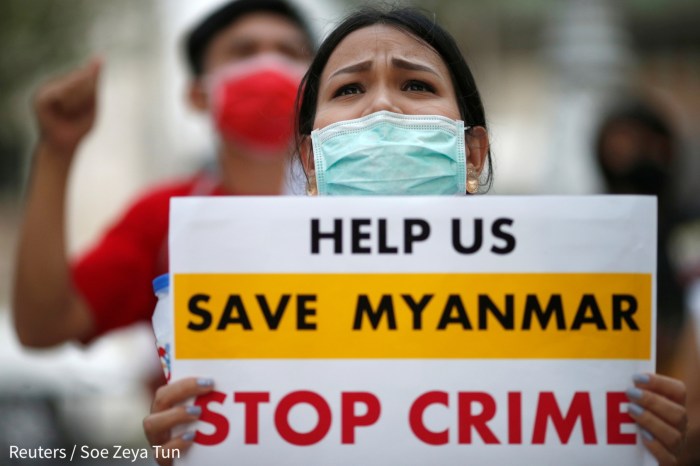
当年天安门广场上的绝食学生中,有一位名叫许那(又名许娜),是北京广播学院(现中国传媒大学)的学生。32年前,她曾和同学高举“新闻自由,言论自由”的横幅,满怀希望地走在北京街头游行的人群中。32年后,许那仍在北京,却已在东城区看守所被刑事拘留近一年了。 

人生巨变,监狱历程 

Continue reading “许那:遭遇过两场镇压的人生”
Sudan City View

Beyond the headlines: Freedom of religion or belief and women’s rights in Sudan

The political shifts in Sudan from the authoritarian rule of Omar al Bashir to the transitional government (a mix of civilians and the military), has garnered many positive headlines. The welcome changes and relief that there is a reservoir of political will to address the root causes of the country’s conflicts have indeed been positive.

In particular, the pledges of reform, the recent announcement that the government will accede to the Convention for the Elimination of Discrimination Against Women (CEDAW), the changing of some public order laws that infringed on the rights of women, especially women from marginalized communities, as well as the removal of apostasy have been warmly received.

However, beneath the headlines are simmering social hostilities which have already generated a series of violations that have not been sufficiently investigated or addressed. These violations threaten to undermine the positive steps taken so far, and both the transitional government and supporters of this new political arrangement in the international community need to note and address them.

Continue reading “Beyond the headlines: Freedom of religion or belief and women’s rights in Sudan”

Pastors or fraudsters? Neither registered nor unregistered religious leaders are safe from the Chinese Communist Party’s false allegations

Under China’s current religious regulations, only government-approved faith leaders can carry out government-approved religious activities in government-approved sites. As a result, there are many situations in which a religious leader can find themselves on the wrong side of the law in China, even facing charges that have no apparent connection to religion but can carry lengthy sentences.

The widely-reported cases of Pastor Wang Yi and Pastor Yang Hua highlight how the Chinese authorities prosecute leaders of unregistered Protestant churches with flagrantly baseless criminal charges: ‘inciting to subvert state power’ and ‘illegal business operations’ for Wang and ‘divulging state secrets’ for Yang. Alarmingly, fraud charges seem to have become one of the most damaging tools that the authorities use against pastors, for persecution as well as defamation.

Elder Zhang Chunlei

On 1 May 2021, the day the new administrative measures on religious clergy came into effect, Love Reformed Church received a notice saying their leader Zhang Chunlei had been officially arrested ‘on suspicion of fraud’. To this, the unregistered church in Guiyang in Guizhou province expressed incredulity in a prayer update issued on the same day.

Continue reading “Pastors or fraudsters? Neither registered nor unregistered religious leaders are safe from the Chinese Communist Party’s false allegations”

Conversion as an act of self-liberation: A history of the Dalit community in India

On 7 June 2020, a Dalit Christian man named Bura Singh, his wife and daughter were conducting prayers in their house in Madhya Pradesh, India, when police officials barged in and beat them up.

For Bura, his conversion to Christianity was a matter of faith. For many other Dalits like him, however, conversion to a religion other than Hinduism is not just a matter of faith, it’s also a means – the only means – to escape the centuries-old harassment and injustice meted out to them under the caste system.

Historically, and even today, Dalits who choose to convert to another religion are socially boycotted and harassed. But to understand why there is so much opposition to Dalit conversion by the upper castes, we must understand the origins of the caste system and the history of the Dalit struggle.

Continue reading “Conversion as an act of self-liberation: A history of the Dalit community in India”

Criminalisée, victime de meurtres et maudite : le sort de la communauté ahmadie du Pakistan

Le 11 février, Abdul Qadir, un médecin homéopathe ahmadi de 65 ans, a été abattu devant sa clinique dans le quartier de Bazikhel, à Peshawar, dans le nord-ouest du Pakistan. Ce meurtre est le dernier d’une série d’attaques à motivation religieuse contre les ahmadis, en particulier à Peshawar. 

L’année dernière, CSW a recensé au moins cinq autres cas de meurtres d’ahmadis, dont un incident au cours duquel un médecin de 31 ans, Tahir Mahmood, a été assassiné devant sa famille à son domicile de Murch Balochan, dans le district de Nankana Sahib, au Pendjab. 

Le fait que la communauté ahmadie du Pakistan soit depuis longtemps victime de harcèlement, discrimination, violence et autres violations des droits humains ne laisse guère de doute quant à la motivation religieuse de ces meurtres. On voit aussi clairement se dessiner un schéma selon lequel des médecins et des universitaires éminents ont été spécifiquement ciblés par les extrémistes. 

Il est fort probable que, dans une certaine mesure, ces personnes aient été tuées car elles occupaient des places importantes dans la société. Pour les extrémistes du pays qui refusent d’accepter les ahmadis comme musulmans, l’idée que des membres de ladite communauté puissent occuper des postes à responsabilité, par exemple dans des hôpitaux ou des universités, est sans aucun doute un affront à leur interprétation fondamentaliste de l’islam. 

Continue reading “Criminalisée, victime de meurtres et maudite : le sort de la communauté ahmadie du Pakistan”