All posts

A Bridge Between Two Worlds: Challenges for Mexico’s Religious Minorities on the Day of the Dead

Growing up in a family, in a culture even, where death is taboo, where people are afraid to talk about it, it seemed strange to me that on the other side of the world, death is deeply ingrained in Mexican culture and in the Mexican people.

In Mexican literature and art there is a fixation with death. The celebrated Mexican poet and diplomat, Octavio Paz, wrote “To the inhabitant of New York, Paris or London, death is a word that is never uttered because it burns the lips. The Mexican, on the other hand, frequents it, mocks it, caresses it, sleeps with it, celebrates it; it is one of his favourite toys and his most enduring love […] he looks at it face to face with impatience, disdain or irony.”

Continue reading “A Bridge Between Two Worlds: Challenges for Mexico’s Religious Minorities on the Day of the Dead”
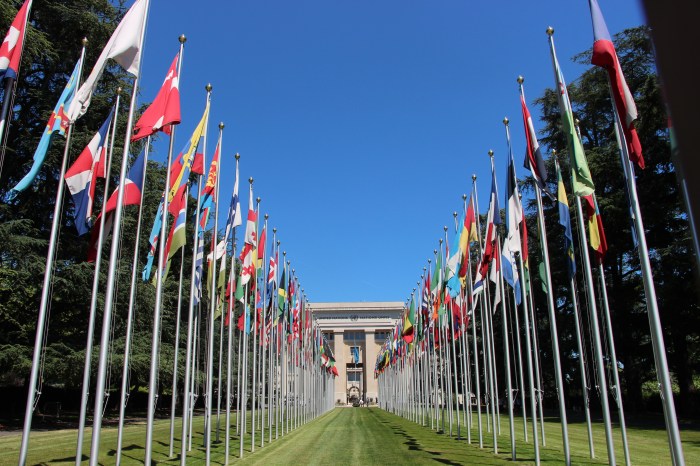

Moving On Up: The UN Human Rights Council Agenda Items Explained

Recently, CSW raised concerns regarding the diminishing scrutiny of Sudan’s human rights record at the United Nations Human Rights Council (UNHRC). The situation in the country is currently considered under agenda item 10, but CSW, along with many Sudanese and international civil society organisations, has repeatedly argued that the present situation is sufficiently serious to merit consideration under agenda item 4.

For many, the importance and even the content of these agenda items is likely to be unclear, yet the differences are crucial in determining the extent to which important human rights situations are scrutinised.

Every HRC session contains ten agenda items, each pertaining to different human rights issues. Matters discussed under these items include the promotion and protection of all human rights, civil, political, economic, social and cultural rights, including the right to development (Item 3), human rights situations that require the Council’s attention (Item 4), the Universal Periodic Review (Item 6) and technical assistance and capacity building (Item 10). At the regular sessions of the HRC, which take place three times a year, the Council considers each agenda item in turn and the resolutions of these discussions are later published online by the OHCHR.

Continue reading “Moving On Up: The UN Human Rights Council Agenda Items Explained”

‘Renounce your faith or leave’: The Ultimatum facing a number of Protestant families in Mexico

While the Mexican constitution provides strong protections for freedom of religion or belief (FoRB), moderate to severe violations of this right are regular occurrences in many parts of the country, particularly the states of Chiapas, Hidalgo and Oaxaca. Often these violations take the form of local authorities attempting to enforce conformity on religious minorities, for example, by denying access to basic services to Protestant families in majority Catholic villages.

CSW’s latest fact-finding visit to Mexico revealed a number of cases where Protestant families have been presented with an ultimatum to either renounce their faith or leave their village before a specific deadline.

To take one example, last year in Colonia Los Llanos in the San Cristóbal de las Casas Municipality, Chiapas, several Protestant families were forced to leave their village after they defied orders to renounce their religious beliefs. CSW also found evidence of similar experiences in two more communities in Chiapas and another in Oaxaca during the visit.

These ultimatums do not come out of nowhere and tend to follow years of religious tension.

Tensions include but are not limited to threats, cutting off basic services and attempts to force minority groups to pay fines or participate in religious activities. In another example, just last month community leaders in another part of Chiapas refused to allow the burial of a Protestant woman in the village cemetery and her family were forced to bury her in a nearby city.   The Mexican government regularly fails to act to reduce such tensions or to stop the deliverance of ultimatums. A culture of impunity surrounds the local authorities responsible for these violations of FoRB.

Continue reading “‘Renounce your faith or leave’: The Ultimatum facing a number of Protestant families in Mexico”

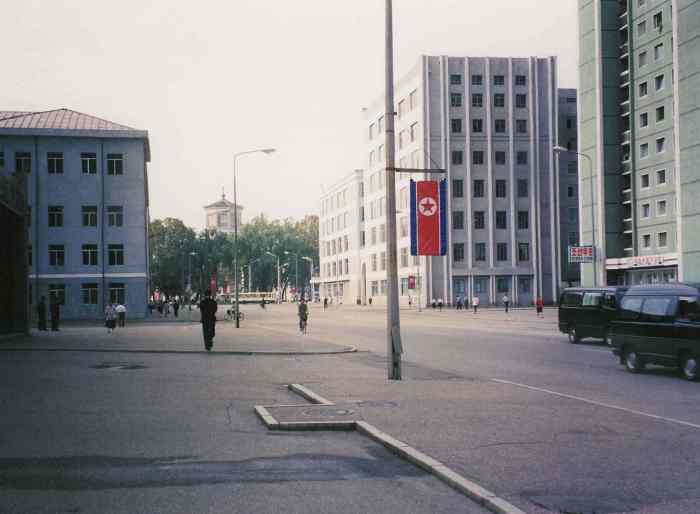
Save North Korean Refugees Day: Time to End China’s Illegal and Horrific Treatment of North Korean Escapees

Save North Korean Refugees Day, which falls on 24 September, aims to highlight the terrible trials faced by North Korean refugees in China.

It also marks the day, 36 years ago, that China became a signatory to the Convention Relating to the Status of Refugees, an agreement the country continues to violate through its treatment of North Korean escapees.

China’s forced repatriation of North Korean refugees is illegal as it violates the fundamental international humanitarian principle of ‘non-refoulement’, which prohibits receiving countries from returning refugees to a country where they would likely face persecution due to their “race, religion, nationality, membership of a particular social group or political opinion”.

And yet, that is exactly what they are being sent back to: North Korea is one of the world’s most repressive regimes, referred to by the 2014 UN Commission of Inquiry as “a State that does not have any parallel in the contemporary world” in terms of human rights violations. CSW’s 2016 report previously revealed that deported escapees regularly face execution, torture, arbitrary detention, deliberate starvation, illegal cavity searches, forced abortions, and other sexual violence at the hands of the North Korean authorities.

Continue reading “Save North Korean Refugees Day: Time to End China’s Illegal and Horrific Treatment of North Korean Escapees”

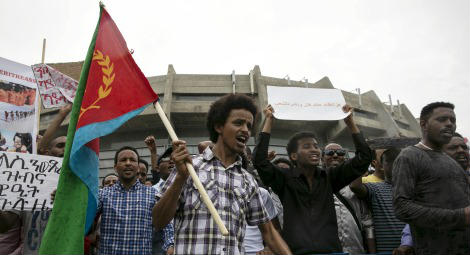
Long read: Eritreans wonder why their president is “making peace with everyone but the Eritrean people”

On the morning of 17 September, Eritrean security operatives arrested former Minister of Finance Berhane Abrehe in Asmara.  According to local reports, 73 year old Mr Abrehe was out having breakfast with his son when he was approached by security agents and instructed to accompany them.

The arrest followed the publication and launch of a two-volume book authored by Mr Abrehe entitled ‘Eritra Hageray’ (Eritrea My Country) in Washington DC. The book is described on the cover as presenting an Eritrean plan on how to end dictatorship and prevent it from happening again. The book received endorsements from several former Eritrean officials in exile, and were accompanied by an audio clip in which Mr Abrehe called, among other things, for the convening of the National Assembly and challenged President Afwerki to a public debate.

Mr Abrehe is currently in an unknown location.  He has been unwell for some time, and there are legitimate concerns for his wellbeing.  Mr Abrehe’s wife, Almaz Habtemariam, has been detained since early 2018, in reprisal for one of their four children fleeing the country.  Both he and his wife are veterans of the liberation struggle.

Continue reading “Long read: Eritreans wonder why their president is “making peace with everyone but the Eritrean people””