All posts

Remembering Kandhamal: a legacy of institutional failure

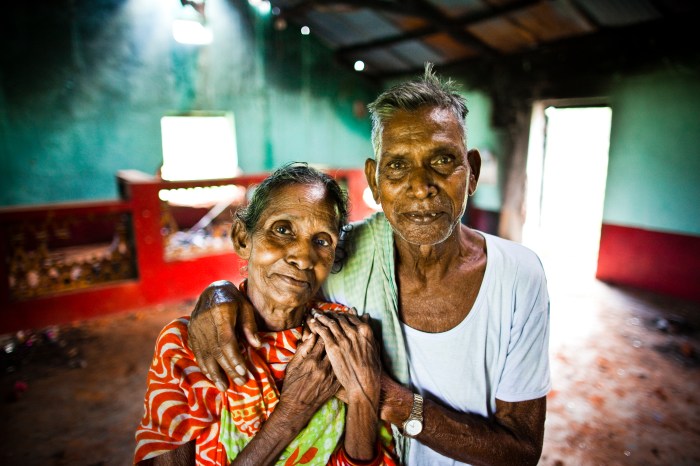
Featured image: Minasi (75) and his wife Sartabati (68) have seen their church in Mukundipur village attacked on five occasions, in 1966, 1975, 1998, 2007 and 2008. They said they did not think they could cope with another attack. Gajapati District, Orissa. Marcus Perkins/CSW 2009.

25 August 2016 is the eighth anniversary of India’s worst instance of communal violence against Christians. Many of the victim-survivors in Kandhamal, Odisha State, continue to wait for justice.

It is estimated that over 90 people were killed, 600 villages ransacked and 5,600 houses looted and burned in the 2008 attack. Approximately 54,000 people were left homeless, while 295 churches and places of worship were destroyed. Furthermore, an estimated 13 schools, colleges and philanthropic institutions for the sick were looted and burned. Approximately 2,000 Christians were forced to renounce their faith during the violence and 10,000 children were robbed of their education.

At every stage, the response of government, law enforcement and the criminal justice system to this tragedy has been woefully inadequate, undermining justice for the victim-survivors.

Continue reading “Remembering Kandhamal: a legacy of institutional failure”

Aleppo Bleeds as the Picture of Another Syrian Child Pricks the World’s Conscience

Many newspapers across the world today have chosen as their main image a photograph of a five year-old Syrian boy who has just survived an airstrike. Like that of another little Syrian boy called Aylan Kurdi, who drowned in the Mediterranean Sea last year, the image has gone viral.

It appears that once again the image of a Syrian child has pricked the world’s collective conscience, igniting renewed efforts to alleviate the suffering of Syrian civilians.

Khalid Albaih Syria cartoon credit Khalid Albaih

Image credit: Khalid Albaih https://www.facebook.com/albaih

 Aleppo as a microcosm for the Syrian Conflict

The Syrian conflict has a prominent sectarian aspect for which the battle for Aleppo is almost a microcosm, with the government and Shi’a militia on one side, and the largely-Islamist armed opposition groups on the other.

Within this complex picture, civilians from all sides are increasingly vulnerable as none of the warring parties have shown commitment to or respect for international humanitarian law, especially in terms of non-combatants, freedom of religion or belief (FoRB) and other human rights.

Aleppo, the second largest city in Syria used to have 4 million inhabitants. Today nearly half are displaced, either internally or externally.

The city has been a battlefield since 2012, and as the overall situation in Syria has deteriorated relentlessly, attention on the suffering of its inhabitants has ebbed and flowed dependent on fresh atrocities.

Continue reading “Aleppo Bleeds as the Picture of Another Syrian Child Pricks the World’s Conscience”

Brexit Wounds – The UK’s Post-EU Human Rights Challenges

As the Prime Minister assembled her new cabinet following the UK referendum on its membership of the European Union (EU), attention was rightly being paid to the how the new-look Government would deal with Britain’s decision to leave. Those appointed by Theresa May know that, whatever their brief, a significant proportion of the Government’s work will be negotiating, executing and accounting for the UK’s withdrawal from EU.

While it is understandable that this unprecedented task will be time consuming for the UK Government, this must not be allowed to supersede its obligation to promote and protect human rights worldwide.

Human Rights within the European Union

For all the debated successes and failures of the EU, what is undeniable is that its various institutions engage in significant human rights work.

Continue reading “Brexit Wounds – The UK’s Post-EU Human Rights Challenges”

The Impact of Sudan’s Identity War on Freedom of Religion or Belief

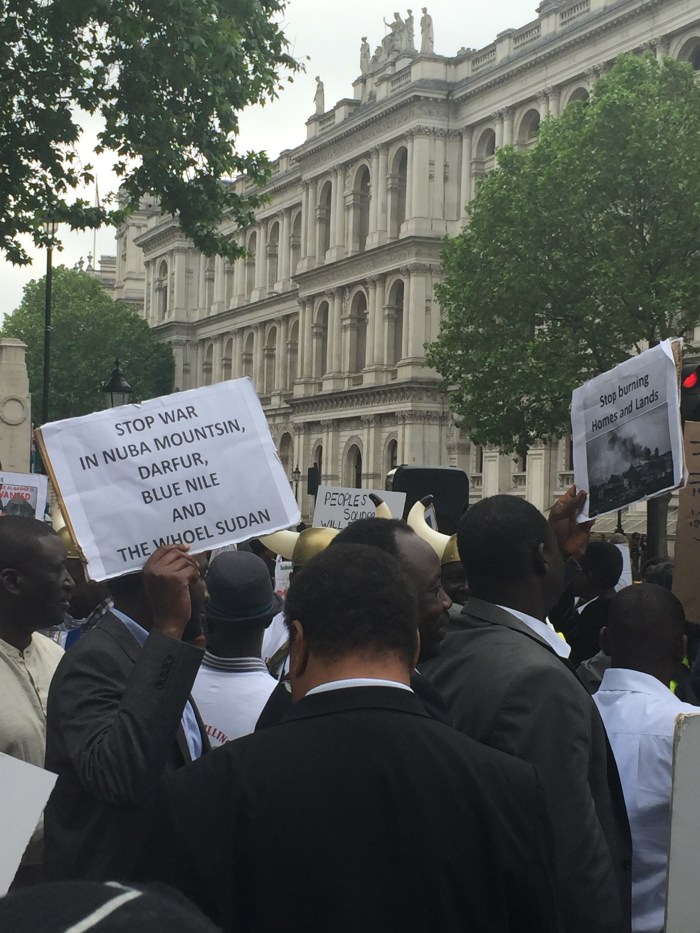
In June 2016, CSW joined a number of African and international civil society organisations in signing and delivering a letter marking the fifth anniversary of the conflicts in South Kordofan and Blue Nile regions, to 10 Downing Street. The letter urged the Prime Minister to use the UK’s considerable influence to ensure that international human rights and humanitarian law are respected.

Protesters walked from the Sudanese Embassy in London to Downing Street to deliver the letter. Among those taking part, it was striking to see veiled and unveiled Sudanese women from the Nuba Mountains, people from other parts of South Kordofan and Darfur, young children, and men in traditional Nuba dress united in calling for an end to all conflicts in Sudan.

This demonstration of unity in diversity was compelling, as was the cry for peace and freedom for all Sudanese citizens. The repression of religious and ethnic diversity in Sudan has been used repeatedly by President al Bashir’s government to sustain his 27-year rule, and what was clearly expressed on that overcast Saturday afternoon in London was the longing for an end to conflicts that serve to perpetuate a divisive government and for a lasting peace in which people can live side by side without fear, regardless of their cultural, linguistic, ethnic or religious differences.

Continue reading “The Impact of Sudan’s Identity War on Freedom of Religion or Belief”

The Lawyers That Were Left

It has been a year since over 300 human rights lawyers, activists, as well as those connected to them (including their friends and family), were detained by the Chinese government. That’s equivalent to one person harassed or disappeared every day since last July. Some of these lawyers have since vanished into China’s prison system. Others were released, but have lived with the threat of re-arrest hanging over them ever since.

Continue reading “The Lawyers That Were Left”