In China’s sprawling, complex legal system, it’s easy to trap the innocent

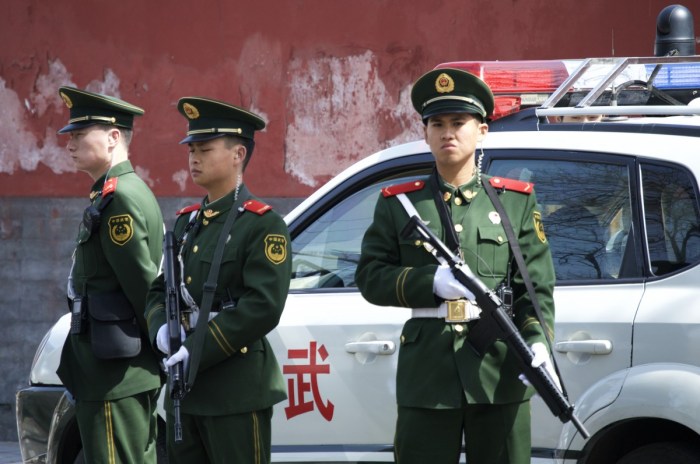
The Chinese criminal justice system is complex and expansive. There are multiple forms of detention, multiple types of arrest, and countless opportunities for the authorities to delay and defer proceedings – as they have done with increasing frequency in recent years – before a case even makes it to trial. 

This, of course, suits the Chinese Communist Party (CCP). A system that is difficult to navigate is easy to manipulate. It makes it harder for detainees, suspects, their lawyers and family members to know where they stand or even the charges they may be facing; it becomes more challenging for activists and journalists to report on and respond to crucial developments in a case, and ultimately nigh impossible for anyone the CCP is set on imprisoning to clear their name. 

This blog aims to shed light on the key steps in the Chinese judicial process, and how they can be subverted as the authorities take advantage of vague language and myriad loopholes in the country’s Criminal Procedure Law (CPL) to prolong the suffering of those they have arbitrarily detained and imprisoned. 

Continue reading “In China’s sprawling, complex legal system, it’s easy to trap the innocent”

Control of Khartoum may have changed hands, but Sudan’s nightmare is far from over

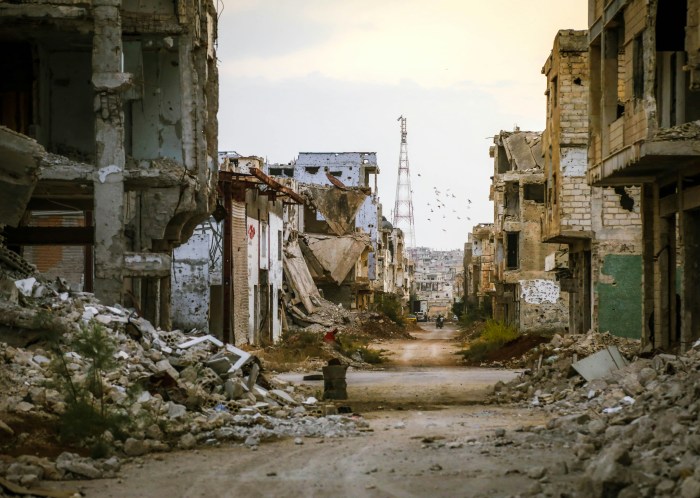
In late March the Sudan Armed Forces (SAF) claimed a significant victory. After months of fighting, the army declared that it had seized full control of the Sudanese capital Khartoum from the Rapid Support Forces (RSF) militia.

Visiting the presidential palace for the first time since conflict broke out between the two forces almost two years ago, the leader of the SAF Abdel Fattah al-Burhan said, ‘Khartoum is free, it’s done.’

Some residents of the city may have even breathed a small sigh of relief. While both the RSF and SAF stand accused of the gravest of international crimes, it is generally accepted that conditions are marginally better in areas under SAF rule, perhaps because it is the party to the conflict that currently occupies Sudan’s seat in international arenas.

But the country’s nightmare is far from over.

Continue reading “Control of Khartoum may have changed hands, but Sudan’s nightmare is far from over”

No matter how hard it tries, the Nicaraguan government cannot make the evidence of its human rights violations disappear

On 24 February, the United Nations Group of Human Rights Experts on Nicaragua (GHREN) published its latest report to the UN Human Rights Council (HRC).  

The GHREN, tasked with conducting thorough and independent investigations into all alleged human rights violations and abuses committed in Nicaragua since April 2018, focused its report on the institutions and individuals responsible for violations in Nicaragua, complete with an annex of 10 functional diagrams ‘illustrating the de jure and de facto connexions between different State and non-State entities.’  The report also drew attention to the four-phase strategy of the Ortega-Murillo regime designed to gain absolute control of the country and to how the regime’s recent constitutional reforms provide unchecked executive authority.  

The findings of the GHREN’s report are supported by a total of more than 1,500 interviews and 7,500 documents, and are also backed by reports by civil society organisations (CSOs) who have consistently and independently documented human rights violations. CSW, for example, documented 222separate cases involving violations of freedom of religion or belief (FoRB) in 2024 alone, with most involving multiple violations and some affecting thousands of people. 

Continue reading “No matter how hard it tries, the Nicaraguan government cannot make the evidence of its human rights violations disappear”

Por más que lo intente, el gobierno de Nicaragua no puede hacer desaparecer la evidencia de sus violaciones a los derechos humanos

El 24 de febrero, el Grupo de Expertos de las Naciones Unidas en Derechos Humanos para Nicaragua (GHREN) publicó su último reporte ante el Consejo de Derechos Humanos de las Naciones Unidas (CDH).  

El GHREN, encargado de realizar investigaciones exhaustivas e independientes sobre todas las presuntas violaciones y abusos de los derechos humanos cometidos en Nicaragua desde abril de 2018, centró su informe en las instituciones y personas responsables de las violaciones en Nicaragua, con un anexo de diez diagramas funcionales “que ilustran las conexiones de iure y de facto entre diferentes entidades estatales y no estatales.” El informe también llamó la atención sobre la estrategia de cuatro fases del régimen de Ortega y Murillo, diseñada para obtener el control absoluto del país, y sobre cómo las recientes reformas constitucionales del régimen otorgan una autoridad ejecutiva sin control.  

Las conclusiones del informe del GHREN se sustentan en más de 1500 entrevistas y 7500 documentos, así como en informes de organizaciones de la sociedad civil (OSC) que han documentado de forma consistente e independiente las violaciones de derechos humanos. CSW, por ejemplo, documentó 222 casos separados que implicaban violaciones de la libertad de religión o creencias (LdRC) en 2024, la mayoría de los cuales implicaban múltiples violaciones y algunos afectaban a miles de personas.

Continue reading “Por más que lo intente, el gobierno de Nicaragua no puede hacer desaparecer la evidencia de sus violaciones a los derechos humanos”
MYA Video footage shows St Patrick's Cathedral on fire on 16 March. CREDIT RVA Kachin Facebook

An attack on St. Patrick’s Cathedral the day before St. Patrick’s Day is yet another indicator of the remorselessness of the Myanmar military

17 March is a significant date for the community of St. Patrick’s Cathedral in the Banmaw diocese of Myanmar/Burma’s Kachin State.  

It is, of course, the feast day of the church’s patron saint – a day of prayer and celebration in honour of one of the most revered figures in Catholic Church history.  

This year, however, the community was unable to mark the occasion as they normally would have done, as on the evening of 16 March the cathedral was set on fire by soldiers from the State Administration Council (SAC), which falls under the authority of Myanmar’s ruling military junta. 

Continue reading “An attack on St. Patrick’s Cathedral the day before St. Patrick’s Day is yet another indicator of the remorselessness of the Myanmar military”