Iran: How the Judicial System is used to Target Religious and Ethnic Minorities

Five Iranian Christians were arrested by Iranian Intelligence (VEVAK) Officers on 26 August while picnicking with their wives in a private garden in Firouzkooh, an area 90 miles east of Tehran. They were not holding a religious service. They were simply enjoying a picnic. Now they are detained in Evin Prison in Tehran.

Since President Rouhani came to office in August 2013 there has been an increase in the number of religious minorities imprisoned on account of their faith. The rise in harassment, arrests and restrictions on freedom of religion or belief (FoRB) are a major concern for non-Muslims, converts to Christianity, members of the Baha’i faith and minority Muslim groups.

Continue reading “Iran: How the Judicial System is used to Target Religious and Ethnic Minorities”

For Some, Yellow Butterflies Symbolise Hope in the Midst of Colombia’s Uncertainty

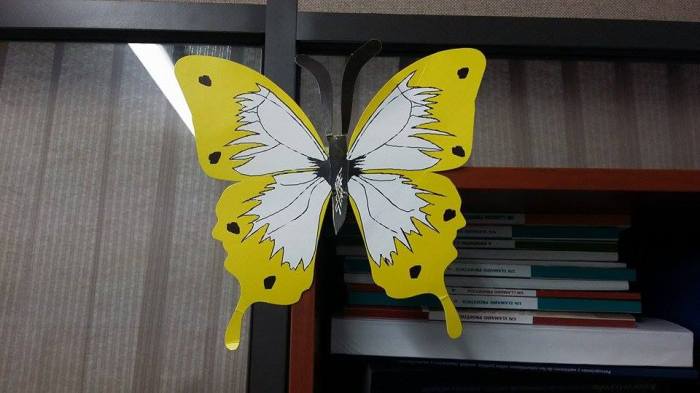
Yellow butterflies covered every wall in the office of one of our partner organisations in Colombia.

The first butterfly was cut out and hung on a wall immediately following the signing of the peace agreement between the government of Colombia and the Revolutionary Armed Forces of Colombia (FARC) on 26 September 2016 in Cartagena on the northern coast of the country.

In their speeches on this momentous occasion, both President Juan Manuel Santos and Timochenco, the commander and Chief of the FARC, referred to the yellow butterflies from celebrated Colombian author Gabriel Garcia Marquez’ famous novel ‘One Hundred Years of Solitude’: Gabriel Garcia Marquez is remembered for his love of yellow butterflies and flowers, which signify that nothing bad will happen.

“The war is over, we are starting to build peace” – Timochenko, Commander and Chief of the FARC

During his speech, Timochenko, stated, “war is over, we are starting to build peace’’ followed by a reference to a character in the novel, Mauricio Babilonia, who is constantly followed by yellow butterflies wherever he goes, as a symbol of infinite love and hope. Ivan Marquez, the FARC’s lead negotiator stated at a national FARC conference, “Tell Mauricio Babilonia he can release the yellow butterflies,” as a direct quote from the novel.

An Unexpected Outcome

These butterflies were a clear example of the hopeful expectancy that surrounded me in Bogota. Everyone was discussing what the peace agreement would mean for the country, especially for the regions most affected by the 52 year long conflict, especially the more rural areas of Colombia.

During the 53 years of internal conflict, hundreds of thousands of lives have been lost. All actors during the conflict have been responsible for major human rights violations; armed actors have also been responsible for a wide range of violations of religious freedom as hundreds of religious leaders have been the victims of targeted assassinations since 2000 and many have received threats, including death threats, by neo-paramilitary groups and guerrillas. Many churches have faced extortion from armed groups or have been forcibly closed.

However, at this point in time, the national plebiscite which was due to be held on 2 October 2016 had not yet taken place and was the final step required to bring the peace agreement into force.

Continue reading “For Some, Yellow Butterflies Symbolise Hope in the Midst of Colombia’s Uncertainty”

NGOs in Partnership with International Parliamentarians

LONG READ: “NGOs in Partnership with International Parliamentarians” is the speech delivered by CSW’s Chief Executive Mervyn Thomas at the UK’s Foreign and Commonwealth’s (FCO) Conference,  ‘Preventing violent extremism by building inclusive and plural societies: How freedom of religion or belief can help’, 19 -20 October 2016. 


As we’ve already heard today, the fundamental human right to Freedom of Religion or Belief (FoRB), embedded in Article 18 of the International Covenant on Civil and Political Rights is one that at first can appear daunting and difficult to raise. Professor Heiner Bielefeldt, UN Special Rapporteur on FoRB has said that “it is the most challenging of all human rights, it is the spice in the soup of human rights.” However, although daunting it is extremely important to intensify our joint efforts to promote it.

The latest information from the Pew Research Center stated that in 2014, 74% or roughly ¾ of the world’s population, live in countries with either high or very high restrictions on religious freedom. That means that over 5.1 billion people in this world are not able to fully recognise their inalienable human right to practice or change the religion or belief system of their choice.

Furthermore, FoRB is part and parcel of peace and stability; a cornerstone of democratic societies, and it can provide an important antidote to rising violent extremism. High-levels of discrimination based on religion or belief and FoRB restrictions can undermine peaceful development and in fact increase the grounds for the rise of extremism.

It is clear that some of the most significant foreign affairs challenges the international community are currently grappling with, involve violent extremism, and many of the challenges are deeply rooted in violations of the right to freedom of religion or belief.

Continue reading “NGOs in Partnership with International Parliamentarians”

India: Striving for Hindu rashtra at the expense of democracy

Recognise that restrictions on public freedoms, extreme inequalities and the mainstreaming of hate around the world are “shearing off the protections that maintain respect”, the High Commissioner for Human Rights, Zeid Ra’ad Al Hussein pleaded with Member States at the 32nd session of the Human Rights Council (HRC).

This sentiment is usually associated with states experiencing severe human rights violations, but the remark is equally relevant to states where human rights violations take place but appear less visible and fail to make news headlines.

The world’s largest democracy

The words ‘largest democracy’ are synonymous with India as a nation state with an electorate of 1.25 billion people and growing. The choice of the Bharatiya Janata Party (BJP) to lead the country may have come as a result of Modi’s election promises of a market orthodoxy for economic revival and open trade.

As such, any proposition that religious freedom in India is deteriorating is deflected by the ‘democracy’ rhetoric despite research showing that understanding freedom of religion or belief is good for business; it comes as no surprise that this defence is readily used by those who have trade and business interests in India, thus casting a cloak of invisibility about the violence against minorities based on religious grounds.

Continue reading “India: Striving for Hindu rashtra at the expense of democracy”

Burma: Stop the Block on Aid

No one should be denied food or medicine on account of their ethnicity or religion, but that is what is increasingly happening to some people in Burma. A humanitarian crisis is emerging because in some parts of the country, the authorities are blocking aid access. In other areas, international agencies are cutting aid. Blocks and cuts combined are resulting in displaced people who have fled conflict going hungry at night. That is why we have launched our new campaign: “Real Change”.

When we talk about refugees today, we think of Syria and Iraq. But Burma remains a country where significant numbers of people are fleeing conflict and persecution. Thousands escape to other countries, but others are internally displaced. Over 120,000 in Kachin and northern Shan states, and over 130,000 Rohingyas in Rakhine state.

Continue reading “Burma: Stop the Block on Aid”