China’s Crackdown on Religion

“My family, relatives, friends and dozens of innocent people [I know] have been arrested since April 2017. I have no knowledge of how many more of our relatives have been arrested as we lost contact with them at the beginning of the year. They have not committed any crime… They are ordinary people… since then I have not heard from them and I am unsure about their safety.”

– Chinese Uyghur living overseas.

Faith groups in China are currently experiencing the most severe crackdown on religious freedom and human rights in decades. One of the worst sites of this crackdown is the Xinjiang Uyghur Autonomous Region (XUAR), where recent reports estimate that as many as three million Uyghurs, Kazakhs and members of other ethnic groups have been detained in political re-education camps without charge.

Ethnicity appears to be the principle driver of these detentions, however there is also a significant religious element. The majority of detainees are Muslim, and reasons for detention – when a reason is given – have often been connected to the practice of peaceful religious activities such as participating in communal religious services or accessing religious materials online.

The religious element is further demonstrated by the treatment of Muslims inside the camps. Witnesses report that detainees have been forced to renounce Islam and promise not to follow religion. Prisoners have also been forced to eat pork or drink alcohol, which goes against their religious beliefs.
Continue reading “China’s Crackdown on Religion”

Save North Korean Refugees Day: Time to End China’s Illegal and Horrific Treatment of North Korean Escapees

Save North Korean Refugees Day, which falls on 24 September, aims to highlight the terrible trials faced by North Korean refugees in China.

It also marks the day, 36 years ago, that China became a signatory to the Convention Relating to the Status of Refugees, an agreement the country continues to violate through its treatment of North Korean escapees.

China’s forced repatriation of North Korean refugees is illegal as it violates the fundamental international humanitarian principle of ‘non-refoulement’, which prohibits receiving countries from returning refugees to a country where they would likely face persecution due to their “race, religion, nationality, membership of a particular social group or political opinion”.

And yet, that is exactly what they are being sent back to: North Korea is one of the world’s most repressive regimes, referred to by the 2014 UN Commission of Inquiry as “a State that does not have any parallel in the contemporary world” in terms of human rights violations. CSW’s 2016 report previously revealed that deported escapees regularly face execution, torture, arbitrary detention, deliberate starvation, illegal cavity searches, forced abortions, and other sexual violence at the hands of the North Korean authorities.

Continue reading “Save North Korean Refugees Day: Time to End China’s Illegal and Horrific Treatment of North Korean Escapees”

The UN Belongs to All of Us: Chinese Prisoners of Conscience Speak Out

Welcome to the United Nations. It’s your world.

Until recently, when you accessed the United Nations (UN) website, these words would appear. They’re still used on some webpages, and the sentiment behind them still stands.

The UN is often the subject of criticism, and its flaws are well-documented, yet it remains one of the most important arenas for raising human rights concerns, including the right to freedom of religion or belief.

Three times a year, in Geneva, Switzerland, the UN Human Rights Council comes together and UN staff, member state delegations and non-governmental Organisations (NGOs) all rub shoulders in meetings, formal sessions and – frequently – impromptu chats over coffee and in canteen queues.

On the agenda are some of the most serious human rights situations in the world.

This is also an opportunity for NGOs like Christian Solidarity Worldwide (CSW) to organise side events running parallel to discussions at the Council, where victims of human rights violations, as well as experts and activists, can present their cases in an open forum. In March 2018, CSW hosted one of its first side events at the UN Human Rights Council since obtaining ECOSOC Consultative Status: an opportunity to discuss some of the most severe and complex challenges to religious communities in China.

Continue reading “The UN Belongs to All of Us: Chinese Prisoners of Conscience Speak Out”

FoRB in China: The UK needs to speak out


Prime Minister Theresa May’s first official visit to China, which begins today, is billed as an opportunity to boost trade with an important ally. But it will also take place against the backdrop of the country’s violations of fundamental human rights, including freedom of religion or belief.

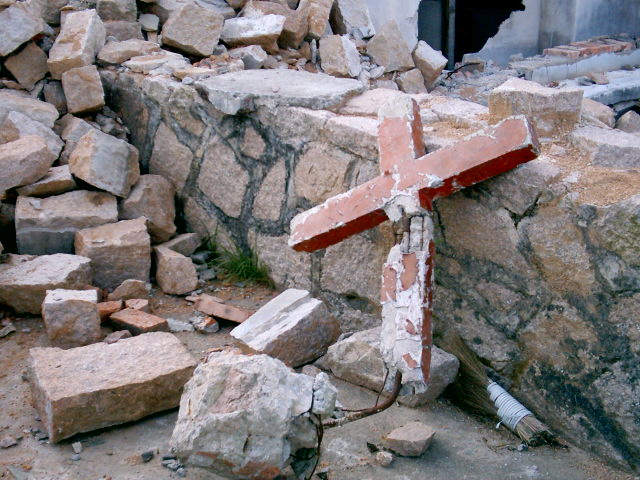
In the last month, Christians have been detained, and unregistered churches shut down or destroyed ahead of the implementation of revised Regulations on Religious Affairs, which strengthen state control over religious activities in China.

Unregistered churches, sometimes called house churches, are independent churches which have not registered with the state-sanctioned Three Self Patriotic Movement. The new regulations are due to come into force tomorrow, giving Mrs May a rare opportunity to speak directly to the Chinese government and publicly to reiterate the UK’s commitment to defending human rights.

Continue reading “FoRB in China: The UK needs to speak out”

No Ifs, No Buts: Torture Should Be Universally Condemned

“He was forced to take medicine. They stuffed the pills into his mouth… After taking the pills he felt pain in his muscles and his vision was blurred… He was beaten. He endured gruelling questioning while being denied sleep for days on end…” 

Wang Qiaoling describing the torture of her husband, lawyer Li Heping

“Even our breaths were suppressed. No voices. No texts. No images. No talking. No walking. Our hands, feet, our posture…every body movement was strictly limited. We needed permission for even the most trivial action”.

 Lawyer Zhao Wei, the youngest legal assistant detained in the 709 Crackdown

“Prisoners were also put in cages submerged mostly in water, and left inside for seven days, the entire body underwater with a space to breath at the top. As they stood in the water and tried to sleep, rats would scurry about outside the cage, biting their nose and ears.” 

Letter to world leaders by ‘709’ Family Members

These are just a few accounts of the torture experienced by human rights lawyers in China. Over 300 lawyers, activists, colleagues and family members were detained, interrogated or disappeared in a sweeping crackdown beginning on 9 July 2015, dubbed the 709 Crackdown. Two years on, most have been released, some on “bail” conditions amounting to house arrest, but with news of their release have come numerous testimonies of physical and psychological torture including frequent beatings, sleep deprivation, forced medication, violent threats, and prolonged isolation.

Use of torture in China

Lawyers and activists are by no means the only victims of torture. Many of the lawyers caught up in the crackdown had defended clients who had been tortured by police or security agents, including those arrested in connection with their religion or belief such as Falun Gong practitioners and Christians associated with unregistered churches, as well as those accused of crimes not related to politics or religion.

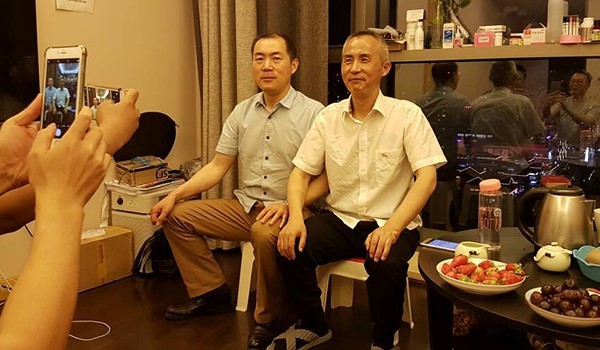
Li Heping reunion
Human rights lawyer, Li Heping (right) pictured with his brother Li Chunfu (left) following his release from detention.
Continue reading “No Ifs, No Buts: Torture Should Be Universally Condemned”