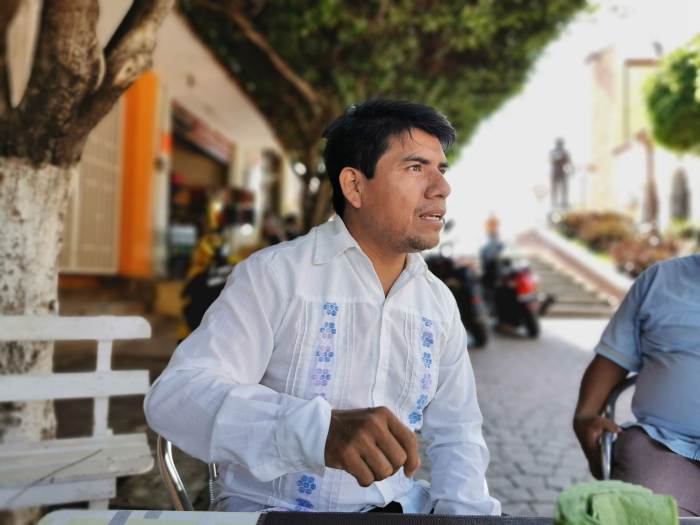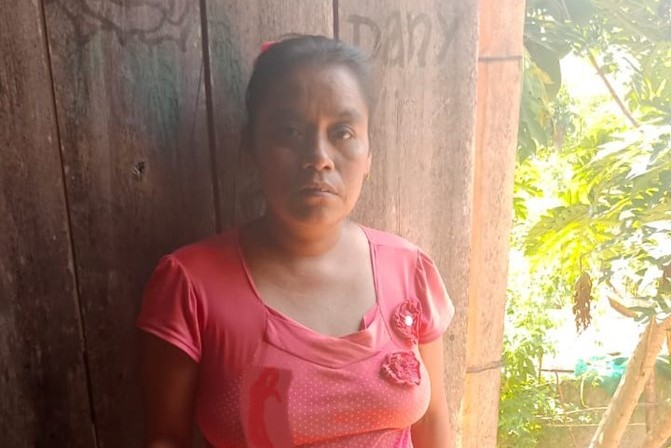
Maria Concepción, a member of the Great Commission Baptist Church in Rancho Nuevo in the Huejutla de los Reyes Municipality of Hidalgo state, Mexico.

After a brutal attack on one of their own, a religious minority community in Mexico is waiting for justice and religious freedom

Maria Concepción began 2023 in hospital recovering from a brutal physical attack that was linked to her membership of a religious minority in her community. On 1 January she was admitted to intensive care due to constant vomiting that meant she was unable to keep food down. She spent ten days there before she was briefly released only to be returned to intensive care due to vomiting blood on 18 January.

As doctors did not report any improvement at first, her family did not see much hope at all, to the point that members of her church in Rancho Nuevo in the Huejutla de los Reyes Municipality of Hidalgo state, Mexico, had cleared a piece of land for her burial.

Mercifully, she pulled through. She returned home on 9 February, and today she walks with the help of her son and a cane. She still suffers from persistent back pain caused by being forcefully thrown into the trunk of a tree, but her recovery remains nothing short of miraculous.

Continue reading “After a brutal attack on one of their own, a religious minority community in Mexico is waiting for justice and religious freedom”
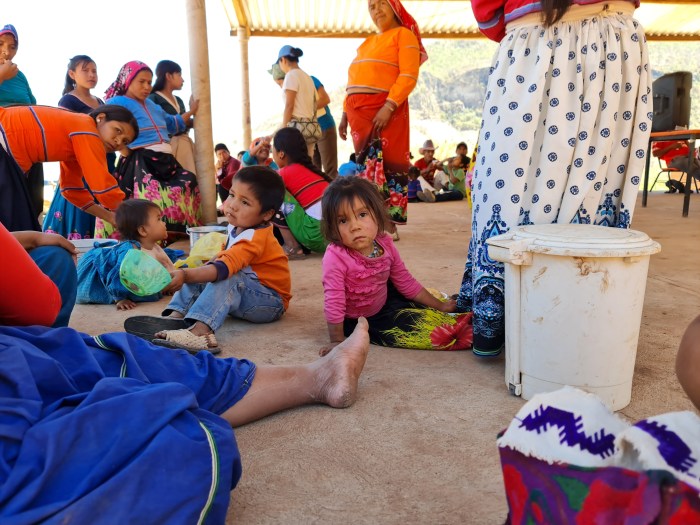
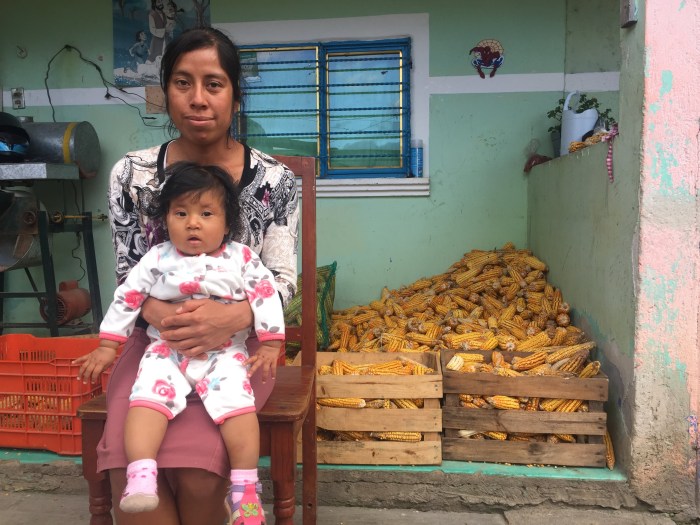
You are my other me: The importance of educating the Mexican women of the future 

Florinda was just 11 years old when her family was displaced from the community of San José Yashtinín, San Cristóbal de las Casas Municipality, in Mexico’s Chiapas State in 2012. She was unable to continue with her studies for around two years following her family’s displacement because the paperwork and certificates she needed to enrol in a new school were left behind. In 2019 she told CSW she hoped to finish her studies in order to teach other children. 

Another woman, Alma, was 17 years old when her education was interrupted after her family was forcibly displaced from their village of Tuxpan de Bolaños, Bolaños Municipality, Jalisco State, in December 2017. She was subsequently unable to enrol in a new school, derailing her plans to become a nurse. 

Three years ago, to mark Children’s Day in the country, Alma travelled to Mexico City to meet with government officials. She also met with the National Council to Prevent Discrimination (CONAPRED) who expressed regret for what had happened: “We owe you an apology, this country owes you an apology…We have certainly failed in the process but we are here to protect you, so that your trajectory in life is what you want it to be.” 

This year, as Mexico observes Children’s Day, we call for more than an apology; we call for action.  

Continue reading “You are my other me: The importance of educating the Mexican women of the future “

Christmas Eve in the Dark

Christmas Eve night. Millions of people around the world prepare to celebrate the birth of a baby, a king and saviour, 2000 years ago in Bethlehem. Jesus Christ was born to be a light to the world.

Over 1,000 miles away from Jerusalem, a mother tends to her new-born baby in total darkness. She lives in the community of El Encanto, Las Margaritas Municipality in the state of Chiapas, in southern Mexico. Her name is Rebeca Vasquez Cruz. Like many others in the community, her electricity supply has been cut off because of her faith. She will celebrate Christmas Eve in the dark.

A culture of abuse and impunity

The Roman Catholic Church has historically dominated the religious landscape across Latin America and particularly in Mexico. The religious hegemony of the past centuries has led to a lack of understanding about other religions, and in particular the right to freedom of religion or belief (FoRB). In an increasingly diverse religious landscape, with 11.2% of the Mexican population identifying as Protestant Evangelical in the latest census, FoRB violations are common and widespread in Mexico.

Continue reading “Christmas Eve in the Dark”

Waiting for action: An interview with a victim of forced displacement in Mexico

On 28 July 2019 four Protestant Christians were forcibly displaced from the village of Cuamontax Huazalingo in the state of Hidalgo, Mexico. Community leaders told the victims that the expulsion was the consequence of their failure to sign an agreement that bans Protestants from entering the village.

Over a year after they were forced to leave their homes, CSW spoke with Uriel Badillo, who was among those displaced:

“My name is Uriel Badillo Lara. I am originally from the Cuamontax community, in the Municipality of Huazalingo, Hidalgo State, Mexico, but I am currently living in my sister’s house in Atlaltipa Tecolotitla, in the Municipality of Atlapexco, along with my parents, my wife and our new-born. I make a living doing odd jobs like helping with electrics and maintenance.”

Continue reading “Waiting for action: An interview with a victim of forced displacement in Mexico”

Following Biblical mandates carries a high price for religious leaders in Mexico

A religious leader and his colleague are kidnapped from a migrant shelter; they have not been seen or heard from since. Another is assaulted, extorted and threatened at gunpoint. Both provided protection to migrants and asylum seekers trapped on the border. In the same country, religious leaders warn that threats and attacks against them constitute one of the most serious problems facing churches today. Ironically, all this is taking place in what is considered to be one of the most religious countries in the world, Mexico.

The worsening situation for migrants and asylum seekers passing through Mexico has been exacerbated by the implementation of the US’ Migrant Protection Program (MPP) also known as ‘Remain in Mexico’ at the start of 2019.[1] The policy has made it increasingly difficult for migrants to win asylum cases in the US, only 0.1% of cases have been successful, and many have sought refuge in church-run migrant shelters across Mexico while they wait, especially at the northern border. On 28 February 2020, a US federal appeals court ruled that that the Remain in Mexico policy was illegal.

While many Protestant and Catholic leaders have responded to the rising levels of need in an outworking of their faith by following commands to help the poor,[2] shelter the homeless,[3] and love the foreigner,[4] their work makes them increasingly exposed to threats and attacks from organised criminal groups who prey on the vulnerable migrant population.

Continue reading “Following Biblical mandates carries a high price for religious leaders in Mexico”