FoRB on the Frontlines: “If I can kill a priest then I can kill anyone”

In several Latin American countries, religious leaders often take on the roles of community leader and human rights defender. As a result, these leaders often face harassment, intimidation and even violence at the hands of state and non-state actors. Over the next few weeks CSW will be presenting interviews with religious leaders working in the region to highlight their experiences on the frontlines of freedom of religion or belief.

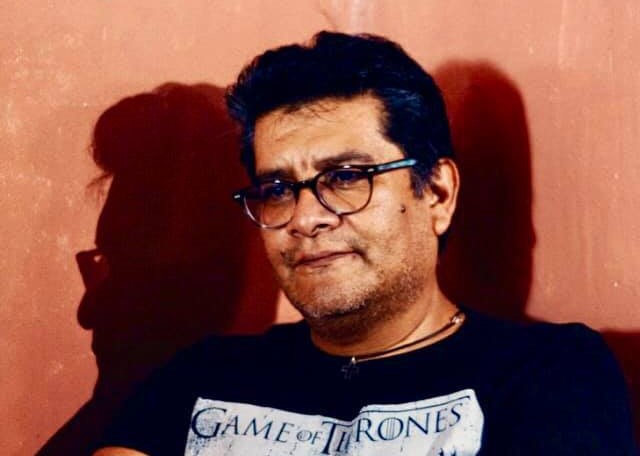
Father Omar Sotelo Aguilar works in Mexico for the Catholic Multimedia Centre (CCM) documenting attacks against Catholic priests.

“In recent years Mexico has been a dangerous place for journalists, priests and other religious leaders. I have been a Catholic priest and a journalist for about 25 years now, so I face a double risk. But even without taking this into account, we are as exposed as any other person.

I decided to approach this work from a journalist’s perspective as it is an issue that was not very visible, but was a very harsh reality. Good journalism, like good advocacy, is based on facts, figures and documentation.

Continue reading “FoRB on the Frontlines: “If I can kill a priest then I can kill anyone””
Mexico’s Culture of Impunity Part 2: Lost years and missed opportunities

Last week, CSW’s Latin America Advocacy Officer detailed the culture of impunity that hinders the protection and promotion of freedom of religion or belief (FoRB) in Mexico. In this post we put a human face on the effects of the government’s inadequate response to violations of FoRB, showing what happens to individuals when authorities delay or neglect their responsibilities to protect religious minorities.

Click here to read this post in Spanish.

One case which illustrates the deep rooted culture of impunity that surrounds attacks on religious minorities in Mexico is that of the community of Yashtinin in San Cristóbal de las Casas Municipality in Chiapas State.

Everything began in 2012, when several people converted away from the majority religion. Some members of the community were afraid that this new religion would damage their customs and traditions and negatively affect their children. On 10 June 2012 a large group from the community went to the house of a Santiago Hernández Vázquez, one of the men who had converted, and took everyone that was meeting there to prison, insulting them and threatening them with violence and even death in the process.

After imprisoning 16 men and boys in a space normally meant to hold a single individual, local teachers employed by the government falsified a document stating that the families had voluntarily decided to leave the community. The victims were forced to sign it and given three days to leave. Upon the expiration of the ultimatum, 12 families were expelled after villagers destroyed all of their homes and property. By 2015, a total of 28 families had been expelled.

Continue reading “Mexico’s Culture of Impunity Part 2: Lost years and missed opportunities”

Mexico’s Culture of Impunity Part 1: Mediation in lieu of justice

While Mexico’s drug trade is far from vanished, President Andrés Manuel López Obrador (AMLO) recently stated that “there is no longer a war.” He has a new strategy. The president says they are no longer trying to arrest drug lords, but instead want to look at the causes of violence.

“We have not detained the bosses [of criminal gangs] because this is not our main function. The government’s main function is to guarantee public security…What is important to me is lowering the number of homicides, robberies, that there are no kidnappings. This is what is essential! Not the spectacular, because we lost a lot of time in this and it resolved nothing.”

To achieve this, AMLO appears to be looking to religious groups.

Continue reading “Mexico’s Culture of Impunity Part 1: Mediation in lieu of justice”

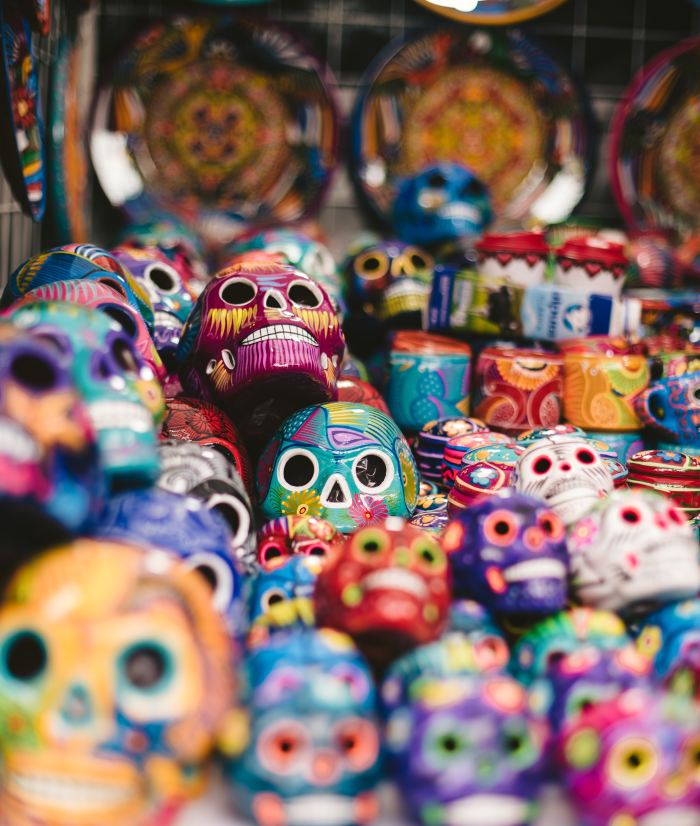
A Bridge Between Two Worlds: Challenges for Mexico’s Religious Minorities on the Day of the Dead

Growing up in a family, in a culture even, where death is taboo, where people are afraid to talk about it, it seemed strange to me that on the other side of the world, death is deeply ingrained in Mexican culture and in the Mexican people.

In Mexican literature and art there is a fixation with death. The celebrated Mexican poet and diplomat, Octavio Paz, wrote “To the inhabitant of New York, Paris or London, death is a word that is never uttered because it burns the lips. The Mexican, on the other hand, frequents it, mocks it, caresses it, sleeps with it, celebrates it; it is one of his favourite toys and his most enduring love […] he looks at it face to face with impatience, disdain or irony.”

Continue reading “A Bridge Between Two Worlds: Challenges for Mexico’s Religious Minorities on the Day of the Dead”

‘Renounce your faith or leave’: The Ultimatum facing a number of Protestant families in Mexico

While the Mexican constitution provides strong protections for freedom of religion or belief (FoRB), moderate to severe violations of this right are regular occurrences in many parts of the country, particularly the states of Chiapas, Hidalgo and Oaxaca. Often these violations take the form of local authorities attempting to enforce conformity on religious minorities, for example, by denying access to basic services to Protestant families in majority Catholic villages.

CSW’s latest fact-finding visit to Mexico revealed a number of cases where Protestant families have been presented with an ultimatum to either renounce their faith or leave their village before a specific deadline.

To take one example, last year in Colonia Los Llanos in the San Cristóbal de las Casas Municipality, Chiapas, several Protestant families were forced to leave their village after they defied orders to renounce their religious beliefs. CSW also found evidence of similar experiences in two more communities in Chiapas and another in Oaxaca during the visit.

These ultimatums do not come out of nowhere and tend to follow years of religious tension.

Tensions include but are not limited to threats, cutting off basic services and attempts to force minority groups to pay fines or participate in religious activities. In another example, just last month community leaders in another part of Chiapas refused to allow the burial of a Protestant woman in the village cemetery and her family were forced to bury her in a nearby city.   The Mexican government regularly fails to act to reduce such tensions or to stop the deliverance of ultimatums. A culture of impunity surrounds the local authorities responsible for these violations of FoRB.

Continue reading “‘Renounce your faith or leave’: The Ultimatum facing a number of Protestant families in Mexico”